Portable Power Banks: 7 Essential Specs for 2025 US Travel
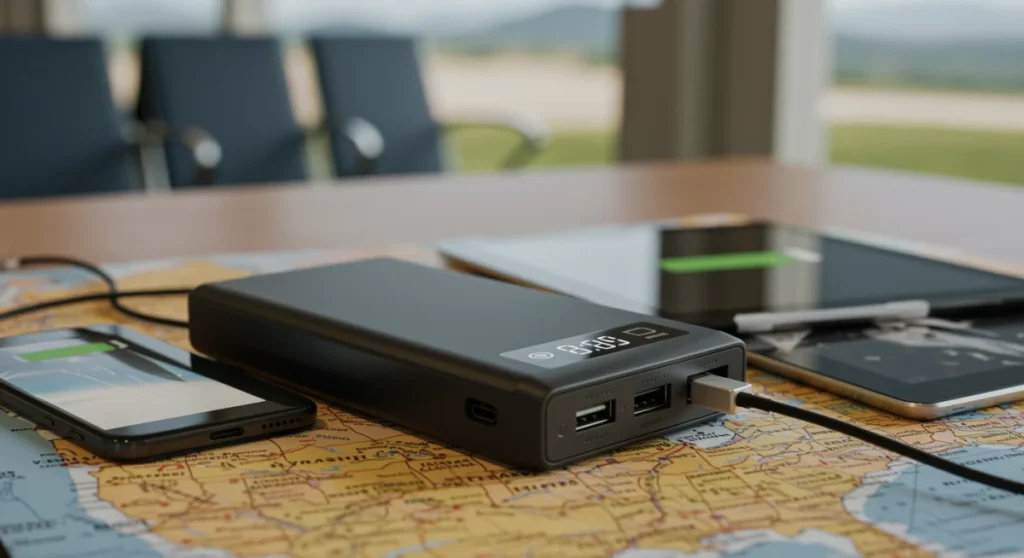
Understanding the 7 essential specifications for portable power banks in 2025 is vital for US travelers seeking reliable device charging, as it ensures compatibility, efficiency, and safety for their electronic gadgets on the go.
Embarking on a journey across the United States in 2025 demands reliable power for your essential devices. A critical component of any modern traveler’s kit is a robust portable power bank. This guide will delve into the portable power bank specs that are absolutely essential for your 2025 US travel adventures, offering a comprehensive comparison and analysis to help you make an informed decision.
Understanding Capacity: mAh and Your Travel Needs
The capacity of a portable power bank, measured in milliampere-hours (mAh), is arguably its most critical specification. This number dictates how many times your devices can be recharged before the power bank itself needs re-energizing. For 2025 US travel, where long flights, bus rides, or remote explorations are common, a higher mAh rating is often preferable.
Choosing the right capacity involves balancing your device’s battery size with the number of recharges you anticipate needing. A smartphone typically has a battery capacity between 3,000 mAh and 5,000 mAh. Tablets can range from 6,000 mAh to over 10,000 mAh. Laptops, especially modern USB-C charging models, often require power banks with capacities exceeding 20,000 mAh for even a single full charge.
Calculating Your Power Requirements
To estimate your ideal power bank capacity, consider the total mAh of all devices you plan to charge. Multiply this by the number of full charges you want to achieve. For instance, if you have a 4,000 mAh smartphone and want two full charges, you’d need at least 8,000 mAh. However, always factor in efficiency loss, which can be around 15-20% for most power banks.
- Smartphone Charging: For casual day trips, 10,000 mAh might suffice for 1-2 phone charges.
- Extended Travel: For weekend trips or heavy usage, 20,000 mAh is a sweet spot, offering 3-5 phone charges or a tablet charge.
- Laptop & Multiple Devices: For digital nomads or those carrying laptops, 25,000 mAh to 30,000 mAh is recommended.
- Airline Restrictions: Be aware that power banks over 27,000 mAh (100Wh) might require special airline approval for carry-on luggage.
Ultimately, a power bank with a capacity between 10,000 mAh and 20,000 mAh offers a versatile balance for most US travelers, providing ample power without excessive bulk. Those with more demanding needs, such as charging laptops, should look towards the higher end of this spectrum, ensuring compliance with airline regulations.
Output Ports and Charging Speeds: USB-C PD and Quick Charge
Beyond capacity, the types of output ports and their charging speeds are paramount. In 2025, USB-C Power Delivery (PD) and Qualcomm Quick Charge (QC) technologies have become industry standards, offering significantly faster charging than traditional USB-A ports.
Many modern smartphones, tablets, and even some laptops utilize USB-C PD for rapid charging. This technology can deliver higher wattages (e.g., 18W, 30W, 45W, or even 60W+) allowing devices to charge much quicker. Quick Charge, while still relevant for many Android devices, focuses on optimizing charging speed for compatible chipsets. A good power bank for 2025 travel should ideally feature at least one USB-C PD port and one or more USB-A ports with Quick Charge compatibility.
Optimizing Your Charging Experience
When evaluating output ports, consider the maximum wattage supported by each. For example, an 18W USB-C PD port will charge a modern smartphone much faster than a standard 5V/2A (10W) USB-A port. If you plan to charge a laptop, ensure the power bank’s USB-C PD output matches or exceeds your laptop’s charging requirements, typically 45W or higher for efficient charging.
- USB-C PD: Look for at least 18W output for smartphones, 30W+ for tablets, and 45W+ for laptops.
- Quick Charge (QC): Useful for many Android devices; check for QC 3.0 or higher.
- Multiple Ports: A power bank with a mix of USB-C PD and USB-A ports allows simultaneous charging of different devices.
- Pass-Through Charging: This feature allows the power bank to charge itself while simultaneously charging connected devices, a convenient option for limited outlets.
The variety and speed of output ports directly impact the convenience and efficiency of your charging setup while traveling. Prioritizing power banks with USB-C PD and Quick Charge capabilities will ensure your devices are powered up swiftly and effectively, minimizing downtime during your US adventures.
Input Charging Speed: Recharging Your Power Bank
While output speed is crucial for your devices, the input charging speed determines how quickly your power bank can be refilled. A high-capacity power bank with slow input charging can be a major inconvenience, especially when you have limited time to recharge it between destinations or overnight stays.
Similar to output, USB-C PD and Quick Charge also apply to input charging. A power bank that supports USB-C PD input can be recharged much faster than one relying on a standard micro-USB or basic USB-C input. For example, a 20,000 mAh power bank with 18W PD input can be fully recharged in approximately 5-7 hours, whereas one with 10W input might take 10-12 hours or more. This difference can be critical when you’re on a tight travel schedule.
Minimizing Downtime
To maximize efficiency, pair your power bank with a wall charger that supports its maximum input charging speed. If your power bank has an 18W USB-C PD input, using an 18W (or higher) USB-C PD wall charger will ensure the fastest recharge times. Relying on a low-wattage charger will negate the benefits of a fast-charging power bank.
- USB-C PD Input: Essential for rapid power bank recharging, typically 18W or higher.
- Compatible Wall Charger: Invest in a wall adapter that matches the power bank’s input speed.
- Overnight Charging: Even with fast input, plan for overnight charging for higher capacity power banks.
Considering the input charging speed is just as important as the output. A power bank that recharges quickly ensures you spend less time tethered to an outlet and more time exploring. For 2025 US travel, prioritizing power banks with fast input capabilities, especially USB-C PD, will significantly enhance your overall charging experience.
Portability and Durability: Design for the Road
A power bank’s utility for travel extends beyond its technical specifications to its physical attributes: portability and durability. A device that’s too heavy, bulky, or fragile will quickly become a nuisance rather than a convenience on your US journey.
For portability, consider the power-to-weight ratio. Higher capacity typically means more weight, but advances in battery technology have led to more compact designs. Look for ergonomic shapes that fit easily into your backpack or carry-on. Durability is also key; travel exposes gadgets to bumps, drops, and varying environmental conditions. A robust casing, often made from polycarbonate or aluminum, provides better protection than cheaper plastic alternatives.
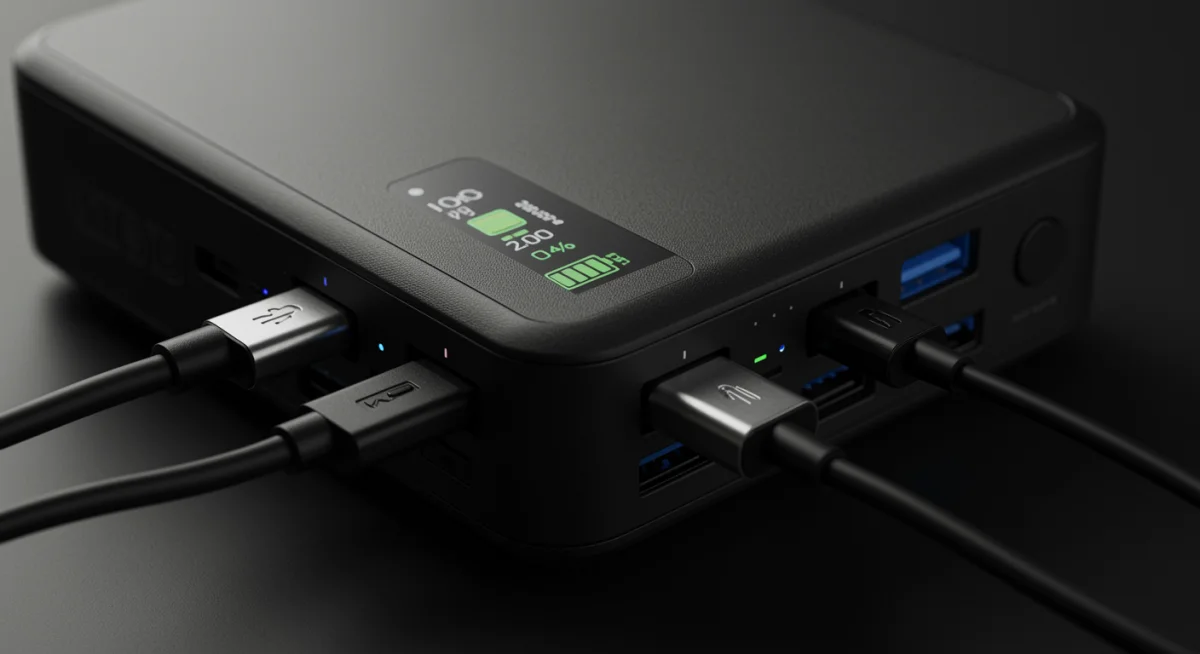
Many modern power banks also feature additional protective elements like rubberized corners or water-resistant coatings, adding an extra layer of peace of mind. While not all power banks need to be ruggedized to military standards, a degree of resilience is certainly beneficial for the rigors of travel.
Travel-Friendly Features
Beyond basic construction, some power banks offer features that enhance their travel-friendliness. Integrated cables, for example, eliminate the need to carry extra cords, reducing clutter. LED indicators or digital displays for battery percentage are also incredibly useful, providing clear information on remaining power.
- Weight and Size: Opt for a balance between capacity and portability.
- Material Quality: Durable plastics or metal casings offer better protection.
- Shock and Water Resistance: Consider these for adventurous travel.
- Integrated Cables: A convenience that simplifies your packing.
The physical design of your portable power bank significantly impacts your travel experience. Prioritizing a device that is both lightweight and rugged enough to withstand the demands of the road will ensure it remains a reliable companion throughout your 2025 US travels.
Safety Features and Certifications: Protecting Your Devices
Safety is paramount when it comes to electronic devices, especially those handling significant power. A reliable portable power bank should incorporate multiple safety features to protect both itself and your valuable gadgets from potential harm. These features often include protection against overcharge, over-discharge, over-current, short circuits, and overheating.
Reputable manufacturers invest heavily in these safety mechanisms. For instance, an intelligent power management system can detect when a device is fully charged and stop supplying power, preventing battery degradation. Similarly, temperature sensors prevent the power bank from overheating during prolonged use or rapid charging, which is crucial for safety and longevity.
Recognizing Trustworthy Products
Beyond internal safety mechanisms, look for power banks that carry certifications from recognized regulatory bodies. In the US, certifications like UL (Underwriters Laboratories) indicate that the product has undergone rigorous testing for safety standards. CE and FCC marks are also common and signify compliance with European and US electromagnetic compatibility standards, respectively.
- Overcharge Protection: Prevents battery damage from excessive charging.
- Short-Circuit Protection: Guards against electrical faults.
- Temperature Control: Prevents overheating during operation.
- UL Certification: A strong indicator of product safety and reliability in the US.
Never compromise on safety when selecting a portable power bank. Opting for products from well-known brands with clear safety certifications ensures that your devices are protected and that the power bank itself operates reliably, providing peace of mind during your 2025 US travels.
Wireless Charging Capabilities: Convenience on the Go
As wireless charging technology becomes more prevalent, many portable power banks for 2025 now include Qi-compatible wireless charging pads. This feature adds a layer of convenience, allowing you to charge your compatible smartphone or earbuds simply by placing them on the power bank, eliminating the need for cables.
While wireless charging is generally slower than wired charging, its ease of use can be a significant advantage, particularly when you’re on the move or want to reduce cable clutter. Imagine sitting in an airport lounge or on a train, and simply placing your phone on your power bank to top it up without fumbling for a cable.
Integrating Wireless Charging into Your Workflow
When considering a power bank with wireless charging, check its output wattage. Standard Qi wireless charging typically offers 5W, 7.5W (for iPhones), or 10W. Some advanced power banks can even support 15W wireless charging for compatible Android devices. While not as fast as USB-C PD, these speeds are perfectly adequate for maintaining battery levels throughout the day.
- Qi Compatibility: Ensure your devices support the Qi wireless charging standard.
- Wireless Output Wattage: Higher wattage means faster wireless charging.
- Placement: Consider the size and placement of the wireless charging pad on the power bank.
- Simultaneous Charging: Many wireless power banks still allow wired charging concurrently.
For the modern traveler, wireless charging capabilities in a power bank offer unparalleled convenience. While it may not be the primary charging method for all devices, its ability to provide a hassle-free power boost to your compatible gadgets makes it a highly desirable feature for 2025 US travel.
Additional Features: Beyond the Core Specs
While the core specifications of capacity, output/input speeds, portability, durability, safety, and wireless charging are fundamental, many portable power banks offer additional features that can significantly enhance their utility for travelers. These can range from integrated flashlights to solar charging capabilities, each catering to specific travel needs.
An integrated flashlight, for example, can be surprisingly useful in unexpected situations, such as navigating a dark hotel room or finding something in your bag at night. Some power banks also include small LCD screens that display precise battery percentages, rather than just vague LED dots, offering a clearer picture of remaining power.
Specialized Travel Enhancements
For outdoor enthusiasts or those venturing off the grid, power banks with solar charging panels can provide a trickle charge when traditional outlets are unavailable. While solar charging is typically slow and best used for maintaining charge rather than rapid replenishment, it offers a valuable emergency option. Additionally, some power banks feature built-in AC outlets, allowing you to power small appliances or even charge laptops that require a standard wall plug, though these tend to be larger and heavier.
- Built-in Flashlight: Handy for emergencies or low-light situations.
- LCD Display: Provides precise battery percentage information.
- Solar Panels: Useful for off-grid charging, albeit slow.
- AC Outlet: For charging laptops or small appliances (check airline restrictions).
- Integrated Cables: Reduces clutter and the need for extra accessories.
When comparing portable power banks for your 2025 US travel, don’t overlook these supplementary features. While not always essential, they can add significant value and convenience, tailoring the power bank to your specific travel style and making your journey smoother and more prepared.
| Key Specification | Travel Relevance for 2025 US |
|---|---|
| Capacity (mAh) | Determines charges for devices; 10,000-20,000 mAh ideal for most US trips. |
| Output Ports & Speed | USB-C PD and Quick Charge are vital for rapid charging of modern devices. |
| Input Charging Speed | Fast input (USB-C PD) minimizes downtime, crucial for tight travel schedules. |
| Safety Features | Protections against overcharge, short-circuit, and overheating are non-negotiable for device longevity and user safety. |
Frequently Asked Questions About Portable Power Banks
Most airlines in the US permit power banks up to 100 watt-hours (Wh) in carry-on luggage without special approval. This typically translates to approximately 27,000 mAh for a standard 3.7V battery. Power banks between 101-160 Wh require airline approval, and anything above 160 Wh is generally prohibited.
Yes, USB-C PD is highly recommended for 2025 travel. It offers significantly faster charging speeds for a wide range of modern devices, including smartphones, tablets, and even some laptops. This efficiency ensures your gadgets are quickly ready for use, minimizing wait times.
Input charging speed is very important, especially for high-capacity power banks. A faster input speed means the power bank itself recharges quicker, allowing you to maximize the use of limited charging opportunities during your travels. Look for USB-C PD input for the best results.
Absolutely. Travel exposes devices to various stresses like bumps, drops, and environmental changes. A durable power bank with a robust casing and potentially some water resistance will withstand the rigors of your journey, ensuring long-term reliability and protecting your investment.
For many travelers, the convenience of wireless charging is well worth it. It eliminates the need for extra cables for compatible devices, streamlining your setup. While typically slower than wired charging, it’s excellent for quick top-ups and reducing clutter, enhancing your overall travel experience.
Conclusion
Navigating the diverse landscapes and bustling cities of the US in 2025 requires more than just a good map; it demands reliable power. By meticulously analyzing the 7 essential specifications – capacity, output ports and speeds, input charging speed, portability and durability, safety features, wireless charging, and additional functionalities – travelers can confidently select a portable power bank that perfectly aligns with their specific needs. Investing in a well-researched power bank not only ensures your devices stay charged but also provides peace of mind, allowing you to fully immerse yourself in the experiences the US has to offer without the constant worry of a dead battery. Choose wisely, and power your adventures without interruption.