Serverless Computing: 30% Cost Reduction for US Companies in 2025
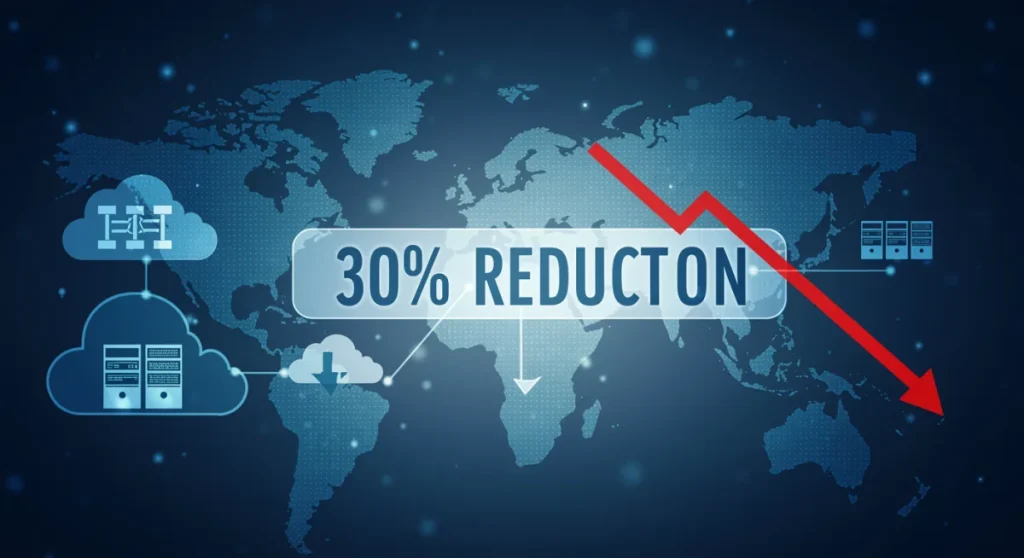
Serverless computing presents a strategic pathway for US companies to realize substantial infrastructure cost reductions, potentially up to 30% by 2025, by optimizing resource utilization and operational overhead.
Are you a US company executive or IT leader looking to significantly cut down your infrastructure expenses? The promise of serverless computing cost reduction is no longer a distant dream, but a tangible reality poised to transform how businesses operate in 2025. This innovative paradigm offers a compelling path to achieve up to a 30% reduction in operational overhead, freeing up valuable resources for innovation and growth.
Understanding the serverless paradigm shift
Serverless computing represents a fundamental shift from traditional infrastructure management. Instead of provisioning and maintaining servers, developers focus solely on writing code, and the cloud provider dynamically manages the underlying infrastructure. This model eliminates the need for server procurement, scaling, and patching, leading to profound operational efficiencies.
The core principle behind serverless is event-driven execution. Your code runs only in response to specific events, such as an API request, a database change, or a file upload. This ‘pay-as-you-go’ model means you are billed only for the compute time consumed, not for idle server capacity, which is a major driver of cost savings.
From fixed costs to variable expenses
Traditional infrastructure often involves significant upfront capital expenditures and ongoing fixed costs, regardless of actual usage. Serverless flips this model, converting what were once fixed costs into highly variable, usage-based expenses. This financial agility is particularly attractive to US companies navigating dynamic market conditions.
- Reduced operational overhead: No server provisioning or maintenance.
- Automatic scaling: Infrastructure scales up and down instantly with demand.
- Lower power consumption: Efficient resource utilization across the cloud.
- Minimized idle time costs: Pay only for execution time.
The transition to serverless enables businesses to reallocate IT budgets from maintenance tasks to strategic development. This allows for faster innovation cycles and a more agile response to market opportunities, directly contributing to competitive advantage. For many, this is the most compelling aspect of adopting serverless technologies.
The economic drivers behind 30% cost reduction
Achieving a 30% reduction in infrastructure costs through serverless computing is not an arbitrary figure; it’s a realistic projection based on several economic drivers. These drivers collectively contribute to a leaner, more efficient operational model that significantly impacts the bottom line for US companies.
One primary factor is the elimination of over-provisioning. In traditional setups, companies often provision more server capacity than they typically need to handle peak loads, leading to substantial waste during off-peak hours. Serverless platforms, like AWS Lambda, Azure Functions, and Google Cloud Functions, automatically scale resources to match demand precisely, ensuring companies pay only for what they use.
Optimizing resource utilization
By abstracting away servers, serverless computing optimizes resource utilization at a granular level. Cloud providers aggregate workloads from numerous customers onto shared infrastructure, achieving economies of scale that individual companies cannot. This shared responsibility model offloads significant operational burdens and associated costs.
- Elimination of server idle time.
- Reduced need for dedicated IT staff for infrastructure management.
- Lower software licensing costs for operating systems and middleware.
- Decreased energy consumption for on-premises data centers.
The cost savings extend beyond just compute. Serverless architectures often integrate seamlessly with other managed services, such as databases, message queues, and storage, further reducing the need for costly self-managed solutions. This holistic approach to cloud services amplifies the overall economic benefits.
Key serverless technologies driving efficiency
The serverless ecosystem is rich with powerful technologies that empower US companies to achieve significant cost reductions and operational efficiencies. Understanding these core technologies is crucial for successful implementation and maximizing their economic benefits.
At the heart of serverless are Function-as-a-Service (FaaS) platforms. These allow developers to deploy individual functions that execute in response to events, without managing servers. Beyond FaaS, a broader serverless ecosystem includes various managed services that integrate seamlessly, providing a complete, scalable, and cost-effective solution.
Leading FaaS platforms
The major cloud providers offer robust FaaS solutions, each with its own strengths and integrations:
- AWS Lambda: The pioneer in FaaS, offering extensive integrations with other AWS services.
- Azure Functions: Microsoft’s offering, deeply integrated with the Azure ecosystem and developer tools.
- Google Cloud Functions: Google’s serverless platform, known for its strong focus on developer experience and integration with Google Cloud services.
These platforms handle everything from provisioning and scaling to patching and logging, effectively offloading a massive amount of undifferentiated heavy lifting from development teams. This allows engineers to focus on delivering business value, rather than infrastructure concerns, accelerating project delivery and reducing time-to-market.
Overcoming challenges and ensuring security in serverless adoption
While the benefits of serverless computing are substantial, US companies must also navigate potential challenges to ensure a smooth and secure adoption. Addressing these proactively is key to realizing the projected 30% cost reduction and maintaining operational integrity.
One common concern is vendor lock-in. While serverless platforms offer immense value, they are inherently tied to specific cloud providers. Mitigating this involves careful architectural design, utilizing open standards where possible, and understanding the implications of platform-specific features. Another challenge is the complexity of monitoring and debugging distributed serverless applications, which requires specialized tools and practices.
Security considerations in a serverless world
Security in serverless environments requires a shift in perspective. While cloud providers manage the underlying infrastructure security, the responsibility for securing the application code, data, and access controls falls on the user. This shared responsibility model demands a robust approach to security from the outset.
- Granular access control: Implement strict IAM policies for functions.
- Input validation: Sanitize all inputs to prevent injection attacks.
- Dependency management: Regularly update and scan third-party libraries.
- Logging and monitoring: Implement comprehensive logging and anomaly detection.
Despite these challenges, serverless functions are often inherently more secure than traditional applications due to their ephemeral nature and reduced attack surface. By adhering to best practices and leveraging cloud provider security tools, companies can build highly secure serverless applications that protect sensitive data and operations.
Real-world impact: case studies and success stories
The theoretical benefits of serverless computing are increasingly being validated by real-world case studies and success stories across various industries in the US. These examples highlight how companies are achieving significant cost reductions and operational agility by embracing serverless architectures. From startups to large enterprises, the impact is undeniable.
For instance, a prominent media company in the US migrated its video processing pipeline to a serverless architecture, resulting in a 40% reduction in infrastructure costs and a significant acceleration in content delivery. Their ability to scale processing power dynamically based on demand eliminated the need for expensive, always-on servers, directly contributing to their bottom line.
Transforming business operations
Another compelling example comes from a fast-growing e-commerce platform. By rebuilding their backend services using serverless functions, they were able to handle massive traffic spikes during promotional events without provisioning additional servers. This not only saved them substantial infrastructure costs but also ensured a seamless customer experience, previously a major challenge.
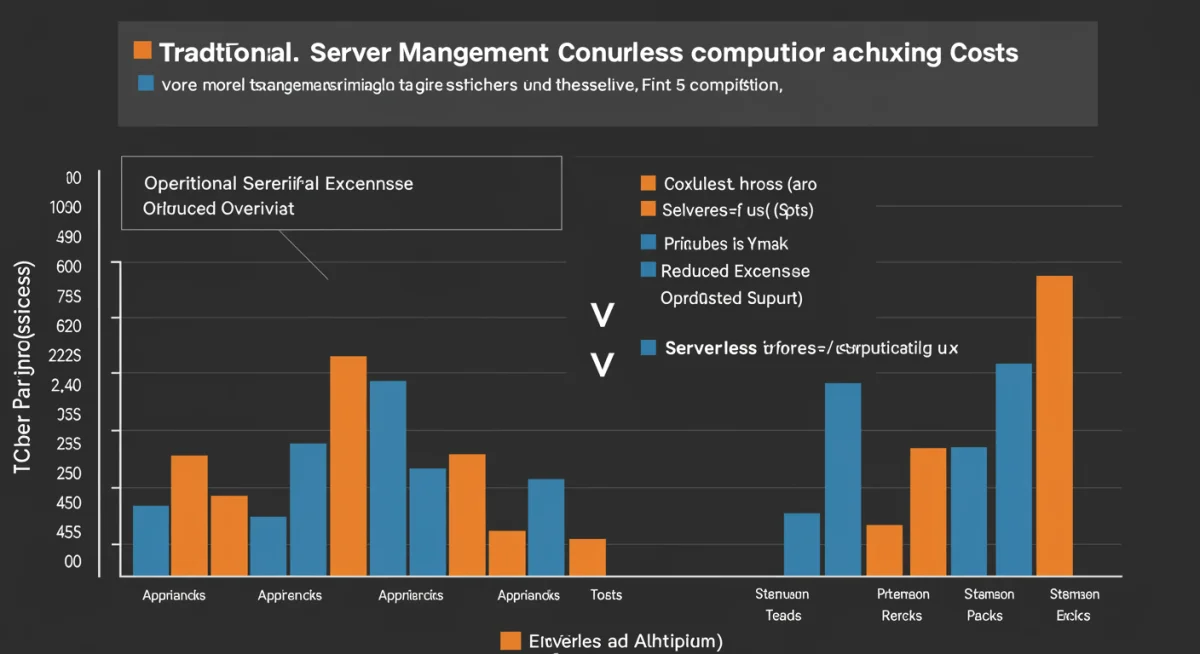
- Startup cost efficiency: Launching new services with minimal upfront investment.
- Enterprise scalability: Handling unpredictable demand without infrastructure bottlenecks.
- Developer productivity: Focusing on code, not server maintenance.
- Faster time-to-market: Rapid deployment of new features and services.
These success stories underscore that serverless computing is not just a niche technology but a powerful paradigm capable of transforming business operations and delivering tangible financial benefits. The 30% cost reduction target is not an exaggeration but a conservative estimate based on observed outcomes in diverse environments.
Strategic roadmap for serverless adoption in 2025
For US companies aiming to achieve a 30% reduction in infrastructure costs by 2025 through serverless computing, a well-defined strategic roadmap is essential. This roadmap should encompass assessment, pilot projects, gradual migration, and continuous optimization to ensure a successful transition and maximize return on investment.
The initial step involves a thorough assessment of existing applications and infrastructure to identify suitable candidates for serverless migration. Not all applications are equally suited for serverless, and prioritizing those that align best with its event-driven nature is crucial. This phase also includes defining clear objectives and key performance indicators (KPIs) for the migration.
Phased implementation and continuous optimization
A phased approach to serverless adoption minimizes risk and allows teams to gain experience incrementally. Starting with small, non-critical components or new greenfield projects provides a safe environment to learn and refine practices before tackling more complex systems. Continuous optimization is vital post-migration to ensure ongoing cost efficiency and performance.
Key steps in the strategic roadmap:
- Assess current infrastructure: Identify applications and services that are good candidates for serverless.
- Pilot projects: Start with small, isolated components to build expertise.
- Gradual migration: Move more complex systems in stages, learning from each phase.
- Training and upskilling: Equip development and operations teams with serverless skills.
- Cost monitoring and optimization: Implement tools to track usage and identify areas for further savings.
By following a structured roadmap, US companies can systematically leverage serverless computing to not only reduce infrastructure costs but also enhance agility, innovation, and overall business competitiveness in the evolving digital landscape of 2025. This strategic foresight will be a defining factor for market leaders.
| Key Aspect | Brief Description |
|---|---|
| Cost Efficiency | Pay-as-you-go model eliminates idle server costs and over-provisioning, leading to significant savings. |
| Operational Agility | Automatic scaling and managed infrastructure accelerate deployment and response to market demands. |
| Innovation Focus | Developers concentrate on code and features, not infrastructure, fostering faster innovation. |
| Security & Reliability | Leverages cloud provider’s robust security and high availability features, reducing user burden. |
Frequently asked questions about serverless computing
Serverless computing is a cloud execution model where the cloud provider dynamically manages the allocation and provisioning of servers. Developers write and deploy code (functions), and the provider automatically runs it, scaling resources as needed, and charging only for the compute time consumed.
The 30% cost reduction stems from eliminating idle server costs, automatic scaling to match exact demand, reduced operational overhead in server management, and the ability to convert fixed infrastructure costs into variable, usage-based expenses. This optimizes resource utilization significantly.
While highly versatile, serverless is best suited for event-driven, stateless applications and microservices. Long-running, stateful applications or those requiring precise control over the operating environment might find traditional server-based solutions more appropriate. Careful assessment is key before migration.
Key security considerations include granular access control through IAM policies, rigorous input validation to prevent common attacks, diligent dependency management for third-party libraries, and comprehensive logging for monitoring and anomaly detection. Users are responsible for application-level security.
Companies should begin with an infrastructure assessment, followed by pilot projects on non-critical components to gain experience. A gradual, phased migration plan, coupled with continuous training for teams and robust cost monitoring, will ensure a successful and cost-effective transition to serverless.
Conclusion
The journey towards serverless computing in 2025 offers US companies a clear and compelling pathway to achieve substantial infrastructure cost reductions, with a realistic target of 30% savings. This paradigm shift moves beyond mere cost cutting; it redefines operational agility, fosters innovation, and allows businesses to focus on core competencies rather than burdensome infrastructure management. By embracing the strategic adoption of serverless technologies, companies can unlock new levels of efficiency, scalability, and competitive advantage, positioning themselves for sustained growth and success in an increasingly dynamic digital landscape.