AIOps: Automating IT Operations for 25% Incident Reduction by 2025

AIOps, or Artificial Intelligence for IT Operations, is rapidly becoming indispensable for enterprises seeking to streamline IT management and achieve a remarkable 25% reduction in incidents by late 2025.
In today’s fast-paced digital landscape, the complexity of IT environments continues to grow exponentially. This surge in complexity often leads to an increase in operational incidents, impacting business continuity and customer satisfaction. However, a transformative solution is emerging: AIOps Incident Reduction. By integrating artificial intelligence and machine learning into IT operations, AIOps promises not just efficiency gains but a significant reduction in critical incidents, with ambitious targets aiming for a 25% decrease by late 2025. This article delves into how AIOps is reshaping IT, its core components, benefits, and the strategic steps organizations can take to harness its full potential.
Understanding AIOps: The Foundation of Modern IT Operations
AIOps, or Artificial Intelligence for IT Operations, represents a paradigm shift in how organizations manage and monitor their complex IT infrastructures. It moves beyond traditional IT monitoring tools by leveraging advanced analytics, machine learning, and automation to process vast amounts of operational data. This data includes logs, metrics, events, and network performance information, providing a comprehensive view of the IT environment.
The primary goal of AIOps is to enhance the speed and accuracy of IT incident detection, diagnosis, and resolution. Instead of relying on manual analysis or rule-based systems, AIOps platforms continuously learn from historical data and real-time streams to identify patterns, anomalies, and correlations that human operators might miss. This proactive approach allows IT teams to address potential issues before they escalate into major incidents, thereby minimizing downtime and improving service availability.
Key Components of an AIOps Platform
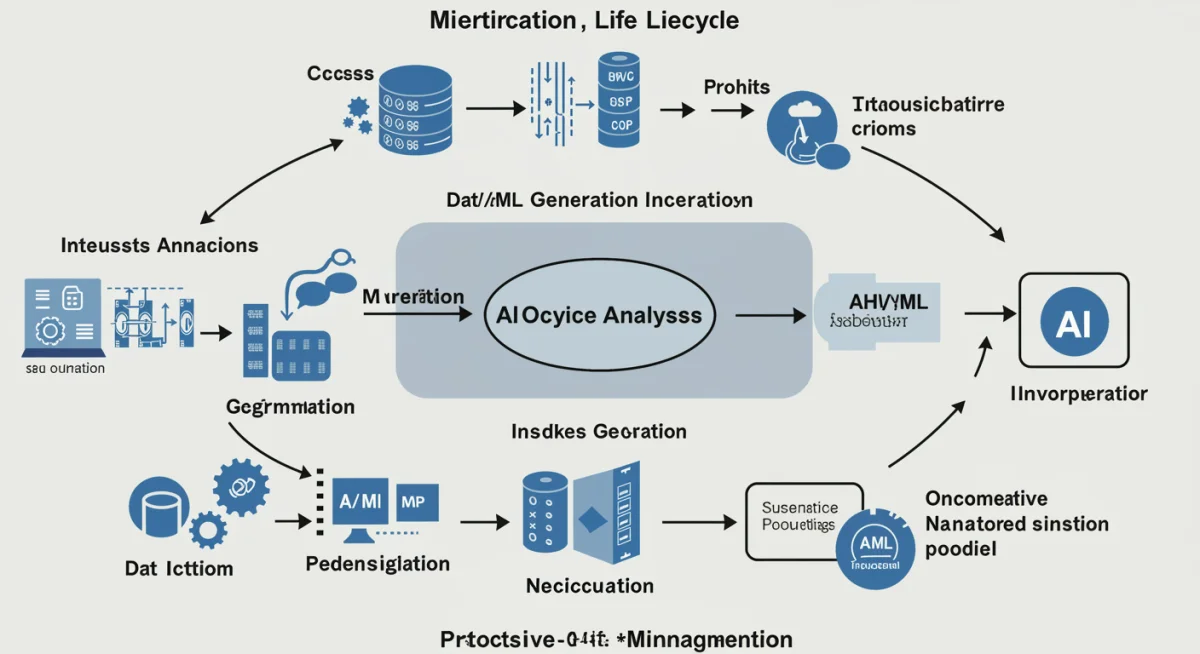
An effective AIOps solution typically comprises several core components that work in concert to deliver intelligent IT operations:
- Data Ingestion and Aggregation: Collecting data from diverse sources like servers, applications, networks, and cloud services.
- Machine Learning Algorithms: Applying AI and ML models to detect anomalies, correlate events, and predict future issues.
- Event Correlation and Noise Reduction: Filtering out irrelevant alerts and grouping related events into meaningful incidents.
- Root Cause Analysis: Automatically identifying the underlying cause of an incident, significantly speeding up resolution.
- Intelligent Automation: Triggering automated remediation actions or workflows based on identified issues.
By bringing these elements together, AIOps transforms raw operational data into actionable insights, enabling IT teams to make informed decisions and automate routine tasks. This not only reduces the burden on IT staff but also ensures a more resilient and efficient operational environment, directly contributing to the ambitious goal of AIOps incident reduction.
The Strategic Imperative: Why AIOps is Crucial for Incident Reduction
The digital age demands uninterrupted service availability and peak performance from IT systems. Any downtime or performance degradation can lead to significant financial losses, reputational damage, and decreased customer trust. This is where AIOps becomes a strategic imperative, offering a robust framework to proactively manage and reduce IT incidents.
Traditional IT operations often struggle with the sheer volume and velocity of data generated by modern distributed systems. Alert fatigue, manual triaging, and slow root cause analysis are common challenges that hinder efficient incident management. AIOps addresses these pain points by intelligently sifting through the noise, pinpointing critical issues, and even suggesting or executing resolutions automatically. This shift from reactive problem-solving to proactive prevention is fundamental to achieving substantial incident reduction.
The target of a 25% reduction in incidents by late 2025 is not merely aspirational; it reflects the tangible benefits that AIOps can deliver. This reduction translates into fewer service disruptions, improved user experience, and a more stable IT infrastructure. Furthermore, it frees up valuable IT resources from firefighting, allowing them to focus on innovation and strategic initiatives that drive business growth.
Measuring the Impact of AIOps on Incident Rates
To truly understand the value of AIOps, organizations must establish clear metrics for measuring its impact on incident rates. Key performance indicators (KPIs) include:
- Mean Time To Detect (MTTD): How quickly an issue is identified. AIOps significantly reduces this.
- Mean Time To Resolve (MTTR): The average time it takes to fix an incident. Automated remediation shortens MTTR.
- Number of Critical Incidents: The total count of high-severity incidents over a period.
- False Positive Rate: The number of alerts that do not represent actual problems. AIOps helps reduce alert fatigue.
By continuously monitoring these metrics, organizations can quantify the effectiveness of their AIOps implementation and demonstrate its direct contribution to achieving the desired incident reduction targets. The ability to predict and prevent outages is a game-changer, moving IT from a cost center to a strategic enabler.
How AIOps Achieves a 25% Reduction in Incidents
The promise of a 25% reduction in incidents by late 2025 through AIOps is rooted in its ability to transform IT operations across several critical dimensions. It’s not a single magic bullet but a combination of intelligent capabilities that work synergistically to enhance resilience and efficiency. AIOps platforms leverage machine learning to analyze vast datasets, identifying anomalies and predicting potential failures long before they impact users.
One of the most significant contributions of AIOps is its capacity for proactive problem-solving. Instead of waiting for an alert to be triggered by a system failure, AIOps can detect subtle deviations from normal behavior, such as unusual spikes in resource utilization or unexpected network traffic patterns. These early warnings allow IT teams to intervene and remediate issues before they escalate. This predictive capability is a cornerstone of effective AIOps incident reduction.
Predictive Analytics and Anomaly Detection
The core of AIOps’s incident reduction capability lies in its advanced analytical features:
- Baseline Establishment: AIOps systems learn the normal behavior of systems and applications over time.
- Anomaly Identification: Deviations from these baselines are flagged as potential issues, often undetectable by human operators.
- Pattern Recognition: Machine learning identifies recurring patterns in operational data that precede incidents, enabling predictive alerts.
- Root Cause Identification: AI algorithms can quickly pinpoint the exact cause of an issue, eliminating lengthy manual investigations.
By automating these complex analytical tasks, AIOps drastically reduces the Mean Time To Detect (MTTD) and Mean Time To Resolve (MTTR) incidents. This means that not only are problems found faster, but the time taken to fix them is also significantly shortened, directly contributing to the overall reduction in incident volume and impact.
Furthermore, AIOps enhances collaboration among IT teams by providing a unified view of the operational landscape and automating communication workflows. When an incident occurs, relevant teams are instantly notified with contextual information, accelerating the diagnostic process and ensuring a coordinated response. This streamlined approach to incident management is vital for achieving the ambitious targets set for AIOps incident reduction.
Implementing AIOps: Best Practices for Success
Implementing AIOps is a strategic undertaking that requires careful planning and execution to maximize its benefits and achieve the desired incident reduction. It’s not just about deploying a new tool; it involves a cultural shift towards data-driven decision-making and automation within IT operations. Organizations must adopt a phased approach, starting with clearly defined objectives and measurable outcomes.
A crucial first step is to assess the current state of IT operations, identifying pain points, existing tools, and data sources. This assessment will inform the scope of the AIOps implementation and help prioritize areas where the technology can deliver the most immediate impact. It’s also important to ensure that the data being fed into the AIOps platform is clean, consistent, and relevant, as the quality of insights directly depends on the quality of the input data.
Key Steps for a Successful AIOps Rollout
To ensure a smooth and effective AIOps implementation, consider these best practices:
- Define Clear Objectives: Establish specific, measurable, achievable, relevant, and time-bound (SMART) goals for AIOps, such as a 25% reduction in critical incidents.
- Start Small, Scale Gradually: Begin with a pilot project in a non-critical area to gain experience and demonstrate value before expanding.
- Integrate Data Sources: Connect all relevant data streams, including logs, metrics, events, and topology data, into a unified platform.
- Train Your Teams: Provide comprehensive training to IT staff on how to use and interact with the AIOps platform, fostering adoption and maximizing its potential.
- Continuously Optimize: AIOps is an ongoing journey. Regularly review performance, fine-tune algorithms, and adapt to evolving IT environments.
Successful AIOps implementations also require strong leadership support and a commitment to change management. IT teams must be empowered to embrace new ways of working, leveraging automation and AI to enhance their capabilities rather than fearing job displacement. By following these best practices, organizations can effectively harness AIOps to achieve significant improvements in incident management and operational efficiency, moving closer to the goal of AIOps incident reduction.
Overcoming Challenges in AIOps Adoption
While the benefits of AIOps are compelling, its adoption is not without challenges. Organizations often encounter hurdles ranging from data integration complexities to a lack of skilled personnel. Addressing these challenges proactively is essential for a successful AIOps journey and for realizing the promised AIOps incident reduction.
One of the primary challenges is the sheer volume and diversity of operational data. Modern IT environments generate data from countless sources, often in different formats and with varying levels of quality. Integrating and normalizing this data into a single, cohesive view for the AIOps platform can be a complex and time-consuming task. Without a robust data strategy, the effectiveness of the AI/ML algorithms can be severely hampered.
Common Hurdles and Solutions in AIOps Implementation
Organizations can overcome common challenges with strategic approaches:
- Data Silos: Implement data connectors and APIs to integrate disparate data sources. Adopt a unified data lake or platform approach.
- Lack of AI/ML Expertise: Invest in training existing staff, hire specialized data scientists, or partner with AIOps vendors offering managed services.
- Resistance to Change: Communicate the benefits of AIOps clearly, involve IT teams in the planning process, and highlight how it augments human capabilities.
- Vendor Lock-in: Choose flexible AIOps platforms that support open standards and integrate with a wide range of tools and technologies.
- Defining ROI: Establish clear KPIs and baselines before implementation to accurately measure and demonstrate the return on investment.
Another significant challenge is ensuring the explainability and trustworthiness of AI-driven insights. IT operators need to understand why an AIOps platform is suggesting a particular action or identifying an anomaly. Addressing this requires platforms with transparent algorithms and intuitive dashboards that provide context and justification for their recommendations. By systematically tackling these challenges, organizations can unlock the full potential of AIOps, paving the way for a more resilient and efficient IT landscape, and ultimately, a substantial AIOps incident reduction.
The Future Landscape: AIOps and Beyond 2025
As we look beyond late 2025, the role of AIOps in IT operations is set to become even more pervasive and sophisticated. The initial goal of a 25% reduction in incidents is just the beginning. The continuous evolution of AI and machine learning technologies will drive further advancements, making AIOps an indispensable component of any modern enterprise’s digital strategy. The focus will shift from merely incident reduction to proactive optimization and self-healing IT systems.
Future AIOps platforms are expected to incorporate more advanced predictive capabilities, moving towards prescriptive analytics. This means not only identifying potential issues but also automatically recommending the best course of action, and in many cases, autonomously executing remediation steps. Imagine an IT environment where systems can detect an impending failure, self-diagnose the problem, and apply a fix without any human intervention. This level of autonomy will redefine operational efficiency and reliability.
Emerging Trends and Innovations in AIOps
- Enhanced Observability: Deeper integration with observability tools to provide a richer, more granular view of system behavior.
- Edge AIOps: Deploying AI capabilities closer to the data source (at the edge) to enable faster processing and real-time responses.
- Generative AI for Operations: Utilizing generative AI to create incident summaries, build automated playbooks, and even generate code for remediation.
- Security AIOps: Expanding AIOps principles to cybersecurity, proactively detecting and responding to threats before they cause breaches.
- Green AIOps: Optimizing IT resource consumption to reduce energy waste and environmental impact.
The integration of AIOps with other emerging technologies, such as blockchain for secure data integrity and quantum computing for advanced analytics, will unlock unprecedented levels of insight and automation. This future vision emphasizes a highly intelligent, self-managing IT infrastructure that not only minimizes incidents but also continuously optimizes performance, cost, and security. The sustained focus on AIOps incident reduction will evolve into a broader mandate for continuous IT excellence, driving innovation and competitive advantage.
| Key Point | Brief Description |
|---|---|
| AIOps Definition | Leverages AI/ML for automated IT operations, enhancing speed and accuracy in incident management. |
| Incident Reduction Goal | Aims for a 25% reduction in IT incidents by late 2025 through proactive monitoring and automation. |
| Key Capabilities | Includes data ingestion, anomaly detection, event correlation, root cause analysis, and intelligent automation. |
| Future Outlook | Evolving towards prescriptive analytics, self-healing systems, and integration with emerging tech. |
Frequently Asked Questions About AIOps Incident Reduction
AIOps stands for Artificial Intelligence for IT Operations. It uses AI and machine learning to analyze vast amounts of operational data, identify anomalies, predict potential issues, and automate responses, thereby proactively preventing and rapidly resolving IT incidents to reduce their overall occurrence.
The ambitious target is to achieve a 25% reduction in IT incidents by late 2025. This goal highlights the significant impact AIOps is expected to have on improving IT operational efficiency and reliability across enterprises.
Key benefits include faster incident detection and resolution, reduced downtime, improved service availability, lower operational costs, and the ability for IT teams to shift from reactive firefighting to strategic initiatives and innovation.
Challenges often include integrating diverse data sources, a shortage of AI/ML expertise, resistance to change within IT teams, potential vendor lock-in, and the need to clearly define and measure the return on investment (ROI).
Beyond 2025, AIOps is expected to move towards more prescriptive analytics, self-healing systems, enhanced observability, and integration with generative AI and edge computing, leading to even greater autonomy and optimization in IT operations.
Conclusion
The journey towards a more resilient and efficient IT landscape is undeniably being paved by AIOps. The ambitious yet achievable goal of a 25% reduction in incidents by late 2025 underscores the transformative power of integrating artificial intelligence and machine learning into IT operations. By moving beyond traditional reactive approaches, AIOps empowers organizations to proactively detect, diagnose, and resolve issues, minimizing downtime and optimizing performance. While challenges in adoption exist, strategic planning, continuous optimization, and fostering a data-driven culture can unlock the immense potential of AIOps, positioning enterprises for sustained success in an increasingly complex digital world. The future of IT operations is intelligent, automated, and remarkably stable, thanks to the rise of AIOps.