Cybersecurity Fortification: AI Preventing 30% More Breaches by 2025

AI applications are rapidly transforming cybersecurity, projected to prevent 30% more breaches by early 2025 through advanced threat detection, intelligent automation, and predictive analytics, significantly enhancing digital defenses.
The digital landscape is under constant siege, with cyber threats evolving at an unprecedented pace. In this dynamic environment, the role of artificial intelligence in bolstering our defenses has become not just beneficial, but essential. Cybersecurity Fortification: AI Applications Preventing 30% More Breaches by Early 2025 is rapidly transitioning from a theoretical concept to a tangible reality, promising a significant leap in our collective digital security.
The Evolving Cyber Threat Landscape and AI’s Imperative Role
The sheer volume and sophistication of cyberattacks today demand a response that outpaces traditional security measures. From ransomware to advanced persistent threats, adversaries are leveraging automation and AI themselves, creating a complex battleground. This section explores why AI is no longer an optional add-on but a fundamental necessity in modern cybersecurity.
Traditional cybersecurity relies heavily on signatures and known patterns, a reactive approach that struggles against zero-day exploits and polymorphic malware. AI, however, introduces a proactive and adaptive layer, capable of learning and evolving alongside threats. It’s about shifting from merely responding to attacks to predicting and preventing them before they can inflict damage.
The Limitations of Legacy Systems
Many organizations still depend on security infrastructures built for a different era. These systems, while once effective, are increasingly overwhelmed by the scale and speed of contemporary attacks. They often generate a flood of alerts, leading to ‘alert fatigue’ among security analysts, making it difficult to distinguish genuine threats from false positives.
- Signature-based detection: Ineffective against novel threats.
- Manual analysis: Too slow for rapid, automated attacks.
- Limited scalability: Struggles with massive data volumes.
- Human error: A constant vulnerability in complex systems.
Why AI is the Game Changer
AI’s ability to process and analyze vast quantities of data at machine speed allows for the identification of subtle anomalies and patterns that human analysts might miss. This capability is crucial for detecting sophisticated attacks that blend into normal network traffic. It offers a scalable solution to a problem that is continuously growing in magnitude.
The integration of AI into cybersecurity platforms represents a paradigm shift, moving defense mechanisms from a static, rule-based system to a dynamic, intelligence-driven one. This adaptability is key to staying ahead of attackers who are constantly innovating their methods.
Predictive Threat Intelligence: Anticipating Attacks Before They Happen
One of AI’s most compelling applications in cybersecurity is its capacity for predictive threat intelligence. Instead of merely reacting to attacks, AI-driven systems can analyze historical data, current trends, and global threat feeds to forecast potential vulnerabilities and attack vectors. This proactive stance is vital for preventing breaches rather than just mitigating their impact.
By leveraging machine learning algorithms, cybersecurity platforms can identify emerging attack patterns and anticipate where and how future threats might manifest. This allows organizations to strengthen their defenses in critical areas before they become targets, fundamentally altering the security posture from reactive to predictive.
Machine Learning for Anomaly Detection
Machine learning models excel at establishing a baseline of ‘normal’ network behavior. Any deviation from this baseline, no matter how subtle, can then be flagged as a potential threat. This includes unusual login times, atypical data access patterns, or sudden spikes in network traffic originating from unexpected sources.
- Behavioral analytics: Identifies deviations from user and system norms.
- Network traffic analysis: Detects suspicious data flows and communication.
- Log file analysis: Uncovers hidden indicators of compromise.
- Endpoint monitoring: Tracks unusual activity on devices.
Leveraging Global Threat Feeds
AI systems can ingest and correlate data from countless global threat intelligence sources, including dark web monitoring, open-source intelligence, and proprietary threat databases. This allows for a comprehensive, real-time understanding of the global threat landscape, far beyond what any human team could manage.
The ability to rapidly process and interpret this vast amount of information enables AI to identify new attack campaigns, malware variants, and vulnerabilities as soon as they emerge, providing critical lead time for defensive actions. This collective intelligence is a powerful deterrent against sophisticated, coordinated attacks.
Automated Incident Response: Speeding Up Remediation
When a breach does occur, every second counts. AI-powered automated incident response systems can significantly reduce the time it takes to detect, contain, and remediate threats. This speed is crucial for minimizing damage and preventing the lateral movement of attackers within a network.
These systems can automatically isolate compromised endpoints, block malicious IP addresses, revoke access privileges, and even deploy patches, all without human intervention. This not only speeds up the response but also frees up human security analysts to focus on more complex strategic tasks.
AI in Security Orchestration, Automation, and Response (SOAR)
AI enhances SOAR platforms by providing intelligent decision-making capabilities. Instead of simply following predefined playbooks, AI can analyze the context of an incident and recommend or execute the most effective response actions based on real-time data and learned patterns.
- Automated triage: Prioritizes alerts based on severity and impact.
- Workflow automation: Executes predefined response actions for common incidents.
- Contextual analysis: Provides deeper insights into threat origins and behaviors.
- Adaptive playbooks: Adjusts response strategies based on evolving threats.
Reducing Human Workload and Error
By automating repetitive and time-sensitive tasks, AI reduces the burden on security teams, allowing them to allocate their expertise to more strategic challenges. This also minimizes the potential for human error, which can often exacerbate security incidents.
The consistent and rapid response provided by AI ensures that threats are addressed uniformly and efficiently, regardless of the time of day or the availability of human staff. This significantly strengthens an organization’s overall resilience against cyberattacks.
Enhanced Threat Detection: Uncovering Hidden Dangers
AI’s ability to analyze massive datasets and identify subtle patterns makes it uniquely suited for enhanced threat detection. It can uncover hidden dangers that would otherwise evade traditional security tools, from sophisticated phishing campaigns to advanced malware variants designed to bypass conventional defenses.
This includes identifying polymorphic malware, which constantly changes its code to avoid detection, and fileless attacks, which operate in memory without leaving traditional traces on disk. AI’s adaptive learning capabilities allow it to detect these elusive threats by focusing on their behavior rather than static signatures.
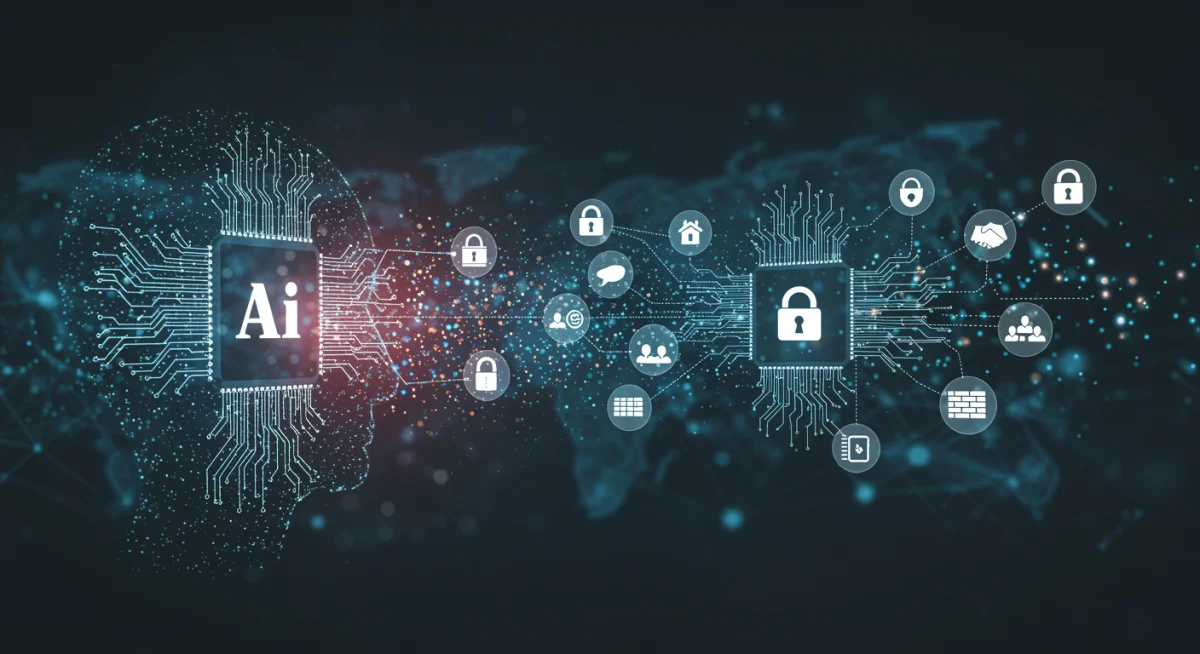
Behavioral Biometrics and User Entity Behavior Analytics (UEBA)
AI-driven UEBA solutions monitor user behavior to detect anomalies that might indicate a compromised account or insider threat. By creating a baseline of normal user activity, AI can flag suspicious actions, such as access to unusual resources or attempts to exfiltrate sensitive data.
- User profiling: Establishes typical user activity patterns.
- Peer group analysis: Compares user behavior to similar roles.
- Risk scoring: Assigns a threat level to anomalous activities.
- Real-time alerts: Notifies security teams of high-risk events instantly.
Detecting Advanced Persistent Threats (APTs)
APTs are characterized by their stealth and long-term presence within a network. AI can detect the subtle, low-and-slow activities associated with APTs, such as lateral movement, privilege escalation, and data staging, which often go unnoticed by signature-based systems.
By correlating seemingly disparate events across an organization’s network, AI can piece together the narrative of an APT attack, providing a comprehensive picture that enables effective remediation. This holistic view is critical for combating adversaries who are determined to remain undetected for extended periods.
Challenges and Ethical Considerations in AI Cybersecurity
While the benefits of AI in cybersecurity are undeniable, its implementation also brings a unique set of challenges and ethical considerations. These range from the potential for algorithmic bias to the need for robust data privacy safeguards and the ongoing development of AI-resistant attack techniques. Addressing these aspects is crucial for responsible AI deployment.
The ‘black box’ nature of some advanced AI models can make it difficult to understand why certain decisions are made, posing challenges for accountability and auditing. Furthermore, the reliance on vast datasets for training AI models necessitates stringent data governance to prevent misuse or compromise.
Algorithmic Bias and Fairness
AI models are only as unbiased as the data they are trained on. If historical cybersecurity data contains biases, the AI might inadvertently perpetuate or even amplify them, leading to unfair or ineffective security outcomes for certain user groups or systems. Ensuring fairness in AI is a paramount ethical concern.
- Representative data: Using diverse datasets to train models.
- Bias detection tools: Identifying and mitigating algorithmic biases.
- Human oversight: Continuous monitoring of AI decisions.
- Transparency: Striving for explainable AI models.
Data Privacy and Security
AI systems require access to vast amounts of sensitive data to be effective. This raises significant concerns about data privacy and the potential for this data to be compromised or misused. Robust encryption, access controls, and compliance with regulations like GDPR and CCPA are essential.
The very strength of AI—its ability to analyze data—becomes a vulnerability if that data is not adequately protected. Organizations must implement comprehensive data security frameworks to safeguard the information fed into and processed by AI cybersecurity systems.
The Future of Cybersecurity: A Synergistic Human-AI Approach
The vision for cybersecurity in early 2025 and beyond is not one where AI completely replaces human intelligence, but rather one where AI and human experts work in a tightly integrated, synergistic partnership. AI will handle the heavy lifting of data analysis and automated responses, while humans provide strategic oversight, critical thinking, and ethical judgment.
This collaborative model maximizes the strengths of both entities: AI’s speed and analytical power, combined with human intuition, creativity, and understanding of complex geopolitical and social contexts. The goal is to create a more resilient, adaptive, and intelligent defense system.
Augmenting Human Security Analysts
AI tools will serve as powerful assistants to human security analysts, providing them with enhanced visibility, faster insights, and the ability to focus on high-level strategic tasks rather than being bogged down by repetitive alert fatigue. This augmentation empowers analysts to be more effective and efficient.
- Threat intelligence enrichment: AI provides context and severity scoring.
- Automated reporting: Generates summaries of incidents and trends.
- Decision support: Recommends optimal response strategies.
- Skill enhancement: Frees analysts for advanced training and research.
Continuous Learning and Adaptation
The cybersecurity landscape is constantly evolving, and so too must our defenses. A synergistic human-AI approach ensures continuous learning and adaptation. AI models can be updated and refined by human experts, incorporating new threat intelligence and lessons learned from real-world incidents.
This iterative process of learning and improvement is crucial for maintaining an effective defense against sophisticated and ever-changing cyber threats. It ensures that the security posture remains robust and relevant in the face of ongoing innovation by adversaries.
| Key Aspect | Description |
|---|---|
| Predictive Analytics | AI analyzes data to forecast threats, preventing breaches proactively. |
| Automated Response | AI swiftly detects, contains, and remediates cyber incidents. |
| Enhanced Detection | Identifies subtle anomalies and hidden threats traditional methods miss. |
| Human-AI Synergy | Combines AI’s speed with human strategic oversight for robust defense. |
Frequently Asked Questions About AI in Cybersecurity
AI prevents breaches by analyzing vast data to detect anomalies, predicting future threats, and automating rapid responses. It identifies suspicious patterns that indicate an attack in progress, such as unusual network activity or unauthorized access attempts, often before humans can react, thereby stopping breaches at an early stage.
AI is highly effective against sophisticated threats like zero-day exploits, polymorphic malware, and advanced persistent threats (APTs). Its strength lies in detecting behavioral anomalies rather than relying solely on known signatures, making it adept at identifying novel and evasive attack techniques that bypass traditional security measures.
Potential downsides include algorithmic bias if training data is unrepresentative, the ‘black box’ problem where AI decisions lack transparency, and the risk of AI-generated false positives overwhelming security teams. Additionally, attackers may develop AI-resistant techniques, requiring continuous evolution of AI defenses.
By 2025, AI is expected to augment, rather than replace, human cybersecurity professionals. It will automate repetitive tasks, allowing humans to focus on complex problem-solving, strategic planning, and ethical considerations. The demand for skilled analysts who can manage and interpret AI insights will likely increase.
Effective AI cybersecurity models require diverse and high-quality data, including network traffic logs, endpoint activity data, user behavior profiles, threat intelligence feeds, and historical incident reports. This broad dataset enables AI to learn comprehensive patterns of both normal and malicious activities, improving its detection accuracy.
Conclusion
The journey towards robust cybersecurity in an increasingly digital world is intrinsically linked with the advancement and deployment of artificial intelligence. As we approach early 2025, the promise of Cybersecurity Fortification: AI Applications Preventing 30% More Breaches by Early 2025 is not merely an aspiration but a strategic imperative. AI’s capabilities in predictive analytics, automated response, and enhanced threat detection are fundamentally reshaping our defense mechanisms. While challenges exist, a synergistic approach combining AI’s computational power with human expertise will define the future of digital security, creating a safer and more resilient online environment for all.