US Self-Healing Composites: 4 Innovations for 2025 Applications
US Self-Healing Composites are ushering in a new era of material science, with four pivotal innovations in 2025 poised to redefine durability and performance across diverse industries.
Imagine materials that can mend themselves, extending their lifespan and reducing the need for costly replacements. This isn’t science fiction; it’s the rapidly advancing reality of US Self-Healing Composites. These revolutionary materials are set to redefine how we approach design, manufacturing, and maintenance across countless sectors, promising a future where infrastructure, vehicles, and even medical devices possess an inherent ability to repair damage. The United States is at the forefront of this exciting field, with several groundbreaking innovations expected to hit mainstream applications by 2025. This article delves into four such remarkable advancements, exploring their underlying science, potential impacts, and what they mean for a more resilient future.
The Dawn of Self-Healing Materials: A Paradigm Shift
The concept of self-healing materials represents a fundamental shift from traditional engineering. Instead of designing for strength and then repairing damage, we are now creating materials that actively respond to and mitigate damage on their own. This inherent capability promises significant advantages, from enhanced safety to reduced environmental impact.
Traditional materials degrade over time, often due to fatigue, corrosion, or environmental stressors. These issues lead to structural failures, expensive repairs, and a substantial waste stream. Self-healing composites, however, offer a compelling alternative by integrating mechanisms that can detect and repair damage at various scales, from microscopic cracks to larger structural compromises.
Understanding the Mechanisms of Self-Healing
Self-healing mechanisms typically fall into two broad categories: intrinsic and extrinsic. Intrinsic healing involves the material’s inherent ability to self-repair, often through reversible chemical bonds or molecular rearrangements. Extrinsic healing, on the other hand, relies on embedded healing agents that are released upon damage.
- Intrinsic Healing: Often involves polymers with dynamic bonds that can re-form after breaking, like certain supramolecular polymers or vitrimers.
- Extrinsic Healing: Utilizes microcapsules or vascular networks filled with healing agents (monomers, catalysts) that rupture or release their contents upon crack formation, initiating a repair process.
- Autonomic Healing: Refers to self-healing processes that occur without external intervention, mimicking biological self-repair.
- Stimuli-Responsive Healing: Requires an external trigger, such as heat, light, or pH change, to activate the healing mechanism.
The development of these mechanisms is complex, requiring precise control over material synthesis and integration. Researchers are constantly refining these techniques to achieve faster, more efficient, and more robust healing capabilities, pushing the boundaries of what materials can do. The ultimate goal is to create materials that are not only strong but also inherently adaptive and durable.
This paradigm shift is not just about extending material life; it’s about fundamentally changing our relationship with manufactured goods and infrastructure. Imagine bridges that repair their own micro-cracks or aircraft components that heal minor fatigue damage in flight. Such advancements could lead to unprecedented levels of reliability and safety, while also fostering greater sustainability through reduced material consumption and waste.
Innovation 1: Microcapsule-Based Healing for Aerospace
One of the most promising areas in US Self-Healing Composites is the development of microcapsule-based healing systems for aerospace applications. The aerospace industry demands materials with exceptional strength-to-weight ratios and impeccable reliability. Fatigue and micro-cracks are common issues in aircraft structures, leading to rigorous inspection schedules and expensive maintenance.
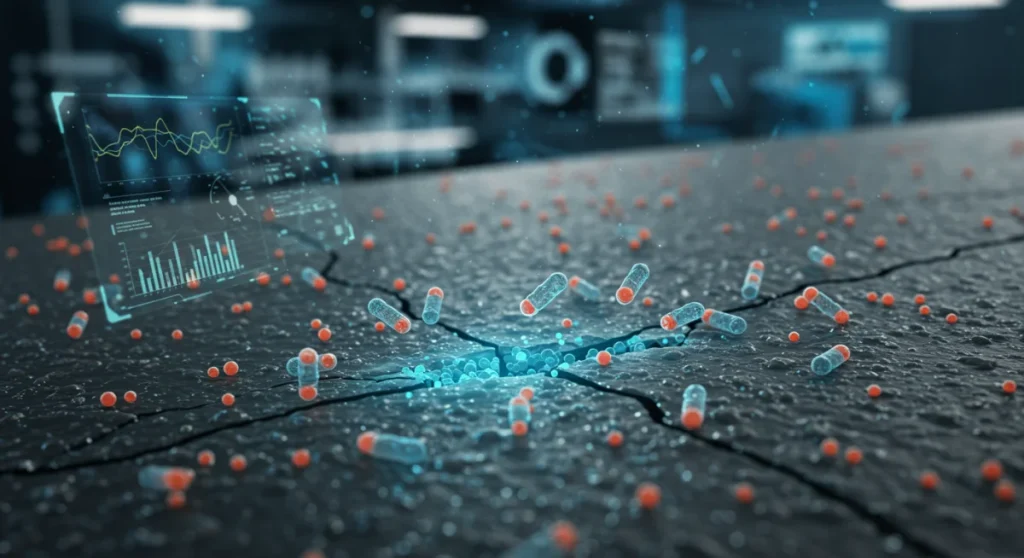
Researchers in the US have made significant strides in embedding microscopic capsules containing healing agents within composite matrices. When a crack forms, it ruptures these capsules, releasing the healing agent into the damaged area. A catalyst, also embedded in the composite, then triggers a polymerization reaction, effectively filling and bonding the crack.
Advanced Microcapsule Design and Integration
The success of these systems hinges on the design of the microcapsules themselves. They must be robust enough to withstand the manufacturing process of the composite yet brittle enough to rupture precisely when a crack propagates through them. Furthermore, the healing agents and catalysts must be chemically stable within the composite matrix and react efficiently at ambient conditions.
- Optimized Shell Materials: Developing capsule shells that are strong yet responsive to crack propagation, often using urea-formaldehyde or poly(melamine-formaldehyde) resins.
- Tailored Healing Agents: Utilizing various epoxy resins or dicyclopentadiene (DCPD) as healing agents, chosen for their rapid polymerization and strong adhesive properties.
- Precise Catalyst Dispersion: Ensuring an even distribution of catalysts (e.g., Grubbs’ catalyst for DCPD) throughout the composite to guarantee efficient healing.
The integration of these microcapsules into aerospace-grade composites, such as carbon fiber reinforced polymers (CFRPs), is a complex engineering challenge. It requires careful consideration of capsule size, distribution, and compatibility with the composite’s resin system to maintain structural integrity while providing healing functionality. By 2025, we anticipate seeing these systems integrated into non-critical aerospace components, paving the way for wider adoption.
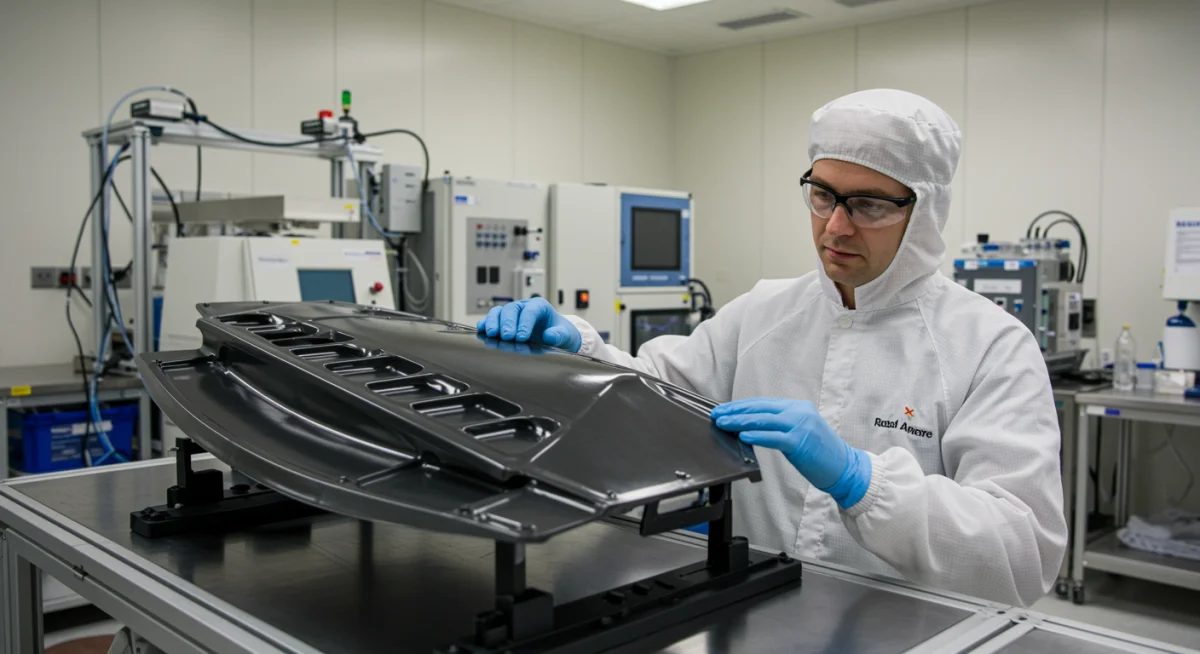
The implications for aerospace are profound. Reduced maintenance costs, extended component lifespan, and enhanced safety due to continuous self-repair could revolutionize aircraft design and operational efficiency. This innovation promises to make air travel even safer and more sustainable.
Innovation 2: Vascular Network Composites for Infrastructure
Beyond aerospace, another critical area benefitting from US Self-Healing Composites is large-scale infrastructure. Bridges, roads, and buildings are constantly subjected to environmental stresses, leading to material degradation and costly repairs. Vascular network composites offer a solution by mimicking biological circulatory systems to deliver healing agents to damaged areas.
Unlike microcapsules, which are consumed upon rupture, vascular networks consist of interconnected channels embedded within the material. These channels can be pre-filled with healing agents or refilled after an initial healing event, offering a more sustainable and potentially repeatable healing mechanism. This approach is particularly attractive for structures that experience continuous micro-damage accumulation.
Designing Resilient Self-Healing Infrastructure
The creation of these intricate vascular networks typically involves advanced manufacturing techniques like 3D printing or sacrificial templating. The goal is to create a network that is both robust enough to withstand structural loads and efficient enough to deliver healing agents precisely where needed.
- 3D Printed Channels: Utilizing additive manufacturing to create complex, interconnected channels within concrete or polymer matrices.
- Sacrificial Templating: Embedding dissolvable filaments during composite fabrication, which are later removed to create hollow channels.
- Pressure-Driven Flow: Designing the network to allow healing agents to flow under slight pressure into crack sites, ensuring thorough infiltration.
By 2025, we expect to see early deployments of these vascular network composites in critical infrastructure projects, such as self-healing concrete for bridge decks or roadways. The ability for these structures to autonomously repair minor cracks caused by thermal expansion, contraction, or traffic loads could dramatically extend their service life and reduce the need for manual inspections and repairs. This not only saves taxpayer money but also minimizes disruption to daily life caused by construction.
The long-term vision is for self-healing infrastructure to become the norm, creating a more resilient and sustainable built environment. The challenges lie in scaling up production and ensuring the longevity and refillability of these complex systems, but ongoing US-based research is rapidly overcoming these hurdles.
Innovation 3: Bio-Inspired Self-Healing for Biomedical Devices
The biomedical field is another frontier where US Self-Healing Composites are poised to make a significant impact. From implants to prosthetics, the failure of medical devices can have severe consequences for patients. Materials that can self-repair offer the promise of safer, more durable, and biocompatible solutions.
Bio-inspired self-healing materials draw lessons from natural biological systems, which exhibit remarkable self-repair capabilities. Researchers are developing polymers and hydrogels that can autonomously heal damage, often through reversible bonds or networks that can reorganize themselves. This approach is particularly relevant for soft tissues and flexible implants.
Mimicking Nature’s Repair Mechanisms
Key to these innovations is the use of materials that are not only biocompatible but also possess dynamic chemical bonds. These bonds allow the material to break and re-form, effectively mending itself without external intervention. Examples include supramolecular polymers, hydrogels with dynamic covalent bonds, and even materials that can respond to physiological cues.
- Supramolecular Polymers: Utilizing non-covalent interactions (e.g., hydrogen bonding, metal-ligand coordination) that can reversibly break and re-form, enabling self-healing.
- Dynamic Covalent Networks: Incorporating reversible covalent bonds (e.g., Diels-Alder reactions, disulfide bonds) into polymer chains to achieve autonomous repair.
- Stimuli-Responsive Hydrogels: Developing hydrogels that can heal in response to changes in pH, temperature, or the presence of specific biomolecules, mimicking cellular repair.
By 2025, we anticipate seeing these bio-inspired self-healing composites integrated into various biomedical applications. This could include self-healing wound dressings that adapt to the healing process, more durable prosthetic limbs that repair minor wear and tear, or even advanced tissue engineering scaffolds that can self-repair and better integrate with natural tissues. The focus is on materials that can extend the functional life of devices within the body, reducing the need for revision surgeries and improving patient outcomes.
The challenges in this area include ensuring long-term biocompatibility, controlling the healing kinetics in a physiological environment, and demonstrating the efficacy and safety of these materials through rigorous testing. However, the potential to enhance patient quality of life and reduce healthcare costs is a powerful driver for continued innovation.
Innovation 4: Thermoset Polymer Healing for Electronics
The electronics industry faces unique challenges related to material durability, particularly with flexible electronics and printed circuit boards. Micro-cracks and delamination can lead to device failure, especially in components subjected to repeated bending or thermal cycling. US Self-Healing Composites are offering a novel solution through thermoset polymer healing.
Thermoset polymers, once cured, form irreversible chemical bonds, making them highly stable but traditionally difficult to repair. However, recent US innovations have focused on incorporating reversible chemistries or encapsulated healing agents into thermoset matrices, allowing them to self-repair without compromising their structural integrity or electrical properties.
Enabling Durable and Flexible Electronics
The key to thermoset self-healing lies in designing the polymer network to either contain dynamic bonds or to release healing agents effectively within the rigid structure. This is crucial for applications like flexible displays, wearable sensors, and robust electronic packaging, where material integrity directly impacts performance.
- Dynamic Cross-linking: Introducing reversible cross-links (e.g., using specific Diels-Alder adducts or disulfide bonds) that allow the thermoset network to re-form upon heating or UV exposure.
- Encapsulated Resins: Embedding microcapsules containing uncured thermoset resin and a catalyst within the primary thermoset matrix. Damage ruptures the capsules, initiating localized re-curing.
- Conductive Healing Agents: Developing healing agents that not only repair mechanical damage but also restore electrical conductivity, crucial for electronic applications.
By 2025, we anticipate seeing these self-healing thermoset composites integrated into high-value electronic components. This could include flexible smartphone screens that can heal minor scratches, circuit boards that repair micro-fractures, or even more durable drone components that withstand harsh operating conditions. The ability to autonomously repair damage in electronics can significantly extend product lifespans, reduce electronic waste, and enable new designs for flexible and resilient devices.
The ongoing research focuses on optimizing healing efficiency, ensuring compatibility with existing manufacturing processes, and verifying the long-term reliability of these self-healing electronic materials. The promise of electronics that can literally fix themselves is a testament to the ingenuity driving US material science.
The Broader Impact and Future Outlook for US Self-Healing Composites
The innovations in US Self-Healing Composites discussed here represent just a fraction of the exciting developments in this field. Their collective impact extends far beyond individual applications, promising a future of enhanced sustainability, economic efficiency, and safety across numerous industries. The ability of materials to autonomously repair damage means less material waste, fewer replacements, and a significant reduction in maintenance costs and downtime.
From a sustainability perspective, self-healing materials align perfectly with a circular economy model, promoting longevity and resource efficiency. Instead of a linear ‘make-use-dispose’ cycle, we move towards a ‘make-use-heal-reuse’ paradigm. This has profound implications for reducing our ecological footprint and conserving valuable resources.
Economically, the benefits are clear. Industries that adopt these materials will see substantial savings in repair and replacement costs, while also gaining a competitive edge through more durable and reliable products. The development of self-healing technologies also fuels job creation in research, manufacturing, and specialized engineering.
Challenges and Opportunities Ahead
While the future of self-healing composites is bright, several challenges remain. Scaling up production, ensuring cost-effectiveness, and developing standardized testing methodologies are critical for widespread adoption. Furthermore, integrating these complex materials into existing manufacturing workflows requires significant investment and innovation.
- Scalability: Moving from laboratory prototypes to industrial-scale production remains a key hurdle for many self-healing technologies.
- Cost-Effectiveness: The initial cost of self-healing materials can be higher than traditional alternatives, requiring a strong business case based on long-term savings.
- Long-Term Performance: Demonstrating consistent and repeatable healing performance over extended periods and multiple damage-healing cycles is crucial.
- Standardization: Developing industry standards and testing protocols to accurately assess and certify the self-healing capabilities of materials.
Despite these challenges, the opportunities presented by self-healing composites are immense. Continued investment in research and development, particularly in the US, will undoubtedly lead to even more sophisticated and versatile materials. Collaboration between academia, industry, and government agencies will be essential to accelerate the transition of these innovations from the lab to real-world applications.
The vision of a world where materials actively contribute to their own longevity and resilience is rapidly becoming a reality, largely thanks to the pioneering work in US Self-Healing Composites. Their impact will be felt for generations, ushering in an era of unprecedented material intelligence and sustainability.
| Key Innovation | Brief Description |
|---|---|
| Microcapsule-Based Healing | Embedded capsules release healing agents upon crack formation, primarily for aerospace composites. |
| Vascular Network Composites | Mimic biological systems with interconnected channels to deliver and potentially refill healing agents for infrastructure. |
| Bio-Inspired Self-Healing | Utilizes reversible bonds in polymers and hydrogels for biomedical devices, mimicking natural repair. |
| Thermoset Polymer Healing | Enables self-repair in rigid thermoset polymers for electronics, using dynamic bonds or encapsulated agents. |
Frequently Asked Questions About Self-Healing Composites
Self-healing composites are advanced materials designed to autonomously repair damage, such as cracks, without external intervention. They are crucial for extending material lifespan, reducing maintenance costs, enhancing safety, and promoting sustainability across various industries by preventing catastrophic failures and minimizing waste.
US innovations often lead in integrating diverse healing mechanisms, particularly in high-stakes sectors like aerospace and biomedical. They focus on scalability, robust long-term performance, and practical application, driven by strong academic-industrial partnerships and significant R&D investment, pushing the boundaries of material intelligence.
By 2025, aerospace will benefit from enhanced safety and reduced maintenance. Infrastructure will gain longer-lasting bridges and roads. Biomedical devices will see more durable implants and prosthetics. The electronics sector will enjoy more resilient and flexible components, significantly impacting product longevity and reliability.
Yes, self-healing composites significantly contribute to sustainability. By extending material lifespans and reducing the need for replacements, they lower raw material consumption, decrease manufacturing energy requirements, and minimize waste generation. This aligns with circular economy principles, making them a key component of future sustainable technologies.
Key challenges include scaling production to industrial levels, ensuring cost-effectiveness compared to traditional materials, proving long-term healing efficacy over multiple cycles, and establishing standardized testing and certification methods. Overcoming these will be crucial for broader market integration and acceptance.
Conclusion
The rapid advancements in US Self-Healing Composites are not merely incremental improvements; they represent a fundamental re-imagining of material science. By 2025, the four innovations highlighted—microcapsule-based healing for aerospace, vascular network composites for infrastructure, bio-inspired materials for biomedical devices, and thermoset polymer healing for electronics—are poised to move from cutting-edge research into tangible, real-world applications. These developments promise a future where materials are not static entities but dynamic, responsive systems capable of maintaining their integrity over extended periods. This shift will lead to unprecedented levels of durability, safety, and sustainability, fundamentally transforming industries and improving the quality of life. The United States continues to be a global leader in this transformative field, laying the groundwork for a more resilient and resource-efficient future.