AI for Cyber Threats: 5 Advanced Applications for US Businesses in Q4 2026
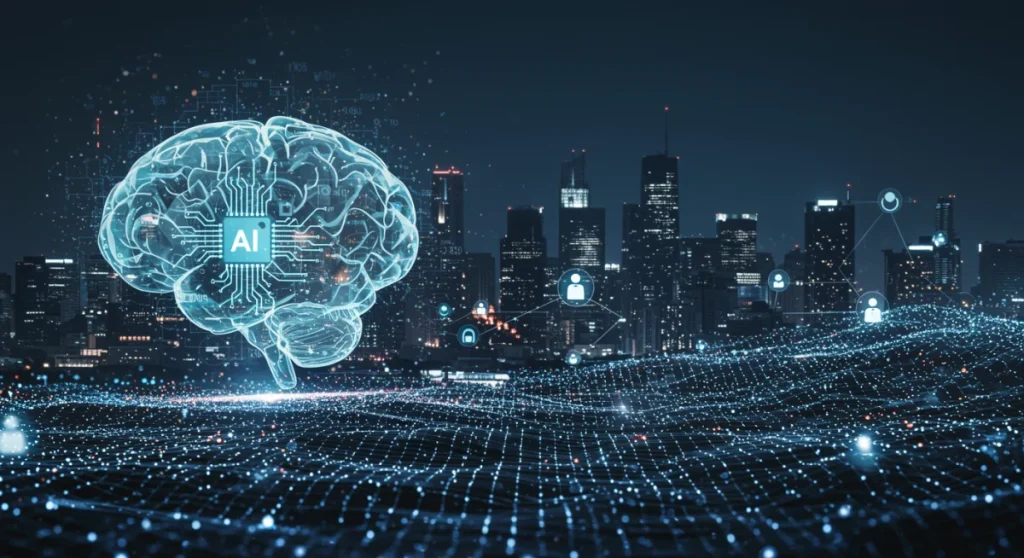
By Q4 2026, U.S. businesses will leverage advanced AI applications for robust cyber threat detection and prevention, transforming their security postures against evolving digital dangers.
As the digital landscape continues its rapid evolution, the challenge of detecting and preventing cyber threats has become paramount for U.S. businesses. By Q4 2026, artificial intelligence (AI) will not just be a supplementary tool but a foundational element in safeguarding enterprise data and infrastructure. This article explores five advanced AI applications poised to revolutionize cybersecurity for American companies.
The evolving cyber threat landscape for U.S. businesses
The complexity and sophistication of cyber threats are escalating at an unprecedented rate, making traditional security measures increasingly insufficient. U.S. businesses, from small startups to multinational corporations, are prime targets for a diverse array of malicious actors, including state-sponsored groups, organized crime syndicates, and individual hackers. These threats range from ransomware and phishing attacks to sophisticated supply chain compromises and zero-day exploits, each capable of inflicting severe financial, reputational, and operational damage.
The sheer volume of potential attack vectors, coupled with the rapid development of new evasion techniques, demands a proactive and adaptive defense strategy. Manual monitoring and rule-based systems simply cannot keep pace with the dynamic nature of modern cyber warfare. This creates an urgent need for intelligent, automated solutions that can identify and neutralize threats before they can fully materialize.
The economic imperative of robust cybersecurity
The financial ramifications of a data breach or cyberattack can be catastrophic. Beyond the immediate costs of remediation, legal fees, and regulatory fines, businesses often face long-term impacts such as loss of customer trust, decreased market share, and impaired brand reputation. For U.S. businesses, particularly those operating in critical infrastructure sectors or handling sensitive consumer data, the stakes are exceptionally high. Investing in advanced cybersecurity, driven by AI, is no longer an option but a strategic imperative to ensure business continuity and resilience in an increasingly hostile digital environment.
Understanding the current and future threat landscape is the first step towards building an impregnable defense. AI offers the promise of a paradigm shift, moving from reactive incident response to predictive threat intelligence and automated prevention. This proactive stance is essential for maintaining a competitive edge and protecting valuable assets in the digital age.
AI application 1: predictive threat intelligence and behavioral analytics
One of the most transformative applications of AI in cybersecurity for U.S. businesses by Q4 2026 will be predictive threat intelligence combined with advanced behavioral analytics. This powerful duo allows organizations to move beyond reactive defenses, anticipating attacks before they occur and understanding user and system behaviors to flag anomalies.
Predictive threat intelligence leverages machine learning algorithms to analyze vast datasets of global cyber attack patterns, vulnerabilities, and attacker methodologies. By identifying emerging trends and correlating seemingly disparate pieces of information, AI can forecast potential threats specific to an organization’s industry, geographic location, and technological stack. This foresight enables security teams to harden their defenses proactively, patching vulnerabilities and implementing controls before they are exploited.
Unveiling anomalies through behavioral baselining
- User and Entity Behavior Analytics (UEBA): AI systems establish a baseline of normal behavior for every user, device, and application within a network. This baseline includes login times, access patterns, data transfer volumes, and resource utilization.
- Anomaly Detection: Any deviation from these established baselines, no matter how subtle, triggers an alert. For instance, a user suddenly accessing sensitive files outside their typical working hours or from an unusual location would be flagged.
- Contextual Analysis: AI doesn’t just flag anomalies; it enriches them with context, understanding if a deviation is benign (e.g., a legitimate remote login) or malicious (e.g., an insider threat or compromised account).
The strength of this application lies in its ability to detect ‘unknown unknowns’ – threats that don’t match any signature-based detection. By focusing on behavior rather than static indicators, AI can uncover sophisticated, stealthy attacks that would otherwise bypass traditional security tools. For U.S. businesses, this means a significant reduction in dwell time for attackers and a much higher probability of preventing breaches.
AI application 2: automated incident response and remediation
The speed at which cyber incidents unfold often overwhelms human security teams, leading to prolonged response times and increased damage. By Q4 2026, advanced AI applications will revolutionize incident response for U.S. businesses, providing automated capabilities for containment, analysis, and initial remediation steps. This significantly reduces the window of vulnerability and minimizes the impact of successful attacks.
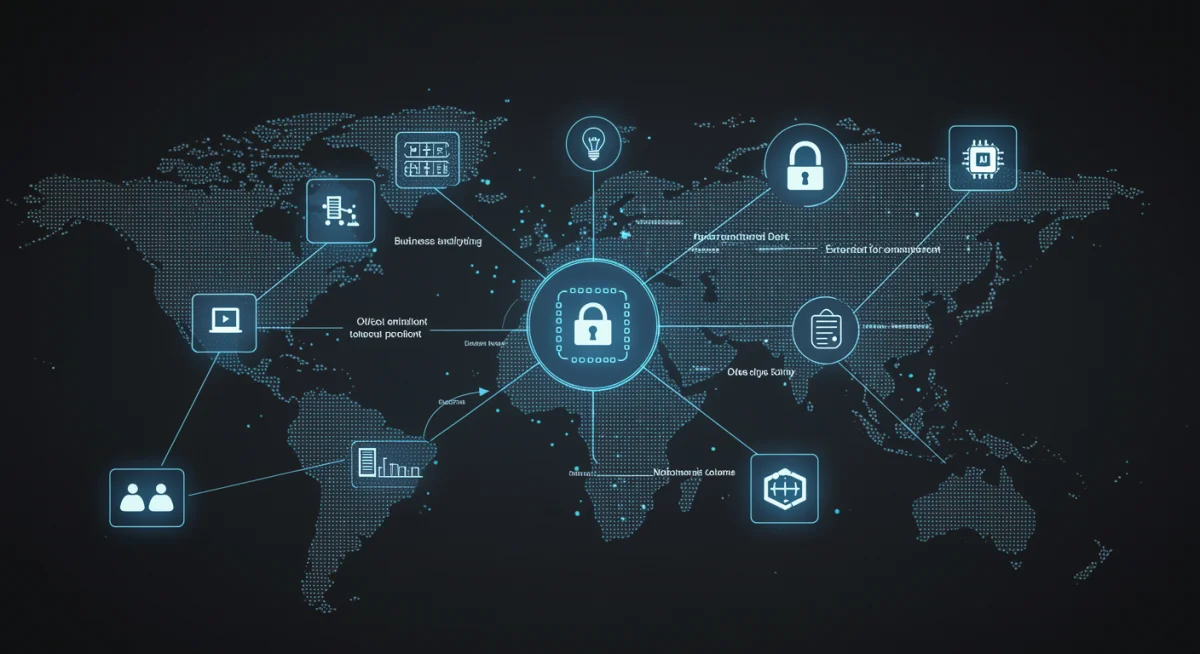
Security Orchestration, Automation, and Response (SOAR) platforms, powered by AI, will be central to this shift. These systems can ingest alerts from various security tools, correlate them to form a comprehensive understanding of an incident, and then execute predefined or AI-generated response playbooks. This automation frees up human analysts to focus on more complex strategic tasks, rather than repetitive, time-consuming manual actions.
Key automated response capabilities
- Threat Containment: AI can automatically isolate compromised endpoints, block malicious IP addresses, or disable user accounts exhibiting suspicious behavior, preventing lateral movement of threats.
- Automated Forensics: When an incident occurs, AI can rapidly collect and analyze forensic data, identifying the root cause, scope, and impact of an attack much faster than manual methods.
- Policy Enforcement: AI systems can dynamically adjust security policies in real-time based on threat intelligence, ensuring that defenses are always optimized against the latest attack vectors.
This level of automation ensures a consistent and rapid response to incidents, reducing human error and improving overall security posture. For U.S. businesses, particularly those with lean security teams, AI-driven automated incident response will be indispensable in managing the ever-increasing volume of alerts and sophisticated attacks.
AI application 3: intelligent vulnerability management and patching
Vulnerability management is a critical but often overwhelming task for U.S. businesses. The sheer volume of new vulnerabilities discovered daily, coupled with the complexity of modern IT environments, makes it challenging to prioritize and patch effectively. By Q4 2026, AI will transform this process, offering intelligent solutions for identifying, prioritizing, and even automating the patching of vulnerabilities.
AI-powered vulnerability scanners go beyond simple signature matching. They can analyze code for logical flaws, predict which vulnerabilities are most likely to be exploited based on current threat intelligence, and assess the potential impact of a vulnerability within a specific network context. This contextual understanding allows businesses to move from a reactive ‘patch everything’ approach to a strategic ‘patch what matters most’ strategy.
Optimizing the patching process
- Risk-Based Prioritization: AI algorithms can assign a dynamic risk score to each vulnerability, considering factors like exploitability, potential impact on critical assets, and existing compensating controls. This ensures that the most dangerous vulnerabilities are addressed first.
- Predictive Patching: Some advanced AI systems can even predict potential conflicts or issues that might arise from applying a patch, allowing for more informed decision-making and minimizing service disruptions.
- Automated Patch Deployment: In less critical scenarios, AI can integrate with existing IT infrastructure to automatically deploy patches, significantly reducing the manual workload and ensuring timely remediation.
The benefits for U.S. businesses are clear: reduced attack surface, more efficient use of security resources, and a stronger overall security posture. Intelligent vulnerability management, driven by AI, enables organizations to stay one step ahead of attackers by proactively eliminating known weaknesses.
AI application 4: secure software development and code analysis
The adage “shift left” in cybersecurity emphasizes integrating security practices earlier in the software development lifecycle. By Q4 2026, AI will be instrumental in enabling U.S. businesses to build inherently more secure applications through intelligent code analysis and automated security testing. This proactive approach significantly reduces the cost and effort of fixing vulnerabilities later in the development process.
AI-powered static application security testing (SAST) and dynamic application security testing (DAST) tools are becoming increasingly sophisticated. They can analyze millions of lines of code, identify complex logical flaws, and detect security vulnerabilities that might be missed by human reviewers or traditional rule-based scanners. This includes identifying insecure coding practices, potential injection flaws, and misconfigurations.
Integrating AI into DevOps for enhanced security
The seamless integration of AI into Continuous Integration/Continuous Deployment (CI/CD) pipelines means that security checks become an automatic part of every code commit. This ensures that security is woven into the very fabric of the software, rather than being an afterthought. AI can provide immediate feedback to developers, allowing them to correct issues as they write code, significantly reducing the introduction of new vulnerabilities.
Furthermore, AI can learn from past vulnerabilities and exploits, automatically updating its detection capabilities to recognize new patterns of insecure code. This continuous learning aspect makes the security testing process more effective over time. For U.S. businesses developing their own software or relying on third-party integrations, AI-driven secure development practices are crucial for minimizing the risk of application-layer attacks.
AI application 5: deception technology and honeypots
Advanced AI applications are also enhancing deception technology, a proactive cybersecurity strategy that creates traps and lures for attackers. By Q4 2026, U.S. businesses will leverage AI-powered honeypots and deception networks to detect, analyze, and even misdirect cyber threats, gaining invaluable intelligence while protecting their real assets.
Traditional honeypots can be resource-intensive to maintain and often require significant manual intervention. AI changes this by automating the deployment, management, and analysis of deception assets. AI can dynamically create realistic-looking decoy systems, networks, and data, making them indistinguishable from legitimate assets to an attacker. When an attacker interacts with these decoys, AI immediately detects the intrusion and gathers detailed information about their tactics, techniques, and procedures (TTPs).
How AI elevates deception technology
- Dynamic Honeypot Generation: AI can rapidly deploy and customize virtual honeypots based on the specific threat landscape and the organization’s real infrastructure, making them highly convincing.
- Automated Threat Intelligence Gathering: When an attacker engages with a decoy, AI monitors their every move, collecting data on their tools, methods, and objectives without risking real systems.
- Attacker Misdirection: Advanced AI can even guide attackers through a fabricated environment, wasting their time and resources, and providing opportunities for security teams to learn and adapt their defenses.
This application provides a unique advantage by turning the tables on attackers. Instead of constantly defending, businesses can actively engage and learn from adversaries in a safe, controlled environment. For U.S. businesses seeking a proactive and intelligent defense, AI-enhanced deception technology offers a powerful new layer of security.
| Key AI Application | Brief Description |
|---|---|
| Predictive Threat Intelligence | AI analyzes global cyber patterns to forecast and prevent future attacks. |
| Automated Incident Response | AI-driven systems rapidly contain, analyze, and remediate cyber incidents. |
| Intelligent Vulnerability Management | AI prioritizes and automates patching of critical vulnerabilities. |
| AI-Powered Deception Tech | AI creates dynamic honeypots to detect attackers and gather intelligence. |
Frequently asked questions about AI in cybersecurity
AI excels by analyzing vast datasets, identifying subtle patterns and anomalies that traditional signature-based systems often miss. It learns and adapts to new threats, offering proactive and predictive capabilities that static rules cannot match, significantly enhancing detection accuracy and speed.
Key challenges include the high initial investment, the need for specialized AI talent, ensuring data privacy for training models, and integrating AI solutions with existing legacy systems. Overcoming these requires careful planning and strategic resource allocation.
While AI can automate many aspects of incident response, human oversight remains crucial. AI can handle routine tasks and initial containment, but complex decision-making, strategic analysis, and legal considerations often require human expertise and judgment to ensure optimal outcomes.
AI’s behavioral analytics can detect unusual system or network activity indicative of a zero-day exploit, even if the specific vulnerability is unknown. By identifying anomalous behaviors rather than relying on signatures, AI offers a proactive defense against novel threats.
Machine learning is the backbone of AI-driven cybersecurity, enabling systems to learn from data without explicit programming. It powers anomaly detection, predictive analytics, and automated response mechanisms, allowing AI to continuously improve its effectiveness in threat identification and mitigation.
Conclusion
The integration of advanced AI applications into cybersecurity strategies is no longer a futuristic concept but a present necessity for U.S. businesses. By Q4 2026, the five applications discussed—predictive threat intelligence, automated incident response, intelligent vulnerability management, secure software development, and AI-powered deception technology—will form the bedrock of robust digital defense. These innovations promise to transform the cybersecurity landscape, enabling organizations to proactively detect, prevent, and respond to cyber threats with unprecedented efficiency and intelligence. Embracing AI is not merely an upgrade; it’s a fundamental shift towards a more resilient and secure digital future for American enterprises.