Advanced Cybersecurity: Protecting Future Tech in 2026

Implementing robust advanced cybersecurity strategies is paramount for protecting future technologies in 2026, necessitating a multi-faceted approach combining AI-driven defenses, stringent zero trust frameworks, and a strong focus on human element security to counter evolving threats effectively.
The landscape of digital threats is evolving at an unprecedented pace, making advanced cybersecurity strategies not just beneficial, but absolutely essential for protecting future tech in 2026. As innovations like quantum computing, ubiquitous AI, and hyper-connected IoT devices become mainstream, the attack surface expands dramatically. How can organizations and individuals stay ahead of sophisticated adversaries?
The Evolving Threat Landscape in 2026
As we gaze into 2026, the digital realm is characterized by an intricate web of interconnected devices, sophisticated AI systems, and vast data streams. This technological acceleration, while bringing immense benefits, simultaneously ushers in a new era of cyber threats. Attackers are no longer just exploiting known vulnerabilities; they are leveraging advanced techniques, often powered by AI themselves, to breach defenses with unprecedented speed and stealth.
The sheer volume of data generated and processed by future tech presents an irresistible target. From personal health records on wearables to critical infrastructure managed by smart grids, sensitive information is everywhere. The stakes are higher than ever, with potential breaches leading to catastrophic financial losses, reputational damage, and even threats to national security. Understanding the nature of these evolving threats is the first step in formulating effective defense strategies.
AI-Powered Attacks and Countermeasures
Artificial intelligence, while a powerful tool for defense, is also being weaponized by malicious actors. AI-powered malware can adapt and learn, making traditional signature-based detection systems obsolete. Phishing campaigns are becoming hyper-personalized and highly convincing, generated by AI algorithms that analyze vast amounts of public data to craft tailored attacks. This necessitates a proactive and adaptive defense.
- Generative AI for Deception: Attackers use generative AI to create realistic fake content, including deepfakes and synthetic identities, to trick individuals and systems.
- Automated Vulnerability Exploitation: AI agents can autonomously scan networks for weaknesses and develop exploits in real-time, accelerating attack cycles.
- Reinforcement Learning for Evasion: Malicious AI can learn from detection attempts, constantly modifying its behavior to evade security measures.
To counter these threats, cybersecurity must also embrace AI. AI-driven threat intelligence platforms can analyze vast datasets to predict attack patterns, identify anomalies, and respond to incidents far faster than human operators. Machine learning models can detect novel malware variants and sophisticated phishing attempts by recognizing behavioral deviations rather than relying on static signatures.
Strategy 1: AI-Driven Adaptive Defense Systems
In the dynamic threat landscape of 2026, static defenses are simply insufficient. The first essential strategy for advanced cybersecurity is the implementation of AI-driven adaptive defense systems. These systems move beyond mere detection, actively learning, predicting, and responding to threats in real-time, often without human intervention. They represent a paradigm shift from reactive security to proactive resilience.
AI-driven systems leverage machine learning, deep learning, and natural language processing to analyze vast quantities of data from various sources, including network traffic, endpoint activity, and threat intelligence feeds. This comprehensive analysis allows them to identify subtle indicators of compromise that would be missed by traditional tools, and to understand the context of an attack.
Predictive Threat Intelligence and Behavior Analytics
One of the core components of AI-driven defense is predictive threat intelligence. Instead of waiting for an attack to occur, these systems use AI to forecast potential threats based on global attack trends, geopolitical events, and vulnerabilities in an organization’s specific infrastructure. This allows for pre-emptive patching and strengthening of defenses before they are targeted.
- Anomaly Detection: AI constantly baselines normal network and user behavior, immediately flagging deviations that could indicate a breach.
- Automated Incident Response: Upon detecting a threat, AI systems can automatically isolate compromised systems, block malicious traffic, and even deploy countermeasures.
- Adaptive Security Policies: Policies are dynamically adjusted by AI based on the current threat level and observed attack vectors, optimizing defense posture in real-time.
Behavioral analytics, powered by AI, scrutinizes user and entity behavior (UEBA) to detect insider threats or compromised accounts. By understanding typical patterns of access, data usage, and communication, AI can identify suspicious activities, such as an employee accessing unusual files or an account logging in from an unfamiliar location at an odd hour. This layer of defense is crucial for protecting against threats that bypass perimeter security.
Strategy 2: Implementing Zero Trust Architectures
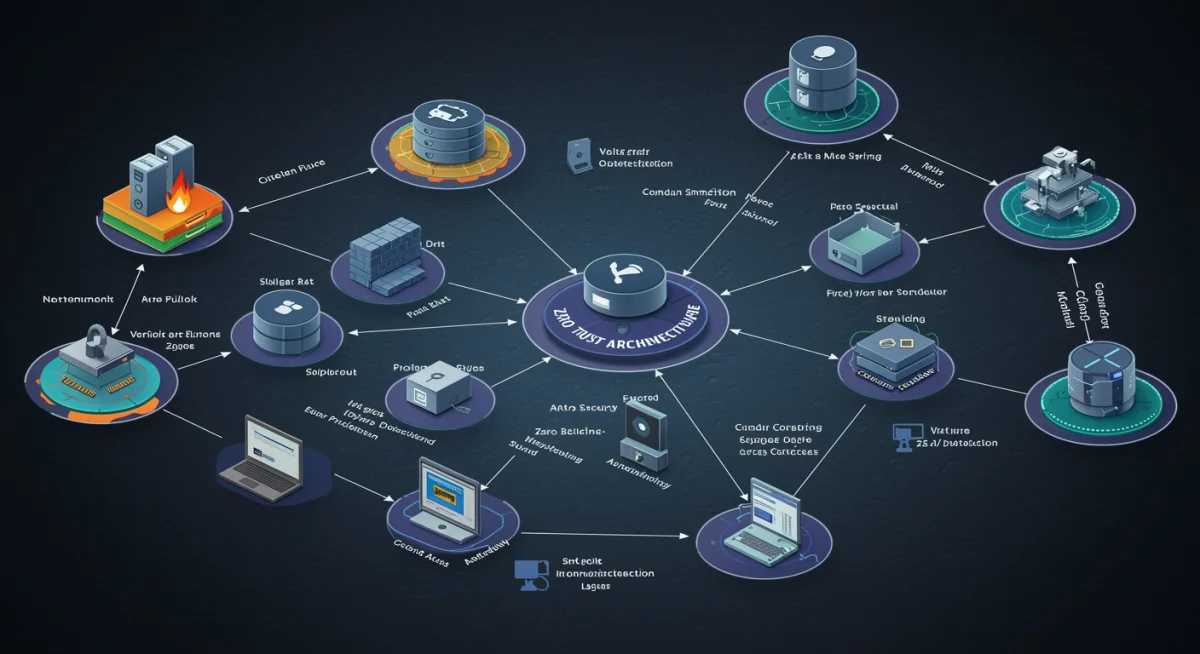
The traditional perimeter-based security model, where everything inside the network is trusted, is fundamentally flawed in an era of distributed workforces, cloud computing, and IoT devices. The second critical strategy for advanced cybersecurity in 2026 is the widespread adoption of Zero Trust Architectures (ZTA). Zero Trust operates on the principle of ‘never trust, always verify,’ treating every access request as if it originates from an untrusted network, regardless of its source.
This architecture mandates strict identity verification for every user and device attempting to access resources, regardless of whether they are inside or outside the network perimeter. It involves continuous authentication, authorization, and validation of every transaction. This significantly reduces the attack surface and minimizes the impact of a breach, as even if an attacker gains access to one part of the network, their lateral movement is severely restricted.
Micro-segmentation and Least Privilege Access
Key components of a robust Zero Trust implementation include micro-segmentation and the principle of least privilege access. Micro-segmentation divides the network into smaller, isolated segments, each with its own security controls. This ensures that a breach in one segment does not automatically compromise the entire network, containing the damage and making it easier to identify and remediate threats.
- Continuous Verification: Every user, device, and application is continuously verified for legitimacy and adherence to security policies.
- Context-Aware Access: Access decisions are made based on multiple contextual factors, including user identity, device health, location, and the sensitivity of the resource being accessed.
- Strong Authentication: Multi-factor authentication (MFA) is universally enforced, often incorporating biometric data or behavioral biometrics for enhanced security.
Least privilege access ensures that users and applications are granted only the minimum level of access necessary to perform their legitimate functions. This minimizes the potential damage if an account is compromised. Combined with continuous monitoring and real-time policy enforcement, Zero Trust architectures create a highly resilient and adaptable security posture, proving indispensable for protecting future tech.
Strategy 3: Human-Centric Security and Cyber Resilience
Despite technological advancements, the human element remains both the strongest and weakest link in the cybersecurity chain. The third essential strategy for advanced cybersecurity in 2026 focuses on human-centric security and fostering a culture of cyber resilience. This involves comprehensive training, robust security awareness programs, and designing systems that are intuitively secure and user-friendly.
Phishing, social engineering, and human error continue to be leading causes of data breaches. Therefore, empowering employees with the knowledge and tools to recognize and report threats is paramount. A strong security culture ensures that every individual understands their role in protecting organizational assets and adheres to best practices, making them an active part of the defense.
Security Awareness Training and Incident Response Drills
Regular and engaging security awareness training is crucial. This training should go beyond basic phishing tests, incorporating real-world scenarios, interactive modules, and personalized feedback. It needs to be continuous, adapting to new threat vectors and technological changes, ensuring that employees are always equipped with up-to-date knowledge.
- Simulated Phishing Attacks: Regular simulations help employees identify and report sophisticated phishing attempts, strengthening their vigilance.
- Role-Based Training: Tailored training for different roles (e.g., IT, finance, executive leadership) addresses specific vulnerabilities and responsibilities.
- Promoting a Reporting Culture: Encouraging employees to report suspicious activities without fear of reprisal is vital for early threat detection.
Beyond prevention, cyber resilience involves an organization’s ability to withstand, respond to, and recover from cyberattacks with minimal disruption. This includes developing robust incident response plans, conducting regular drills, and maintaining comprehensive backup and recovery strategies. Human teams, well-trained and coordinated, are indispensable in navigating the chaos of a breach and rapidly restoring operations.
Securing Quantum and Post-Quantum Computing
The emergence of quantum computing poses both a promise and a profound threat to current cryptographic standards. As we approach 2026, the discussion around securing quantum and post-quantum computing becomes increasingly urgent. Current encryption methods, which rely on the computational difficulty of factoring large numbers, could be easily broken by sufficiently powerful quantum computers. This necessitates a proactive shift towards quantum-resistant cryptography.
Governments and industry leaders are already investing heavily in research and development for post-quantum cryptography (PQC). These new cryptographic algorithms are designed to be secure against both classical and quantum attacks. Organizations must begin assessing their cryptographic inventory, identifying vulnerable systems, and planning for a migration to PQC standards to protect long-term data confidentiality and integrity.
Transitioning to Quantum-Resistant Cryptography
The transition to PQC will be a complex undertaking, requiring significant resources and careful planning. It involves evaluating various PQC candidates, such as lattice-based cryptography, multivariate cryptography, and hash-based signatures, and integrating them into existing security protocols and applications. The goal is to ensure that sensitive data remains protected for decades to come, even in the face of quantum adversaries.
- Cryptographic Agility: Designing systems with the flexibility to easily swap out cryptographic algorithms as new threats emerge or new standards are adopted.
- Standardization Efforts: Following the work of organizations like NIST (National Institute of Standards and Technology) in standardizing PQC algorithms.
- Inventory and Assessment: Identifying all cryptographic assets, their locations, and their level of exposure to potential quantum attacks.
Furthermore, securing quantum systems themselves from attack is another emerging challenge. Quantum key distribution (QKD) offers a theoretically unbreakable method of secure communication, but its practical implementation and scalability are still under development. Integrating these advanced cryptographic techniques and understanding the unique security challenges of quantum technology will be vital for future tech protection.
Regulatory Compliance and Ethical AI in Cybersecurity
As cybersecurity strategies become more sophisticated, the intersection with regulatory compliance and ethical AI becomes increasingly prominent in 2026. Data privacy regulations, such as the GDPR and various state-level laws in the US, continue to evolve, placing stringent requirements on how organizations collect, process, and protect personal data. Adhering to these regulations is not just a legal obligation but a cornerstone of building trust with customers and stakeholders.
Ethical considerations around AI in cybersecurity are also gaining traction. While AI offers immense benefits for defense, its deployment must be guided by ethical principles. This includes ensuring transparency in AI decision-making, avoiding algorithmic bias, and safeguarding against unintended consequences, such as false positives that could disrupt critical operations or infringe on individual privacy.
Data Governance and Privacy by Design
Robust data governance frameworks are essential to manage the lifecycle of data, from collection to deletion, ensuring compliance with privacy regulations. Implementing ‘privacy by design’ principles means integrating privacy considerations into the very architecture of systems and processes, rather than adding them as an afterthought. This proactive approach helps organizations build inherently more secure and compliant systems.
- Regular Audits: Conducting frequent audits of security practices and data handling to ensure ongoing compliance with relevant regulations.
- Vendor Risk Management: Assessing the cybersecurity posture and compliance of third-party vendors who have access to sensitive data.
- Ethical AI Guidelines: Developing internal guidelines for the responsible and ethical deployment of AI in cybersecurity operations, focusing on fairness, accountability, and transparency.
Organizations must also navigate the complexities of international data transfers and varying jurisdictional requirements. A strong legal and compliance team, working in tandem with cybersecurity experts, is crucial for developing strategies that are both technically sound and legally compliant. The ethical use of AI in threat detection and response will define the trustworthiness of cybersecurity solutions in the years to come.
The Future of Cybersecurity: Integration and Collaboration
Looking ahead to 2026 and beyond, the future of advanced cybersecurity is characterized by deep integration and extensive collaboration. No single technology or strategy will be sufficient to combat the ever-growing sophistication of cyber threats. Instead, a holistic approach that seamlessly integrates various security layers, from AI-driven defenses to human-centric practices, will be paramount. This integration extends beyond an organization’s internal systems to encompass a broader ecosystem of partners, threat intelligence networks, and governmental bodies.
Cybersecurity will become an even more integral part of every business process and technological innovation, rather than an isolated function. Security by design will be the default, baked into the very foundation of new products, services, and infrastructure. This proactive stance ensures that vulnerabilities are addressed at the earliest stages of development, significantly reducing the cost and complexity of remediation later on.
Information Sharing and Collective Defense
Effective cybersecurity in the future will heavily rely on information sharing and collective defense initiatives. Organizations cannot afford to operate in silos. Sharing threat intelligence, best practices, and lessons learned from attacks with peers, industry groups, and government agencies will enhance the collective ability to predict, prevent, and respond to cyber threats. Platforms for real-time threat intelligence exchange will become commonplace.
- Cross-Industry Collaboration: Working with other organizations in the same sector to share insights on common threats and vulnerabilities.
- Public-Private Partnerships: Collaborating with government agencies and law enforcement to combat sophisticated state-sponsored attacks and cybercrime syndicates.
- Global Threat Intelligence Platforms: Utilizing and contributing to global databases of threat indicators, attack methodologies, and defensive strategies.
The cybersecurity workforce will also need to evolve, with a greater emphasis on interdisciplinary skills, including data science, AI ethics, and quantum computing knowledge. Continuous learning and adaptation will be key for cybersecurity professionals to stay ahead of adversaries. Ultimately, the future of cybersecurity is a shared responsibility, demanding constant vigilance, technological innovation, and unwavering cooperation to protect our increasingly digital world.
| Key Strategy | Brief Description |
|---|---|
| AI-Driven Adaptive Defense | Utilizes AI and ML for real-time threat prediction, detection, and automated response, moving beyond static defenses. |
| Zero Trust Architectures | ‘Never trust, always verify’ principle; continuous authentication and authorization for all access requests, enhancing network resilience. |
| Human-Centric Security | Focuses on comprehensive security awareness, training, and fostering a culture of cyber resilience among all personnel. |
| Quantum-Resistant Crypto | Proactive shift to new cryptographic algorithms secure against future quantum computing threats. |
Frequently Asked Questions About Advanced Cybersecurity
AI-driven adaptive defense uses artificial intelligence and machine learning to continuously learn, predict, and respond to cyber threats in real-time. It analyzes vast data sets to identify anomalies and automate responses, moving beyond traditional static security measures to offer more proactive protection against evolving attacks.
Zero Trust Architecture (ZTA) is crucial because it operates on the principle of ‘never trust, always verify.’ With distributed workforces and cloud environments, traditional perimeter security is insufficient. ZTA ensures every user and device is authenticated and authorized continuously, significantly reducing the attack surface and containing breaches effectively.
Human-centric security enhances cyber resilience by empowering individuals as a strong line of defense. Through continuous security awareness training and fostering a reporting culture, it reduces vulnerabilities caused by human error or social engineering. This approach ensures that employees are equipped to recognize and respond to threats, making them active participants in organizational security.
Post-quantum cryptography (PQC) refers to cryptographic algorithms designed to be secure against attacks from future quantum computers. It’s important because current encryption methods could be easily broken by sufficiently powerful quantum machines. PQC ensures long-term data confidentiality and integrity, safeguarding sensitive information for decades to come.
Ethical AI in advanced cybersecurity ensures that AI deployments are transparent, unbiased, and responsible. It prevents unintended consequences like algorithmic bias or privacy infringements. Adhering to ethical guidelines builds trust and ensures that AI-driven security measures are fair, accountable, and ultimately more effective and trustworthy in protecting future tech.
Conclusion
Protecting future technology in 2026 demands a sophisticated and multifaceted approach to cybersecurity. The three essential strategies—AI-driven adaptive defense, stringent Zero Trust Architectures, and human-centric security—form the bedrock of this resilience. Coupled with proactive measures like transitioning to quantum-resistant cryptography and maintaining rigorous regulatory compliance and ethical AI practices, organizations can build robust defenses against an ever-evolving threat landscape. The future of our digital world hinges on our collective ability to innovate not just in technology, but in securing it, fostering an environment where innovation can thrive without fear of compromise.