Space Tech’s Commercial Boom: 5 US Investment Opportunities by 2026
The US space tech sector is undergoing a profound commercial transformation, offering significant investment avenues by 2026, notably in satellite broadband, next-generation launch services, in-space manufacturing, data analytics, and space tourism infrastructure, propelled by private innovation and government support.
The landscape of space exploration and utilization is rapidly shifting, moving beyond purely governmental endeavors into a vibrant commercial arena. This transformation heralds a new era, positioning the United States at the forefront of innovation and economic expansion. For astute investors, understanding the drivers behind Space Tech’s Commercial Boom: 5 Investment Opportunities in the US by 2026 is crucial, as this sector promises substantial returns and groundbreaking advancements.
The New Space Economy: A Paradigm Shift
The “New Space” economy marks a significant departure from traditional government-led space programs. This era is characterized by private companies driving innovation, reducing costs, and expanding access to space for various commercial applications. This shift has democratized space, making it more accessible and, crucially, a fertile ground for investment.
Historically, space activities were the exclusive domain of national agencies like NASA, involving colossal budgets and long development cycles. Today, agile startups and established private enterprises are leveraging advanced technologies and venture capital to disrupt this model. This commercialization is not merely about launching rockets; it encompasses a vast ecosystem of services and products, from satellite communications to in-orbit servicing, all contributing to a robust economic engine.
Drivers of Growth in New Space
Several key factors are propelling the growth of the New Space economy:
- Decreasing Launch Costs: Reusable rocket technology has dramatically lowered the cost of sending payloads into orbit, making space more accessible for commercial ventures.
- Miniaturization of Satellites: Advancements in small satellite technology (CubeSats, nanosatellites) have enabled more frequent launches and diverse applications at lower costs.
- Private Capital Influx: A significant increase in private investment, including venture capital and private equity, is fueling research, development, and commercial deployment.
- Government Support and Partnerships: Governments are increasingly partnering with private companies, fostering innovation and providing crucial contracts that de-risk early-stage ventures.
The confluence of these factors has created an environment ripe for innovation and commercial success. The US, with its strong technological infrastructure and entrepreneurial spirit, is particularly well-positioned to capitalize on these trends, offering compelling opportunities for investors looking towards 2026 and beyond.
Investment Opportunity 1: Satellite Broadband Networks
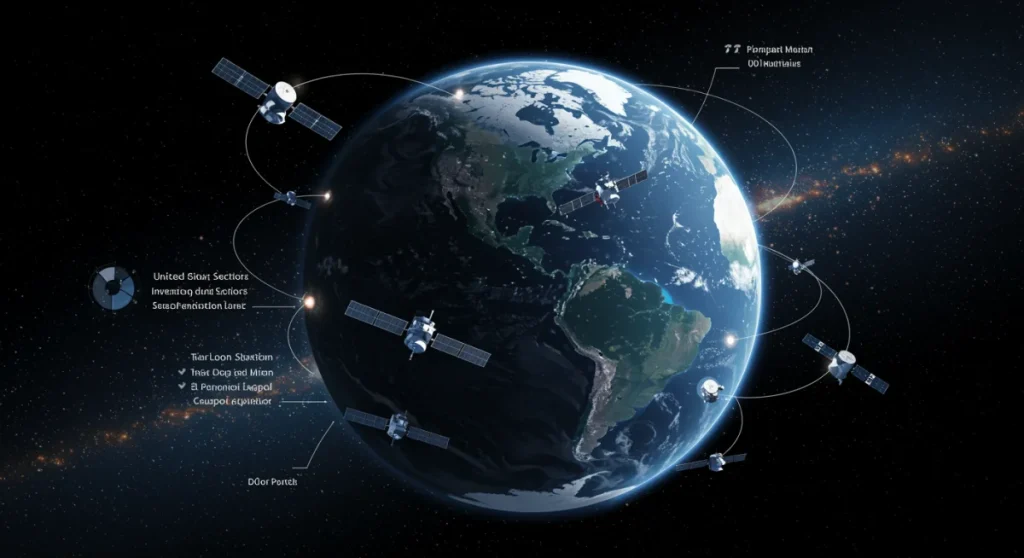
One of the most transformative areas within space tech is the development and deployment of satellite broadband networks. These constellations of low Earth orbit (LEO) satellites promise to deliver high-speed internet access globally, bridging the digital divide and enabling new applications in remote areas.
Companies like SpaceX’s Starlink, Amazon’s Project Kuiper, and OneWeb are at the forefront of this revolution, deploying thousands of satellites to create interconnected networks. The demand for reliable, high-speed internet is insatiable, and terrestrial infrastructure often struggles to reach underserved populations or provide consistent service in challenging terrains. Satellite broadband offers a viable, scalable solution.
Market Potential and Key Players
The market for satellite broadband is projected to grow exponentially, driven by both consumer demand and enterprise applications. Industries such as agriculture, logistics, and remote energy operations stand to benefit immensely from ubiquitous connectivity. This sector represents a significant portion of the overall space tech investment landscape.
- Rural Connectivity: Providing internet access to remote and rural communities currently lacking reliable terrestrial options.
- Maritime and Aviation: Enhancing connectivity for ships and aircraft, improving operational efficiency and passenger experience.
- Enterprise Solutions: Offering secure and high-bandwidth connections for businesses operating in areas with limited infrastructure.
Investing in companies developing the satellites, ground stations, user terminals, or the underlying network infrastructure presents a robust opportunity. The competitive landscape is intense, but the sheer scale of the potential market ensures ample room for multiple successful players. The technological hurdles are significant, yet the progress seen in recent years indicates that these challenges are being overcome at an accelerating pace.
Investment Opportunity 2: Next-Generation Launch Services
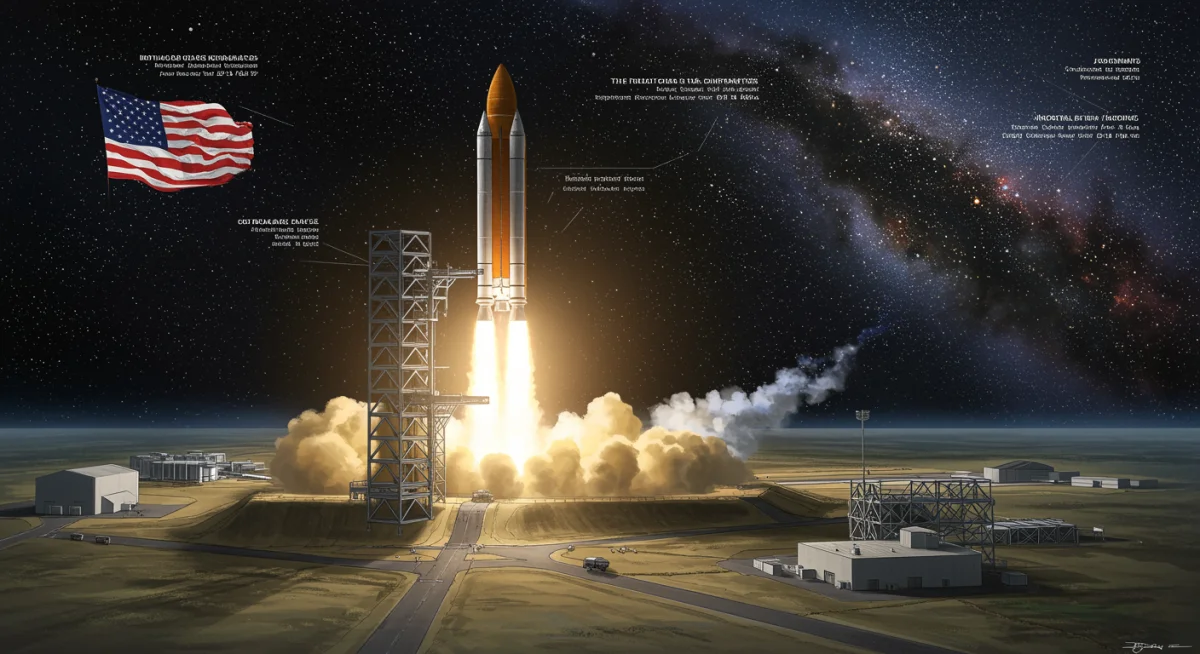
The ability to launch payloads into space reliably and affordably is the bedrock of the commercial space industry. Next-generation launch services are characterized by reusability, rapid turnaround times, and a diverse range of launch vehicle sizes to accommodate various satellite types.
Companies like SpaceX have pioneered reusable rocket technology, drastically cutting the cost per launch. However, the demand for launch services continues to outpace supply, especially for small and medium-sized satellites. This has opened the door for new entrants and innovative approaches in the launch market.
Innovations in Launch Technology
The future of launch services involves more than just reusable rockets. It includes vertically integrated manufacturing, advanced propulsion systems, and dedicated small-payload launchers. These innovations are making space access more flexible and cost-effective, which is critical for the proliferation of satellite constellations and other in-orbit activities.
- Reusable Launch Vehicles: Reducing operational costs and increasing launch frequency.
- Small Satellite Launchers: Dedicated rockets for CubeSats and nanosatellites, offering tailored and timely access to specific orbits.
- Advanced Propulsion: Research into electric, nuclear, and other novel propulsion systems for more efficient in-space travel and payload delivery.
Investment in companies developing these launch systems, manufacturing components, or operating launch pads offers exposure to a fundamental and growing segment of the space economy. As more commercial entities aim for orbit, the demand for varied and efficient launch solutions will only intensify, making this a pivotal area for space tech investment.
Investment Opportunity 3: In-Space Manufacturing and Servicing
Moving beyond simply launching payloads, the next frontier in space tech involves manufacturing and servicing assets directly in orbit. This capability promises to revolutionize how we design, build, and maintain spacecraft, leading to more resilient and adaptable space infrastructure.
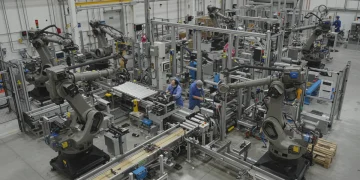
In-space manufacturing can involve 3D printing components, assembling large structures that are impractical to launch fully, or even producing materials with unique properties only achievable in microgravity. In-orbit servicing includes refueling satellites, repairing malfunctioning components, upgrading older spacecraft, and even de-orbiting space debris.
The Benefits of On-Orbit Capabilities
The advantages of in-space manufacturing and servicing are multifaceted, offering both economic and operational benefits. This area is poised for significant growth as the space economy matures, reducing reliance on Earth-based manufacturing and mitigating the risks associated with single-point failures.
- Reduced Launch Mass: Manufacturing in space can significantly reduce the mass that needs to be launched from Earth, lowering costs.
- Extended Satellite Lifespans: Servicing and refueling can extend the operational life of expensive satellites, maximizing their utility.
- Space Debris Mitigation: Active debris removal and in-orbit recycling can help address the growing problem of space junk.
- New Materials: Production of novel materials and components leveraging the unique microgravity environment.
Companies developing robotic assembly systems, additive manufacturing processes for space, or specialized repair vehicles are at the cutting edge of this emerging field. As the number of satellites and space missions increases, the need for robust in-space capabilities will become critical, making this a high-potential area for long-term space tech investment.
Investment Opportunity 4: Space-Based Data and Analytics
The proliferation of Earth observation satellites, remote sensing technologies, and in-space sensors is generating an unprecedented volume of data. This data, when properly collected, processed, and analyzed, offers invaluable insights for a wide range of terrestrial and extraterrestrial applications.
From monitoring climate change and agricultural yields to tracking global supply chains and providing intelligence for national security, space-based data is becoming indispensable. The challenge and opportunity lie in converting this raw data into actionable intelligence, requiring sophisticated analytics platforms and artificial intelligence.
Applications and Value Proposition
The value derived from space-based data is immense, impacting numerous sectors and offering solutions to complex global challenges. This segment is less about the hardware of space and more about the intellectual capital and software solutions that unlock its potential.
- Environmental Monitoring: Tracking deforestation, ocean health, air quality, and natural disaster impacts.
- Precision Agriculture: Optimizing crop yields, managing water resources, and monitoring soil health.
- Urban Planning: Analyzing urban growth, infrastructure development, and traffic patterns.
- Defense and Intelligence: Providing critical information for strategic planning and situational awareness.
Investing in companies specializing in satellite data acquisition, image processing, AI-driven analytics, and data visualization platforms offers exposure to a rapidly expanding market. As more satellites are launched, the demand for sophisticated tools to interpret their output will only grow, solidifying this as a key area for space tech investment.
Investment Opportunity 5: Space Tourism and Infrastructure
While often perceived as a futuristic dream, space tourism is rapidly approaching commercial viability, driven by companies like Virgin Galactic, Blue Origin, and SpaceX. Beyond the thrill of suborbital or orbital flights, this sector also encompasses the necessary ground and in-space infrastructure to support a burgeoning space travel industry.
As the cost of space access decreases and technology matures, the market for space tourism is expected to expand beyond ultra-high-net-worth individuals to a broader affluent clientele. This includes not only direct travel but also the development of space hotels, orbital habitats, and specialized training facilities.
Enabling the Space Travel Ecosystem
The growth of space tourism is intrinsically linked to the development of robust infrastructure, both on Earth and in space. This includes launch facilities, astronaut training centers, spaceports, and potentially even orbital hotels or research stations that cater to private citizens. This broader ecosystem presents diverse space tech investment opportunities.
- Suborbital and Orbital Flights: Direct investment in companies offering spaceflight experiences.
- Spaceport Development: Investing in the terrestrial infrastructure required for launch and landing operations.
- Orbital Habitats: Companies designing and building modules for long-duration stays in space.
- Training and Support Services: Businesses providing astronaut training, medical support, and specialized equipment for space travelers.
While still in its nascent stages compared to other sectors, space tourism and its supporting infrastructure represent a high-growth, high-reward investment area. The psychological allure of space travel, combined with technological advancements, positions this sector for significant expansion towards 2026 and beyond, creating a unique opportunity for visionary investors.
| Key Investment Area | Brief Description |
|---|---|
| Satellite Broadband | Global high-speed internet via LEO satellite constellations, bridging digital divides. |
| Launch Services | Reusable rockets and specialized launchers reducing access-to-space costs. |
| In-Space Manufacturing | 3D printing and assembly of structures in orbit, extending satellite life. |
| Space Data Analytics | Processing and interpreting satellite data for insights across various industries. |
Frequently Asked Questions About Space Tech Investment
The commercial space boom is primarily driven by decreasing launch costs due to reusable rockets, satellite miniaturization, significant private capital investment, and increasing government partnerships with private companies, fostering rapid innovation and market expansion.
Satellite broadband is crucial due to its potential to provide global, high-speed internet access, especially in underserved and remote areas. It addresses the insatiable demand for connectivity across consumer, maritime, aviation, and various enterprise sectors, promising substantial market growth.
In-space manufacturing offers several benefits, including reduced launch mass and costs, extended satellite lifespans through servicing, mitigation of space debris, and the creation of novel materials leveraging microgravity conditions. It revolutionizes how space assets are built and maintained.
Space-based data provides critical insights for numerous terrestrial industries, from environmental monitoring and precision agriculture to urban planning and defense. It enables better decision-making by offering comprehensive, real-time information on global trends and localized conditions.
Yes, space tourism is becoming increasingly viable, propelled by private companies making space more accessible. Investment opportunities exist not only in direct space travel operators but also in the essential supporting infrastructure, such as spaceports, orbital habitats, and specialized training facilities.
Conclusion
The commercial space sector in the United States is no longer a niche market but a burgeoning economic powerhouse, presenting a multitude of compelling investment opportunities. From the global reach of satellite broadband to the transformative potential of in-space manufacturing and the adventurous frontier of space tourism, the avenues for capital deployment are diverse and promising. As technology continues to advance and private enterprise drives innovation, the landscape of space tech will undoubtedly evolve, creating new markets and redefining existing ones. For investors seeking to capitalize on the next wave of technological disruption, engaging with these five key areas by 2026 offers a strategic pathway to participate in one of the most exciting and impactful industries of our time. The future of commerce is increasingly extending beyond Earth’s atmosphere, and the time to invest in this cosmic journey is now.