AI-Driven Product Development: Accelerating Innovation Cycles 25% by 2026
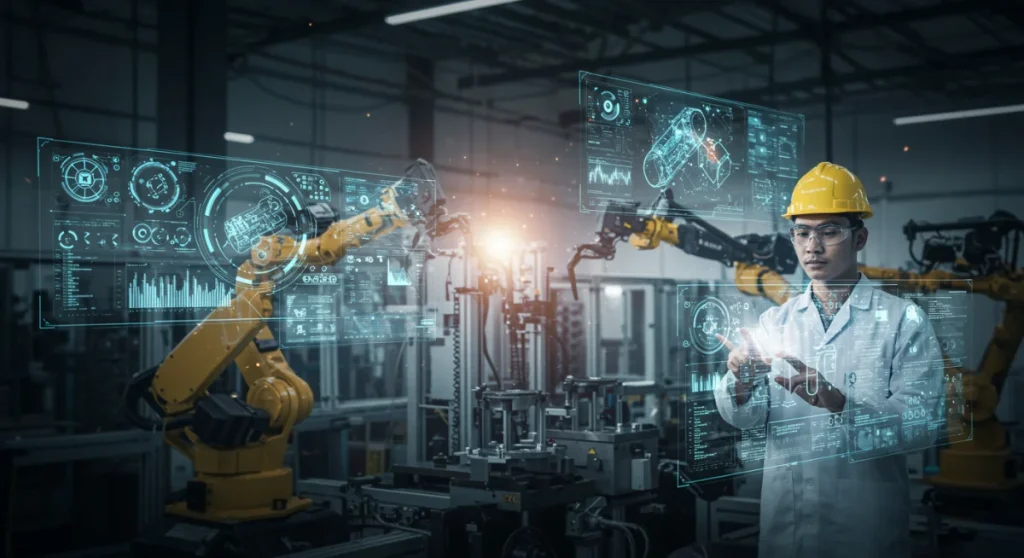
AI-driven product development is set to accelerate innovation cycles by 25% for U.S. manufacturers by 2026, fundamentally reshaping the industry’s approach to design, prototyping, and market entry.
The landscape of manufacturing is undergoing a profound transformation, with artificial intelligence emerging as a pivotal force. Specifically, AI-Driven Product Development: Accelerating Innovation Cycles by 25% for U.S. Manufacturers in 2026 is not merely a forecast, but a strategic imperative that promises to redefine efficiency, competitiveness, and market leadership. This shift is urging U.S. manufacturers to re-evaluate their operational frameworks and embrace AI as a core component of their innovation strategy, moving beyond traditional methods to unlock unprecedented speeds in bringing new products to market.
The AI Revolution in Product Development
The integration of artificial intelligence into product development is no longer a distant dream but a tangible reality transforming how U.S. manufacturers conceptualize, design, and produce goods. This revolution is driven by AI’s unparalleled ability to process vast datasets, identify intricate patterns, and generate optimized solutions at speeds unattainable by human-only teams. It’s about more than just automation; it’s about intelligent automation that learns and adapts, pushing the boundaries of what’s possible in innovation.
Redefining Design and Ideation with AI
AI’s impact begins at the earliest stages of product development: ideation and design. Generative design, a cutting-edge AI capability, allows engineers to input design parameters and constraints, then let AI algorithms explore thousands of design permutations. This not only significantly reduces design time but also uncovers innovative geometries and material optimizations that human designers might overlook.
- Generative Design: AI creates optimal design solutions based on specified parameters, material properties, and performance requirements.
- Predictive Analytics for Market Trends: AI analyzes consumer data, social media, and market reports to identify emerging trends, guiding product conceptualization.
- Simulation and Virtual Prototyping: AI-powered tools simulate product performance under various conditions, reducing the need for costly physical prototypes.
- Material Innovation: AI can suggest novel material combinations or identify existing materials with properties ideally suited for new product applications.
The speed and scope of AI in these initial phases mean that manufacturers can move from concept to validated design much faster, dramatically compressing the innovation cycle. This proactive approach ensures that products are not only relevant but also optimized for performance and cost from the outset.
In essence, AI acts as an intelligent co-pilot for designers and engineers, expanding their creative horizons while simultaneously streamlining the iterative process. This synergy between human ingenuity and artificial intelligence is what truly propels the acceleration of innovation, laying a solid foundation for the subsequent stages of development.
Accelerating Prototyping and Testing with AI
Once designs are finalized, the next critical phase in product development is prototyping and testing. Traditionally, this stage is time-consuming and resource-intensive, often involving multiple iterations of physical prototypes. AI, however, is fundamentally altering this process, making it faster, more cost-effective, and significantly more accurate.
Virtual Prototyping and Simulation
AI-driven simulation tools allow manufacturers to create highly accurate virtual prototypes that can be tested under a multitude of conditions without ever building a physical model. These simulations can predict material stress, thermal performance, aerodynamic efficiency, and more, providing invaluable data for refinement.
- Reduced Physical Prototypes: AI simulations minimize the need for expensive and time-consuming physical prototypes.
- Faster Iteration Cycles: Design changes can be tested virtually in minutes or hours, rather than days or weeks.
- Optimized Performance: AI identifies performance bottlenecks and suggests improvements before manufacturing begins.
- Cost Savings: Significant reductions in material waste and labor associated with physical prototyping.
This capability not only accelerates the testing phase but also enables a more thorough exploration of design variations, leading to more robust and reliable products. The immediate feedback loop provided by AI-powered simulations empowers engineers to make data-driven decisions swiftly, ensuring optimal product characteristics.
Furthermore, AI can analyze data from previous product failures or customer feedback to inform predictive testing scenarios, anticipating potential issues before they arise. This foresight is crucial for minimizing risks and ensuring that products meet stringent quality and safety standards, all while maintaining an accelerated development timeline.
Optimizing Manufacturing Processes with AI
The benefits of AI in product development extend far beyond design and testing, permeating the manufacturing floor itself. By integrating AI into production processes, U.S. manufacturers can achieve unprecedented levels of efficiency, quality control, and adaptability. This optimization is key to realizing the 25% acceleration in innovation cycles by 2026.
Smart Factories and Predictive Maintenance
AI-powered smart factories leverage interconnected machines and sensors to collect real-time data on production lines. This data is then analyzed by AI to optimize various aspects, from machine performance to inventory management. Predictive maintenance, a significant application of this, uses AI to forecast equipment failures, allowing for proactive maintenance and minimizing costly downtime.
- Real-time Quality Control: AI vision systems detect defects in products with extreme precision during production, ensuring higher quality output.
- Dynamic Scheduling: AI algorithms optimize production schedules based on demand fluctuations, material availability, and machine capacity.
- Energy Efficiency: AI identifies patterns in energy consumption and suggests adjustments to reduce waste and lower operational costs.
- Supply Chain Optimization: AI predicts supply chain disruptions and recommends alternative sourcing or logistics strategies, ensuring uninterrupted production.
The ability of AI to monitor and control complex manufacturing environments in real-time means that production can be adjusted on the fly, responding to unforeseen challenges or opportunities with agility. This level of responsiveness is vital for maintaining accelerated innovation cycles, as it ensures that new product designs can transition seamlessly into efficient production.
Ultimately, AI transforms manufacturing from a reactive process into a proactive, intelligent system. This not only enhances productivity and reduces waste but also provides a dynamic foundation for continuous improvement and the rapid deployment of new product innovations, solidifying the U.S. competitive edge.
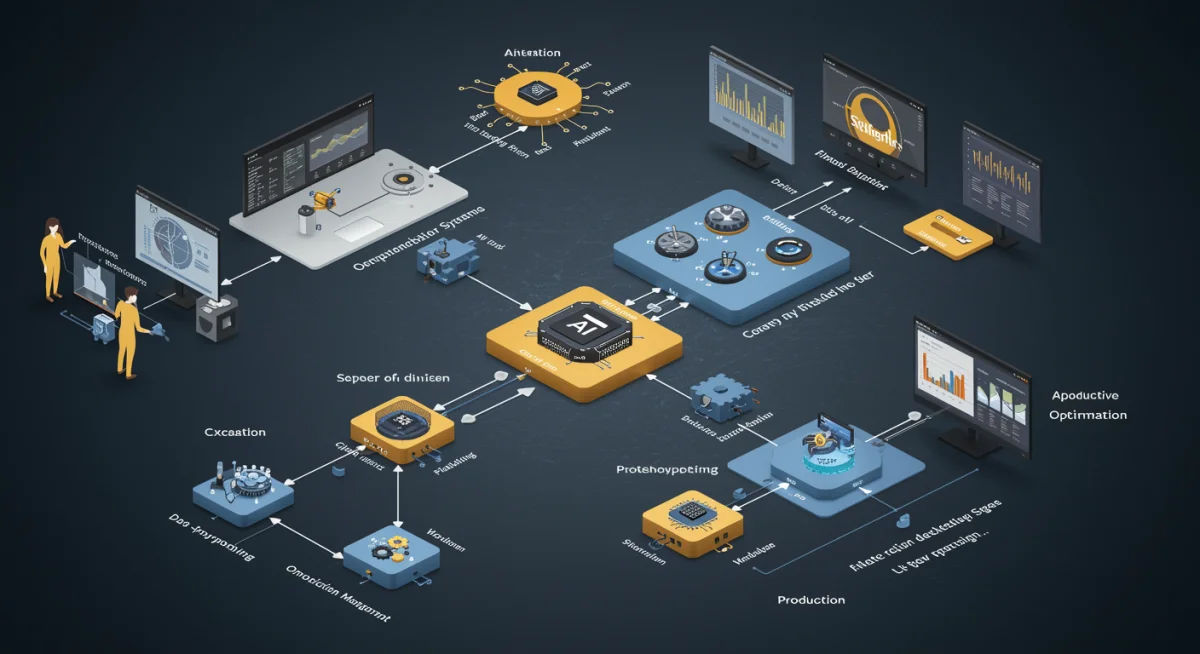
Data-Driven Decision Making and Continuous Improvement
At the heart of AI-driven product development lies the power of data. AI’s ability to collect, analyze, and interpret vast quantities of data from every stage of the product lifecycle is transforming decision-making from intuition-based to data-driven. This shift is crucial for identifying areas of improvement, understanding market dynamics, and ensuring continuous innovation.
Leveraging AI for Insights and Adaptability
AI algorithms can sift through customer feedback, sales data, warranty claims, and performance metrics to uncover insights that might otherwise remain hidden. This allows manufacturers to understand what works, what doesn’t, and what customers truly desire, leading to more informed product enhancements and future designs.
- Customer Feedback Analysis: AI processes large volumes of customer reviews and social media comments to extract sentiment and identify common pain points or desires.
- Market Performance Prediction: AI models forecast product success based on various market indicators, aiding strategic launch decisions.
- Root Cause Analysis: AI helps pinpoint the underlying causes of product defects or performance issues, enabling targeted solutions.
- Personalized Product Development: AI can identify niches and preferences, allowing for the creation of highly customized product offerings.
By continuously feeding data back into the development loop, AI fosters a culture of iterative improvement. Each product generation benefits from the lessons learned from its predecessors, leading to a steady evolution of quality, functionality, and market fit. This adaptive approach is essential for staying ahead in a rapidly changing global market.
Furthermore, AI’s capacity for real-time analysis means that manufacturers can react swiftly to market shifts or competitive pressures. Instead of waiting for quarterly reports, insights are available instantly, allowing for proactive adjustments to product roadmaps and development priorities. This agility is a cornerstone of accelerated innovation.
Challenges and Considerations for U.S. Manufacturers
While the promise of AI-driven product development is immense, its implementation is not without challenges. U.S. manufacturers must navigate a complex landscape of technological integration, workforce development, and data governance to fully realize the benefits of AI. Addressing these hurdles proactively is essential for a successful transition.
Overcoming Implementation Barriers
The initial investment in AI technologies, including software, hardware, and infrastructure, can be substantial. Furthermore, integrating AI into existing legacy systems requires careful planning and execution. Manufacturers must also contend with the need for specialized AI talent and the retraining of their current workforce.
- Data Quality and Accessibility: Ensuring clean, consistent, and accessible data is paramount for effective AI training and operation.
- Talent Gap: A shortage of AI specialists and data scientists in the manufacturing sector requires investment in training and recruitment.
- Cybersecurity Risks: Protecting sensitive design data and intellectual property in AI-powered systems is a critical concern.
- Ethical AI Use: Establishing guidelines for responsible AI development and deployment to avoid bias and ensure accountability.
Beyond the technical and human capital challenges, manufacturers must also consider the cultural shift required to embrace AI. This involves fostering an environment where experimentation is encouraged, and data-driven insights are valued across all departments, from engineering to marketing.
However, the long-term benefits of AI, including increased efficiency, reduced costs, and accelerated innovation, far outweigh these initial challenges. Strategic planning, phased implementation, and a commitment to continuous learning will enable U.S. manufacturers to successfully integrate AI and achieve their innovation acceleration goals.
The Future Impact on U.S. Manufacturing Competitiveness
The successful adoption of AI-Driven Product Development: Accelerating Innovation Cycles by 25% for U.S. Manufacturers in 2026 will have a profound and lasting impact on the nation’s global competitiveness. By enabling faster, more efficient, and more innovative product creation, AI will solidify the U.S. position as a leader in advanced manufacturing.
Strengthening the Domestic Manufacturing Base
AI’s ability to streamline operations and reduce development costs makes domestic manufacturing more attractive and competitive compared to outsourcing. This can lead to reshoring initiatives, job creation, and a stronger, more resilient U.S. industrial base. The increased speed of innovation also means U.S. manufacturers can respond more quickly to market demands.
- Global Market Leadership: Faster innovation cycles allow U.S. companies to introduce cutting-edge products ahead of international competitors.
- Economic Growth: Increased efficiency and innovation drive economic expansion and create high-value jobs within the manufacturing sector.
- Enhanced Product Quality: AI-driven optimization leads to superior product performance, reliability, and customer satisfaction.
- Sustainability: AI can optimize resource usage, reduce waste, and identify eco-friendly design alternatives, contributing to sustainable manufacturing practices.
Moreover, the integration of AI fosters a culture of continuous learning and adaptation within manufacturing organizations. This intellectual capital, combined with advanced technological capabilities, creates a virtuous cycle of innovation that ensures long-term growth and competitiveness. The ability to rapidly iterate and improve products will be a key differentiator.
Ultimately, the investment in AI-driven product development is an investment in the future of U.S. manufacturing. It promises not just a temporary boost in efficiency but a fundamental transformation that will enable American companies to lead the next wave of industrial innovation, setting new benchmarks for speed, quality, and market responsiveness.
| Key Aspect | Brief Description |
|---|---|
| Innovation Acceleration | AI is projected to accelerate product innovation cycles for U.S. manufacturers by 25% by 2026. |
| Generative Design | AI-powered tools explore vast design permutations, optimizing complex products rapidly. |
| Virtual Prototyping | AI simulations reduce the need for physical prototypes, saving time and resources. |
| Manufacturing Optimization | AI enhances quality control, predictive maintenance, and supply chain efficiency. |
Frequently Asked Questions About AI in Product Development
AI-driven product development leverages artificial intelligence technologies, such as machine learning and generative design, to automate, optimize, and accelerate various stages of product creation, from ideation and design to prototyping, testing, and manufacturing, leading to faster market entry and improved product quality.
AI accelerates innovation by rapidly analyzing data, generating optimized designs, facilitating virtual prototyping, and streamlining manufacturing processes. These capabilities collectively reduce the time spent on iterative tasks, allowing manufacturers to bring new products to market significantly faster and more efficiently, achieving substantial cycle time reductions.
U.S. manufacturers benefit from enhanced competitiveness through faster innovation, reduced development costs, improved product quality, and greater operational efficiency. AI also enables better resource utilization, predictive maintenance, and data-driven decision-making, strengthening domestic manufacturing and global market leadership.
Challenges include significant initial investment, the need for high-quality data, a shortage of skilled AI talent, and cybersecurity risks. Integrating AI with legacy systems and managing the cultural shift within an organization also require careful planning and strategic execution to overcome these hurdles effectively.
In product design, AI facilitates generative design, allowing algorithms to create optimal designs based on specific parameters and constraints. It also aids in predictive analytics for market trends and enables advanced simulation for virtual prototyping, leading to more innovative, optimized, and cost-effective product designs.
Conclusion
The journey towards AI-Driven Product Development: Accelerating Innovation Cycles by 25% for U.S. Manufacturers in 2026 is not merely an optional upgrade but a strategic necessity. By embracing artificial intelligence across design, prototyping, testing, and manufacturing, U.S. industries can unlock unprecedented levels of efficiency, innovation, and global competitiveness. While challenges exist, the transformative potential of AI to redefine product creation and market responsiveness makes it an indispensable tool for the future success of American manufacturing.