Navigating SaaS Security: Essential Updates for US Enterprises to Prevent 90% of Data Breaches in 2026
US enterprises must implement essential SaaS security updates, including robust data encryption, multi-factor authentication, and continuous threat monitoring, to significantly reduce data breaches by 90% by 2026.
Navigating SaaS security: Essential updates for US enterprises to prevent 90% of data breaches in 2026 is not merely a goal but a critical imperative for businesses operating in an increasingly digital landscape. As more organizations migrate their operations to cloud-based Software as a Service (SaaS) platforms, the attack surface expands, making robust security measures indispensable. This article delves into the crucial strategies and technological advancements US enterprises must adopt to safeguard their sensitive data and achieve an ambitious reduction in breach incidents.
The Evolving SaaS Threat Landscape
The digital world constantly shifts, and with it, the threats targeting SaaS applications. Cybercriminals are becoming more sophisticated, exploiting vulnerabilities that were once considered minor. Understanding this evolving landscape is the first step toward building resilient defenses.
Enterprises often face a myriad of challenges, from misconfigurations in SaaS platforms to advanced phishing campaigns designed to steal credentials. The sheer volume of data processed and stored within these applications makes them prime targets. Moreover, the interconnectivity of various SaaS solutions can create complex dependencies, where a compromise in one service can cascade across an entire ecosystem.
Common SaaS Vulnerabilities
SaaS vulnerabilities are diverse and can stem from various sources, making a comprehensive security strategy crucial. It is not just about the platform provider’s security, but also how the enterprise configures and uses these services.
- Misconfigurations: Often, human error in setting up SaaS applications leads to exposed data or overly permissive access controls.
- API Insecurities: Many SaaS platforms rely on APIs for integration, and if not properly secured, these can become entry points for attackers.
- Insider Threats: Malicious or negligent employees with access to sensitive SaaS data pose a significant risk.
- Supply Chain Attacks: A compromise in a third-party vendor integrated with a SaaS platform can directly impact the enterprise.
The proactive identification and remediation of these vulnerabilities are paramount. Regular security audits, penetration testing, and employee training can significantly mitigate the risks associated with these common attack vectors. A robust understanding of these threats allows US enterprises to prioritize their security investments effectively.
Embracing a Zero-Trust Security Model
In the realm of modern cybersecurity, the zero-trust model stands out as a foundational shift from traditional perimeter-based security. Instead of implicitly trusting users and devices within a network, zero trust operates on the principle of “never trust, always verify.” This approach is particularly vital for SaaS environments, where data and applications are distributed across various cloud services.
Implementing zero trust means that every access request, whether from inside or outside the corporate network, is subject to strict authentication and authorization. This continuous verification process significantly reduces the risk of unauthorized access and lateral movement by attackers, even if they manage to breach an initial defense layer.
Key Principles of Zero Trust
The zero-trust framework is built upon several core tenets that guide its implementation. These principles ensure that security is enforced at every interaction point, rather than relying on a single, permeable perimeter.
- Verify Explicitly: Authenticate and authorize every user and device accessing resources, regardless of location.
- Least Privilege Access: Grant users only the minimum access necessary to perform their tasks, revoking privileges when no longer needed.
- Assume Breach: Design security with the assumption that a breach is inevitable, focusing on minimizing damage and rapid recovery.
- Micro-segmentation: Divide networks into small, isolated segments to limit lateral movement if a breach occurs.
By adopting these principles, US enterprises can create a more resilient security posture for their SaaS applications. This model is not a one-time implementation but an ongoing process of monitoring, adapting, and refining security policies to address emerging threats.
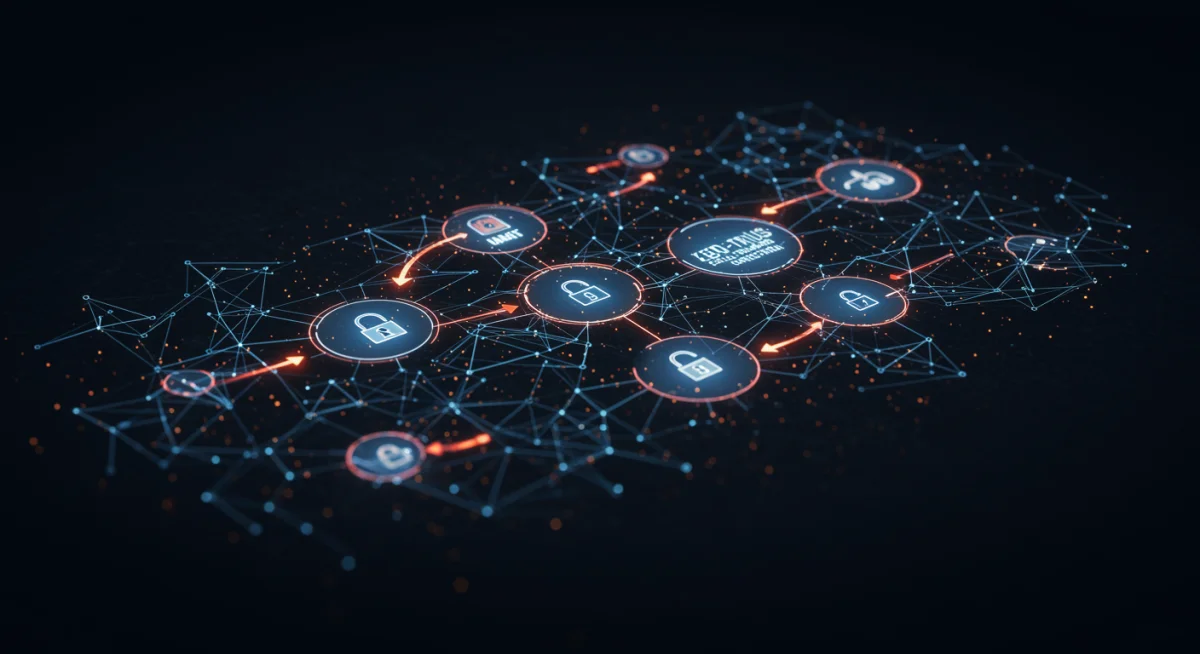
The shift to zero trust requires a cultural change within organizations, emphasizing security as a shared responsibility. Training employees on the importance of strict access controls and continuous verification is crucial for successful adoption.
Advanced Threat Detection and Response
Detecting and responding to threats in real-time is paramount for preventing data breaches. Traditional security measures, often reactive, are no longer sufficient against sophisticated cyberattacks. US enterprises must invest in advanced threat detection and response capabilities tailored for SaaS environments.
This involves leveraging artificial intelligence (AI) and machine learning (ML) to analyze vast amounts of data for anomalous behavior, identifying patterns that indicate a potential breach. Automated response mechanisms can then isolate threats, preventing them from escalating and minimizing potential damage. The goal is to move from a reactive stance to a proactive, predictive one.
Implementing Security Information and Event Management (SIEM)
A robust SIEM system is central to effective threat detection and response in SaaS environments. SIEM solutions aggregate and analyze security logs from various sources, providing a centralized view of an organization’s security posture.
Integrating SaaS application logs with a SIEM platform allows security teams to gain comprehensive visibility into user activities, access attempts, and potential security incidents. This consolidated data enables faster detection of threats, more accurate incident correlation, and streamlined incident response workflows.
- Centralized Logging: Collect logs from all SaaS applications, endpoints, and network devices into a single platform.
- Real-time Analytics: Utilize AI/ML to analyze log data for suspicious activities and anomalies in real time.
- Automated Alerts: Configure alerts for predefined threat indicators, ensuring immediate notification to security teams.
- Incident Playbooks: Develop automated response playbooks within the SIEM to neutralize threats swiftly.
The effectiveness of a SIEM system hinges on its proper configuration and continuous tuning. Regular review of alerts and incident data helps refine detection rules and improve overall security operations. For US enterprises, a well-implemented SIEM is a cornerstone of advanced threat detection.
Data Encryption and Access Control Best Practices
Data encryption and stringent access controls form the bedrock of any effective SaaS security strategy. Protecting sensitive information, both in transit and at rest, is non-negotiable, especially with increasing regulatory scrutiny. US enterprises must implement robust encryption protocols and meticulously manage user access to minimize the risk of unauthorized data exposure.
Encryption acts as a last line of defense, rendering data unreadable to anyone without the correct decryption key. Combined with granular access controls, it ensures that even if an attacker gains access to a system, they cannot readily compromise the data itself. These practices are fundamental to achieving the 90% breach prevention target.
Encryption Strategies for SaaS Data
Enterprises should adopt a multi-layered approach to encryption, covering data at every stage of its lifecycle within SaaS applications. This includes data in transit, data at rest, and data in use.
Utilizing strong encryption algorithms like AES-256 for data at rest and TLS/SSL for data in transit is standard practice. Furthermore, organizations should explore client-side encryption where feasible, allowing them to retain control over their encryption keys, even when data resides in a third-party SaaS environment. This provides an additional layer of security and compliance.
- Data in Transit Encryption: Always use TLS 1.2 or higher for all communication with SaaS applications.
- Data at Rest Encryption: Ensure SaaS providers encrypt data stored on their servers using strong, industry-standard algorithms.
- Client-Side Encryption: Implement encryption before data leaves the enterprise’s control, maintaining key ownership.
- Key Management: Develop a secure and robust key management strategy for all encrypted data.
Beyond encryption, strict access controls, including multi-factor authentication (MFA) and single sign-on (SSO), are crucial. These mechanisms ensure that only authorized individuals can access SaaS applications and their underlying data, significantly reducing the risk of credential compromise.
Compliance and Regulatory Adherence
For US enterprises, navigating the complex web of compliance and regulatory requirements is a critical component of SaaS security. Non-compliance can result in hefty fines, reputational damage, and legal repercussions. Ensuring that SaaS solutions adhere to relevant standards like HIPAA, GDPR (for global operations), CCPA, and industry-specific regulations is paramount.
Compliance is not merely a checklist; it’s an ongoing commitment to data protection and privacy. It requires continuous monitoring, regular audits, and a clear understanding of how data is handled within each SaaS application. Establishing a strong compliance framework helps mitigate risks and builds trust with customers and stakeholders.
Key Compliance Frameworks for US Enterprises
Different industries and data types necessitate adherence to various compliance frameworks. US enterprises must identify and integrate the relevant standards into their SaaS security strategy.
For healthcare, HIPAA is non-negotiable. For financial institutions, regulations like GLBA are critical. Furthermore, any enterprise handling personal data of California residents must comply with CCPA. Understanding the specific data types processed by each SaaS application helps determine the applicable regulatory landscape.
- HIPAA: Health Insurance Portability and Accountability Act for protected health information.
- CCPA: California Consumer Privacy Act for personal information of California residents.
- SOC 2: Service Organization Control 2 reports on controls relevant to security, availability, processing integrity, confidentiality, and privacy.
- NIST Cybersecurity Framework: A voluntary framework providing guidance for managing cybersecurity risks.
Regular assessments of SaaS provider compliance, coupled with internal audits of usage policies, are essential. Enterprises should demand transparency from their SaaS vendors regarding their security certifications and compliance reports. This diligence ensures that the shared responsibility model of cloud security is effectively managed, with both parties upholding their obligations.
The Role of AI and Automation in SaaS Security
The scale and complexity of modern cyber threats demand more than human intervention alone. Artificial intelligence (AI) and automation are becoming indispensable tools in bolstering SaaS security, enabling enterprises to proactively identify, analyze, and neutralize threats at speeds impossible for manual processes. These technologies elevate security from reactive to predictive.
AI-driven solutions can analyze vast datasets from SaaS applications, identify subtle anomalies indicative of an attack, and even predict potential vulnerabilities before they are exploited. Automation, in turn, allows for rapid response to detected threats, orchestrating security actions without human delay, thereby significantly reducing the window of opportunity for attackers.
Automating Security Workflows
Implementing security orchestration, automation, and response (SOAR) platforms can transform an enterprise’s security operations. SOAR tools integrate various security solutions, automating routine tasks and enabling faster, more consistent incident response.
For SaaS security, SOAR can automate tasks such as patching vulnerabilities, updating access policies, or isolating compromised user accounts. This not only frees up security analysts to focus on more complex threats but also ensures that responses are executed consistently and without error, a critical factor in preventing breaches.
- Automated Vulnerability Scanning: Regularly scan SaaS configurations and integrations for potential weaknesses.
- Threat Intelligence Integration: Automatically ingest and act upon the latest threat intelligence feeds.
- Incident Response Automation: Develop automated playbooks for common incident types, such as phishing or malware detection.
- Policy Enforcement: Automatically enforce security policies across all connected SaaS applications.
The synergy between AI and automation provides a powerful defense mechanism. AI learns from past incidents and adapts to new threats, while automation ensures that these learnings are immediately put into action. For US enterprises aiming to prevent 90% of data breaches, embracing these advanced technologies is no longer optional but a strategic necessity.
Continuous Monitoring and Employee Training
Even with the most advanced security technologies, human elements remain a significant factor in cybersecurity. Continuous monitoring of SaaS environments and comprehensive employee training are critical components of a holistic security strategy, addressing both technological vulnerabilities and human-related risks. A robust security posture requires vigilance and an informed workforce.
Continuous monitoring ensures that any deviations from normal behavior or potential security incidents are immediately flagged, allowing for swift investigation and remediation. Employee training, on the other hand, empowers staff to become the first line of defense, recognizing phishing attempts, practicing strong password hygiene, and understanding their role in data protection.
Building a Security-Aware Culture
A strong security culture begins with consistent and engaging employee training. It’s not enough to conduct annual training; security awareness must be an ongoing dialogue within the organization.
Training should cover a range of topics, from recognizing social engineering tactics to understanding the importance of secure data handling within SaaS applications. Regular simulated phishing attacks and security awareness campaigns can reinforce these lessons, helping employees develop a proactive mindset towards security.
- Phishing Simulations: Conduct regular simulated phishing campaigns to test employee vigilance.
- Secure SaaS Usage Guidelines: Educate employees on best practices for using specific SaaS applications securely.
- Data Handling Policies: Train staff on proper data classification and handling procedures to prevent accidental exposure.
- Incident Reporting: Ensure employees know how and when to report suspicious activities or potential security incidents.
Coupled with continuous monitoring tools that track user behavior and application access, employee training creates a formidable defense. By integrating technological safeguards with human awareness, US enterprises can significantly strengthen their overall security posture and move closer to their goal of preventing 90% of data breaches by 2026. This dual approach ensures that both systems and people are aligned in the effort to protect sensitive information.
| Key Security Area | Brief Description |
|---|---|
| Zero Trust Adoption | Verify every access request, regardless of location, to minimize unauthorized access risks in SaaS. |
| Advanced Threat Detection | Utilize AI/ML and SIEM for real-time anomaly detection and automated response in SaaS environments. |
| Data Encryption & Controls | Implement strong encryption for data at rest and in transit, coupled with stringent access controls like MFA. |
| Compliance Adherence | Ensure SaaS solutions meet regulatory standards (HIPAA, CCPA, SOC 2) to avoid penalties and build trust. |
Frequently Asked Questions About SaaS Security
The primary goal is to prevent 90% of data breaches by 2026. This ambitious target requires US enterprises to implement comprehensive and proactive security measures across all their Software as a Service (SaaS) applications, focusing on robust defense mechanisms and continuous adaptation to emerging threats.
A zero-trust model is essential because it operates on the principle of “never trust, always verify.” This means every user and device accessing SaaS resources is continuously authenticated and authorized, significantly reducing the risk of unauthorized access and lateral movement by attackers within distributed cloud environments.
AI and automation enhance SaaS security by enabling real-time threat detection, analysis, and rapid response at scale. AI identifies subtle anomalies and predicts vulnerabilities, while automation orchestrates security actions like patching and isolating threats, minimizing human delay and error in critical situations.
Employee training is crucial because human error remains a significant vulnerability. By educating staff on recognizing phishing, practicing strong password hygiene, securely handling data, and reporting suspicious activities, employees become the first line of defense, significantly reducing human-related risks in SaaS environments.
Key compliance frameworks include HIPAA for healthcare data, CCPA for California consumer privacy, SOC 2 for service organization controls, and NIST Cybersecurity Framework for general risk management. Adhering to these standards is vital for legal compliance, avoiding fines, and maintaining customer trust in SaaS data handling.
Conclusion
Achieving the ambitious goal of preventing 90% of data breaches in US enterprises by 2026 through enhanced SaaS security is a multifaceted challenge that demands a strategic and proactive approach. It requires a comprehensive overhaul of security postures, embracing advanced technologies like AI and automation, adopting foundational frameworks such as zero trust, and fostering a strong security-aware culture through continuous employee training. By meticulously implementing robust data encryption, stringent access controls, and diligently adhering to regulatory compliance, businesses can significantly fortify their defenses. The journey towards this target is ongoing, necessitating constant vigilance, adaptation, and investment in cutting-edge solutions to stay ahead of the evolving cyber threat landscape. Only through such concerted efforts can US enterprises safeguard their invaluable data and maintain trust in an increasingly interconnected world.