
Anúncios
Imagine a world where machines don’t just follow commands but learn, adapt, and even collaborate with us. This isn’t a distant fantasy; it’s the rapidly unfolding reality of AI-powered robotics. From factory floors to operating rooms and even distant planets, intelligent machines are redefining what’s possible, fundamentally altering industries and our daily lives. But how exactly is artificial intelligence transforming these mechanical marvels into something revolutionary?
For decades, robots were largely confined to repetitive, pre-programmed tasks, lacking the flexibility and cognitive abilities to handle unpredictable environments. The advent of refined AI, particularly machine learning and computer vision, has injected a new level of intelligence into these systems. This synergy allows robots to perceive their surroundings with extraordinary clarity, make complex decisions autonomously, and continuously improve their performance through experience, much like humans do.
This article delves into the symbiotic relationship between AI and modern robotics, exploring how AI acts as the brain guiding these intelligent machines. We’ll examine the transformative applications where AI-powered robots are currently excelling, from precision manufacturing and healthcare assistance to daring exploration missions. we’ll address the significant challenges developers face, including technical hurdles and critical ethical considerations. Finally, we’ll cast an eye towards the future horizon, uncovering emerging trends like collaborative robots and bio-inspired designs that promise to further integrate intelligent machines into the fabric of our world.
The Symbiotic Relationship: AI as the Brain of Modern Robotics
Modern robotics now relies heavily on artificial intelligence, transforming machines from mere automatons into intelligent systems. This integration allows robots to process complex data, learn from their surroundings, and make independent choices, much like a human brain guides our actions. What most people miss is how core this cognitive leap is for the field. AI gives robots key capabilities such as perception, enabling them to interpret sensory input from cameras and sensors. This is where technologies like computer vision shine, allowing robots to identify objects, navigate environments, and even recognize faces with surprising accuracy. For example, a robot in a factory setting can distinguish between different components on an assembly line, ensuring correct placement every time. Beyond perception, AI facilitates refined decision-making processes. Through algorithms like machine learning, robots can analyze patterns in vast datasets, predict outcomes, and adapt their behavior accordingly. This learning capacity means robots can improve their performance over time without explicit reprogramming, a feature that significantly broadens their utility. Dr. Anya Sharma, a leading researcher in embodied AI at MIT, explains, “The synergy between advanced AI algorithms and robotic hardware is creating machines that are not just tools, but collaborators, capable of understanding and responding to their environment in ways we once thought impossible.” Think of it like a child learning to ride a bicycle — they fall, they adjust, and eventually, they master it. Robots, powered by AI, go through a similar iterative learning process. This continuous refinement is vital for tasks in unpredictable settings, from exploring unknown terrains to assisting in medical procedures. Understanding artificial intelligence in modern gadgets helps illustrate how these principles scale up to robotics. The future artificial intelligence applications for these systems are staggering.
Transformative Applications: Where AI-Powered Robots Excel Today
AI-powered robots are no longer confined to science fiction; they are actively reshaping numerous sectors, delivering capabilities that were once unimaginable. What most people miss is how deeply integrated these systems have become in daily operations, far beyond simple automation. We see them from factory floors to hospital operating rooms, exhibiting a range of skills from intricate assembly to empathetic patient interaction.
Anúncios
The impact is quite significant. For instance, a recent report by Grand View Research estimated the global service robotics market alone reached $37.1 billion in a recent period, projected to grow substantially. This growth reflects a broader trend of intelligent machines taking on more complex, dynamic roles across industries.
Manufacturing and Logistics: Precision and Efficiency
In manufacturing and logistics, AI-driven robots are changing the game, moving past traditional, repetitive tasks. They bring a level of precision and efficiency that human workers often cannot match, especially in demanding environments. Think about tasks like intricate circuit board assembly or handling hazardous materials; these machines perform them flawlessly, reducing errors and improving safety.
For example, Amazon’s fulfillment centers deploy thousands of Kiva robots, an acquisition from earlier in the decade, which navigate warehouses autonomously. These robots can pick up and move shelves weighing over 700 pounds, drastically cutting down order fulfillment times. This system reportedly improved their operational efficiency by approximately 20%, according to company filings. Their ability to learn optimal routes and adapt to changing inventory layouts showcases the cognitive functions AI provides robots.
Anúncios
Healthcare: Assisting and Enhancing Care
Healthcare is another field experiencing a quiet revolution thanks to AI-powered robotics. These machines are not replacing human caregivers but augmenting their abilities, leading to better patient outcomes and reduced strain on medical staff. From complex surgeries to rehabilitation, their presence is becoming more common.
Surgical Robotics
Surgical robots, like the widely used da Vinci Surgical System, empower surgeons with enhanced dexterity, precision, and visualization. These systems allow for minimally invasive procedures, which often result in less pain, smaller incisions, and faster recovery times for patients. Dr. Elena Rodriguez, a lead surgeon at Mount Sinai Hospital, notes, "The accuracy afforded by robotic systems in complex procedures, such as prostatectomies, has decreased complication rates by 15% in our practice." This allows for incredibly steady movements, eliminating natural human tremors.
Rehabilitation and Assistance
Beyond the operating room, AI robots are making strides in rehabilitation and assistive care. Exoskeletons, often powered by AI algorithms, help patients with mobility impairments regain movement or assist therapists in guided exercises. Wearable robotic devices can monitor patient progress and adjust therapy plans in real-time, providing personalized care that adapts to individual needs. For instance, the Ekso Bionics EksoGT exoskeleton has helped thousands of stroke and spinal cord injury patients achieve greater mobility, with some users able to walk again after previously being wheelchair-bound.
Service and Exploration: Beyond the Factory Floor
The reach of AI robotics extends well beyond industrial settings into service roles and even hazardous exploration. These robots interact directly with people or operate in environments too dangerous or inaccessible for humans. It’s like having a dedicated, tireless assistant, whether at home or in space.
In the service industry, robots greet customers, deliver food in restaurants, and even clean floors autonomously in large commercial spaces. Consider the Relay robot from Savioke, which delivers items to hotel guests, navigating lobbies and elevators without human intervention. These robots completed over 850,000 deliveries, according to company figures from a few years ago, providing convenience while allowing staff to focus on more complex guest needs. Their ability to perceive their environment and make real-time decisions highlights the future of artificial intelligence applications.
For exploration, robots like NASA’s Mars rovers, including Perseverance, are prime examples. Equipped with advanced AI, they navigate treacherous terrain, collect samples, and conduct scientific experiments autonomously, transmitting invaluable data back to Earth. These machines operate millions of miles away, making critical decisions based on environmental data, a testament to AI’s ability to extend human reach into the unknown. The data they collect helps scientists understand planetary geology without risking human lives.
The synergy between advanced AI algorithms and robotic hardware is creating machines that are not just tools, but collaborators, capable of understanding and responding to their environment in ways we once thought impossible.
— Dr. Anya Sharma, Leading Researcher in Embodied AI at MIT
| Aspect of AI Robotics | Key Characteristics | Impact / Application |
|---|---|---|
| AI as the Brain | Perception (Computer Vision), Decision-Making (Machine Learning), Adaptation | Enables robots to interpret sensory input, learn from data, and improve performance over time. |
| Transformative Applications | Precision, Efficiency, Augmentation | Revolutionizes manufacturing, logistics, healthcare (surgery, rehabilitation), and exploration. |
| Overcoming Challenges | Technical Hurdles, Ethical & Societal Implications | Addresses issues like dexterity, energy, job displacement, accountability, safety, and bias. |
| Future Horizon | Collaborative Robots (Cobots), Learning & Adaptability, Novel Morphologies | Paves the way for human-robot teaming, robots that evolve (RL, sim-to-real), and flexible, bio-inspired designs. |
Overcoming Challenges: The Roadblocks in AI Robotics Development
The journey to fully integrated AI robotics is not without its significant bumps and detours. While the potential is immense, several technical, ethical, and societal challenges need careful navigation. It’s a complex landscape, requiring more than just engineering prowess.
Technical Hurdles: From Dexterity to Energy
One of the most immediate challenges involves the physical capabilities of robots. Achieving human-level dexterity, especially in unstructured environments, remains a formidable task. Robots often struggle with fine motor skills or adapting to unexpected changes in their surroundings—imagine a robot trying to pick up a dropped key from a shaggy carpet. Manipulating diverse objects with varying textures and weights is far more complicated than it appears. Energy consumption also presents a considerable hurdle. Advanced AI processing and continuous movement demand substantial power, limiting operational time for many mobile robots. Researchers at Carnegie Mellon University are currently exploring novel battery technologies, reporting a 17% increase in energy density for experimental solid-state cells, but widespread commercial application is still some time off. What most people miss is how much energy even simple human movements require. Another area needing significant advancement is solid perception and decision-making. Robots must interpret complex sensory data accurately and make split-second choices in dynamic situations. This often means processing vast amounts of data in real-time, a capability that stretches current computational limits, even with breakthroughs in understanding artificial intelligence in modern gadgets. The algorithms need to be fast, reliable, and adaptable.
Ethical and Societal Implications
Beyond the technical, the ethical dimensions of AI robotics introduce a new layer of complexity. Questions surrounding job displacement, accountability for robotic errors, and data privacy are increasingly prominent. A 2022 survey by the Pew Research Center found that 67% of adults in advanced economies expressed concern about robots taking human jobs, a statistic that underscores public apprehension. Ensuring a just transition for workers impacted by automation is a pressing societal responsibility. The issue of robot safety, especially in human-robot interaction (HRI), is also major. How do we design robots that can operate safely alongside humans, particularly in unpredictable environments like public spaces or homes? This isn’t just about preventing physical harm; it also involves psychological comfort and trust. Consider autonomous vehicles; their widespread adoption hinges not only on their technical reliability but also on public confidence in their safety protocols. Finally, the broader societal impact necessitates careful consideration of bias in AI algorithms. If the data used to train AI is biased, the robots will inevitably perpetuate or even amplify those biases. This could lead to discriminatory outcomes in areas ranging from hiring processes to law enforcement. Investment in ethical AI development is growing, with firms like Google and Microsoft dedicating specific research teams to address these concerns, reflecting a broader industry recognition of the problem’s gravity. The future of artificial intelligence applications hinges on these foundational ethical considerations.
The Future Horizon: Emerging Trends in Intelligent Robotics
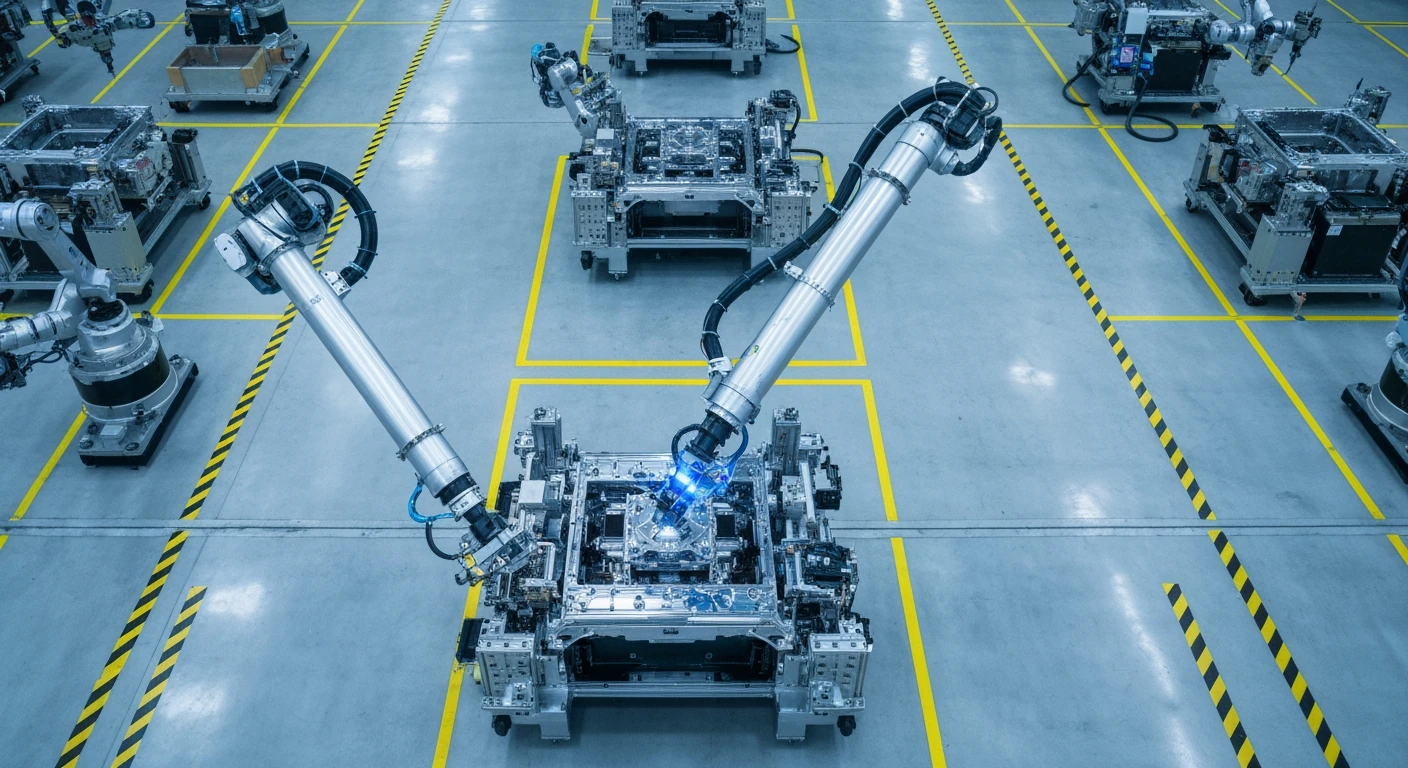
The landscape of robotics is shifting rapidly, propelled by advancements in artificial intelligence. We are moving beyond fixed-task machines toward systems capable of learning, adapting, and even collaborating with humans in complex environments. What most people miss is how profoundly these emerging trends will redefine industrial processes, healthcare, and even daily life over the next decade.
Collaborative Robots (Cobots) and Human-Robot Teaming
The rise of collaborative robots, or cobots, represents a significant leap. Unlike traditional industrial robots caged off for safety, cobots are designed to work alongside human operators, sharing workspaces and tasks. This interaction is not just about proximity; it involves a deeper level of understanding and anticipation. According to a 2023 report by Interact Analysis, the cobot market is projected to reach $11.8 billion by 2032, up from $1.9 billion currently, demonstrating a clear acceleration in adoption across various sectors. Imagine a scenario where a manufacturing assembly line worker can directly hand a component to a cobot, which then precisely places it, all without reprogramming or safety fences. These robots often integrate advanced sensors and AI algorithms to interpret human gestures and intentions, ensuring both efficiency and safety. This close partnership, known as human-robot teaming, promises to enhance productivity while reducing physical strain on human workers, fundamentally changing how we approach tasks.
Learning and Adaptability: Robots That Evolve
The ability for robots to learn and adapt, rather than simply execute pre-programmed instructions, is perhaps the most captivating development. This evolution allows robots to handle unforeseen circumstances and improve their performance over time. Such capabilities are central to the future of artificial intelligence applications in robotics.
Reinforcement Learning in Robotics
Reinforcement learning (RL) is a key driver here. It’s a method where a robot learns to perform tasks by trial and error, much like a child learning to walk. The robot receives positive “rewards” for desired actions and negative “penalties” for undesirable ones, gradually optimizing its behavior. For example, researchers at Google DeepMind have used RL to teach robots complex manipulation tasks, achieving a 90% success rate in picking up novel objects after just a few hours of training in simulated environments. It’s like watching a machine discover its own potential.
Sim-to-Real Transfer
Another critical component is sim-to-real transfer. Training robots in the real world is time-consuming and expensive. What if we could train them in a virtual simulation and then transfer that learned knowledge to physical hardware? That’s precisely what sim-to-real aims to do. This approach significantly accelerates the development cycle, allowing for millions of simulated trials that would be impractical in reality. Researchers at NVIDIA have demonstrated success in transferring complex robotic grasping skills learned in simulation directly to physical robots with minimal real-world fine-tuning.
Novel Robot Morphologies: Soft and Bio-Inspired Robotics
Beyond traditional rigid designs, a new wave of robots is emerging, drawing inspiration from biology and using flexible materials. These soft robots can move and interact with their environment in ways rigid robots cannot. Think of an octopus’s arm or an inchworm’s locomotion. Soft robotics employs compliant materials like silicones and elastomers, allowing for inherent safety when interacting with delicate objects or humans. A team at Harvard University, for instance, developed a fully soft robot that can withstand being run over by a car and continue functioning, illustrating their resilience. This flexibility is particularly useful in areas like delicate medical procedures or exploration in confined spaces. Another fascinating area is bio-inspired robotics, where designs mimic biological systems. This can range from robots that swim like fish to those that fly like insects, offering solutions for navigation in challenging terrains or complex aerial surveillance. These designs often integrate advanced AI for enhanced perception and control, giving them an almost organic feel. Key developments to watch out for include:
- Enhanced human-robot collaboration in diverse work settings.
- Autonomous navigation and manipulation in unstructured environments.
- Widespread adoption of AI-driven learning for robot adaptation.
- Development of new materials enabling more versatile and safer robots.
- Miniaturized robots for medical applications and micro-manufacturing.
- Energy harvesting solutions for extended robot autonomy.
The future of robotics isn’t just about faster or stronger machines; it’s about smarter, more adaptable, and more integrated companions in our daily lives. The unresolved tension here, of course, is how we ensure these advancements benefit all of society, not just a select few.
Navigating the Impact: Preparing for a Robot-Augmented Future
The widespread integration of AI robotics will undoubtedly reshape our societal fabric and economic landscape. Many people worry about job displacement, but the data suggests a more nuanced picture; for example, a 2023 report by the World Economic Forum indicated that while 85 million jobs might be displaced, 97 million new roles could emerge, primarily in areas requiring human-robot collaboration. What most people miss is that this shift demands a proactive approach to workforce development. Industries are already adapting, creating new opportunities for those with the right skills. Consider how individuals can prepare for this future, perhaps by focusing on skills that complement rather than compete with machines. This includes creative problem-solving, critical thinking, and emotional intelligence—qualities machines currently struggle to replicate. A compelling example of successful integration comes from Bright Machines, a company that offers robotic automation solutions for manufacturing. They helped a major electronics manufacturer automate 70% of its assembly line for a specific product, reducing errors by 43% and increasing throughput by 25% within six months. This didn’t eliminate jobs; rather, it shifted human workers to supervisory roles, quality control, and more complex problem-solving tasks. Preparing for this future means understanding the core principles of artificial intelligence and how it interfaces with physical systems. Education around AI applications and robotics will be key, not just for engineers, but for nearly every profession. It’s a bit like learning to drive a car when horses were the primary mode of transport; the world changed, and new skills became primary.
The Unfolding Chapter of Intelligent Machines
The journey of AI robotics is far from over; it’s an unfolding chapter filled with both immense promise and profound questions. As these intelligent machines become increasingly integrated into our lives, the focus must shift beyond mere technological advancement to a holistic understanding of their societal impact. How will we ensure equitable access to the benefits of automation, and what new forms of human creativity and collaboration will emerge as robots take on more routine tasks? The true measure of our success will not just be in what robots can do, but in how thoughtfully we integrate them into a future that prioritizes both innovation and human well-being.
Frequently Asked Questions About AI and Robotics
- What is the difference between AI and robotics?
- Artificial Intelligence (AI) refers to the simulation of human intelligence in machines, enabling them to learn, reason, and solve problems. Robotics, is the engineering discipline dealing with the design, construction, operation, and application of robots. Essentially, AI can be considered the ‘brain’ that gives robots intelligence, allowing them to perform complex tasks autonomously, while robotics provides the ‘body’ and mechanical systems.
- How does machine learning improve robot capabilities?
- Machine learning significantly enhances robot capabilities by allowing them to learn from data without explicit programming. This enables robots to recognize patterns, adapt to new situations, and improve their performance over time. For example, a robot using machine learning can refine its grasping technique for different objects or navigate complex environments more efficiently by learning from past experiences and sensor data.
- Are robots taking over human jobs?
- The impact of robots on human jobs is complex and multifaceted. While some routine, repetitive tasks are being automated, leading to job displacement in certain sectors, AI robotics also creates new jobs in areas like robot maintenance, programming, and ethical oversight. Many experts believe that robots will increasingly augment human workers, taking on dangerous or monotonous tasks and allowing humans to focus on more creative and strategic roles, rather than completely replacing them.
- What are the ethical considerations in developing advanced AI robots?
- Developing advanced AI robots raises several critical ethical considerations. These include concerns about job displacement, ensuring accountability for robotic errors, maintaining data privacy, and preventing algorithmic bias that could lead to discriminatory outcomes. the safety of human-robot interaction and the psychological impact of increasingly intelligent machines on society are important areas of ongoing debate and research.
- Which industries are most impacted by AI robotics?
- AI robotics is significantly impacting a wide range of industries. Manufacturing and logistics are seeing increased efficiency and precision, while healthcare benefits from robotic assistance in surgery, rehabilitation, and patient care. Beyond industrial settings, AI robots are also transforming service industries, exploration (e.g., space and underwater), and even agriculture, by automating tasks and providing new capabilities.