AI in Urban Planning: 15% Traffic Flow Optimization by 2025
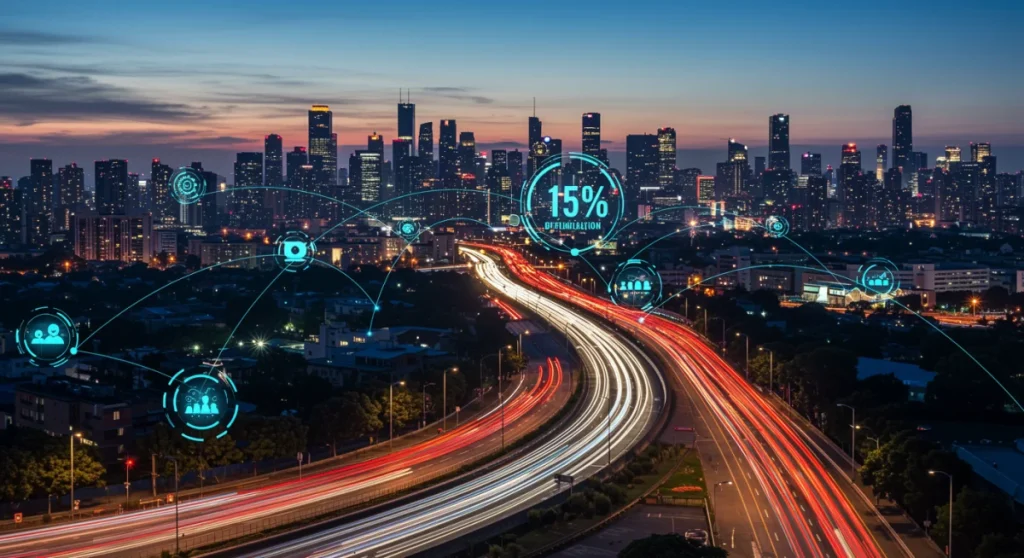
AI urban traffic optimization is poised to dramatically enhance urban mobility, with major US cities targeting a 15% improvement in traffic flow by late 2025 through the strategic deployment of advanced artificial intelligence solutions.
The promise of a smoother commute and less congested streets is not just a dream, but a rapidly approaching reality. Urban Planning with AI: Optimizing Traffic Flow by 15% in Major US Cities by Late 2025 is no longer a futuristic concept but a tangible goal that cities across the United States are actively pursuing, leveraging the power of artificial intelligence to redefine urban mobility.
the dawn of intelligent traffic systems
Modern cities are constantly battling the formidable challenge of traffic congestion. This pervasive issue not only leads to significant economic losses but also contributes to environmental degradation and reduces the quality of life for urban dwellers. However, the advent of artificial intelligence (AI) offers a revolutionary approach to tackle this complex problem, moving beyond traditional, static traffic management methods.
Intelligent Traffic Systems (ITS) powered by AI are fundamentally transforming how urban planners perceive and manage traffic. These systems collect and analyze vast amounts of data from various sources, including sensors, cameras, and even social media, to create a comprehensive, real-time picture of traffic conditions. This data-driven insight allows for dynamic adjustments and predictive modeling that were previously impossible.
real-time data acquisition and analysis
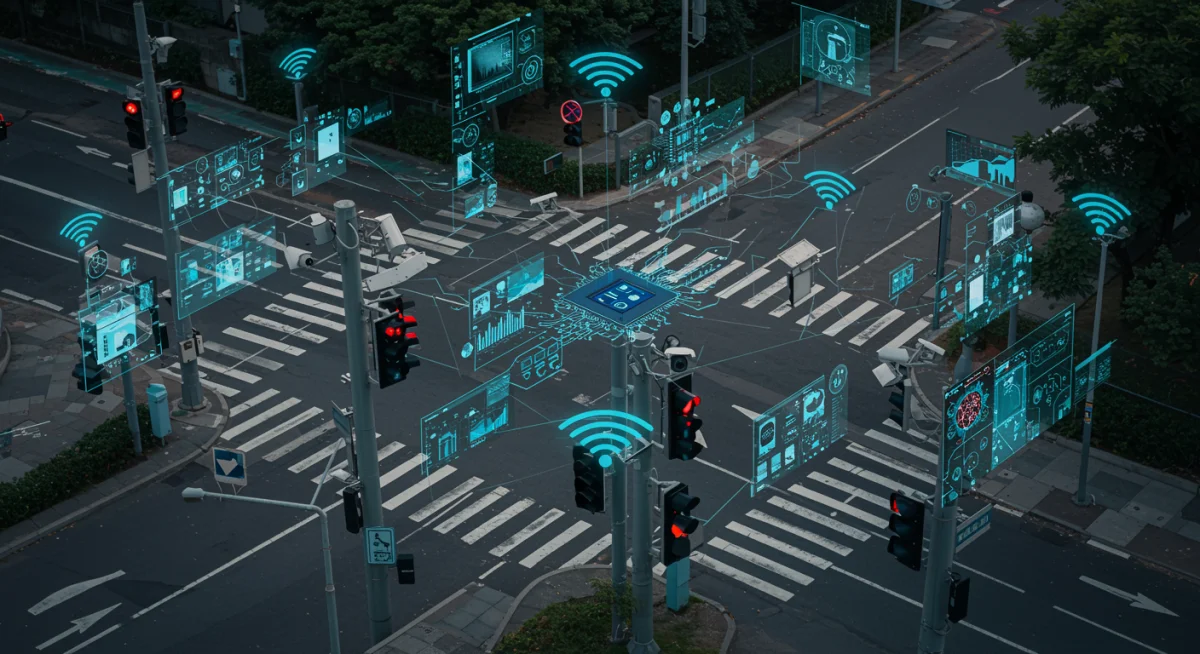
The foundation of effective AI-driven traffic optimization lies in robust data collection. Cities are investing heavily in infrastructure capable of gathering granular data on vehicle movement, pedestrian flow, and incident detection.
- Sensor Networks: Deployment of inductive loops, radar, and lidar sensors at key intersections and roadways.
- CCTV and Video Analytics: Utilizing cameras with AI algorithms to detect congestion, accidents, and unusual patterns.
- Connected Vehicle Data: Leveraging information from GPS devices and smart cars to understand movement patterns.
- Mobile Device Data: Anonymized data from smartphones providing insights into pedestrian and vehicle density.
By integrating these diverse data streams, AI algorithms can identify bottlenecks, predict impending congestion, and suggest proactive interventions. This shift from reactive to predictive management is crucial for achieving substantial improvements in traffic flow, ensuring that urban environments can adapt to the ever-changing demands of their populations.
predictive analytics: anticipating and mitigating congestion
One of the most powerful applications of AI in urban planning is its ability to predict future traffic conditions. Unlike traditional models that often rely on historical averages, AI-driven predictive analytics can factor in a multitude of variables in real-time, offering a much more accurate forecast.
These sophisticated models learn from historical data, current traffic patterns, weather forecasts, special events, and even public transportation schedules. By processing these inputs, AI can anticipate where and when congestion is likely to occur, allowing traffic managers to implement preventative measures before problems escalate. This proactive approach is a game-changer for urban centers struggling with persistent gridlock.
dynamic signal timing and route optimization
The insights gained from predictive analytics are then translated into actionable strategies. Dynamic signal timing is a prime example, where traffic lights adjust their cycles in real-time based on actual traffic demand rather than fixed schedules. This can significantly reduce waiting times and improve overall flow.
Furthermore, AI can assist in route optimization, not just for individual drivers through navigation apps, but for entire traffic networks. By understanding the flow across multiple routes, AI can suggest diversions or even influence traffic through smart signage to distribute vehicles more evenly, preventing single points of failure from crippling an entire district. This holistic view provides unprecedented control and adaptability.
The integration of AI into these operational aspects of traffic management moves beyond simple automation. It enables a continuous learning loop, where the system constantly refines its predictions and interventions based on the outcomes of its previous actions. This iterative improvement is what makes AI such a transformative tool for achieving ambitious goals like a 15% traffic flow optimization.
smart infrastructure: the backbone of ai traffic management
The effectiveness of AI in optimizing traffic flow is heavily reliant on the underlying smart infrastructure. This includes not only the sensors and cameras mentioned earlier but also interconnected communication networks, intelligent road signage, and even autonomous vehicle readiness. Without a robust and integrated physical layer, the most advanced AI algorithms would lack the data and control mechanisms to operate effectively.
Investment in smart infrastructure is a long-term commitment for cities aiming to stay ahead of urban challenges. It involves upgrading existing systems and deploying new technologies capable of seamless communication and data exchange. This foundational work ensures that AI has the necessary tools to gather information and implement its decisions across the urban landscape.
the role of 5g and iot in urban mobility
The emergence of 5G networks and the Internet of Things (IoT) is a critical enabler for sophisticated AI traffic management. 5G provides the low-latency, high-bandwidth connectivity required for real-time data transmission from thousands of sensors and devices across a city. IoT devices, from smart traffic lights to connected public transport, form the distributed intelligence network.
- Enhanced Connectivity: 5G facilitates instantaneous communication between vehicles, infrastructure, and central AI systems.
- Massive Data Streams: IoT sensors generate continuous data, feeding AI algorithms with rich, up-to-the-minute information.
- Edge Computing: Processing data closer to the source reduces latency and allows for quicker responses to changing traffic conditions.
This symbiotic relationship between AI, 5G, and IoT creates an ecosystem where traffic management can be dynamic, responsive, and highly efficient. It’s not just about collecting data, but about creating an intelligent fabric that allows the city to ‘think’ and ‘react’ in real-time to optimize movement.
case studies and pilot programs in us cities
Across the United States, several major cities are already implementing and testing AI-powered traffic optimization solutions, demonstrating promising results. These pilot programs serve as crucial proving grounds, allowing urban planners to refine strategies and understand the practical implications of deploying such advanced technologies on a large scale.
Cities like Pittsburgh, Los Angeles, and Atlanta have been at the forefront, experimenting with adaptive traffic signal systems that use AI to learn traffic patterns and adjust timings. These initiatives have already reported significant reductions in travel times and idling, laying the groundwork for the ambitious 15% optimization target by late 2025.
lessons learned and future scalability
The experiences from these early adopters provide invaluable lessons. They highlight the importance of not just the technology itself, but also the integration challenges, data privacy concerns, and the need for public acceptance. Successful deployments often involve phased rollouts and continuous community engagement.
Looking ahead, the scalability of these solutions is paramount. What works in a specific district needs to be adaptable to an entire metropolitan area. AI models must be robust enough to handle the complexity and diversity of different urban environments, from downtown cores to suburban arterial roads. The goal is to create a harmonious system where every component contributes to overall efficiency, moving towards a truly smart city.
challenges and ethical considerations in ai traffic management
While the benefits of AI in urban traffic optimization are clear, the path to implementation is not without its challenges. Technical hurdles, such as ensuring data accuracy and system interoperability, are significant. Moreover, ethical considerations surrounding data privacy, algorithmic bias, and the potential impact on jobs within the transportation sector require careful attention.
Cities must navigate these complexities by establishing clear policies, investing in robust cybersecurity measures, and fostering transparency in how AI systems are designed and operated. Public trust is essential for the widespread adoption of these technologies, making ethical governance as crucial as technological innovation.
ensuring equity and data privacy
A key concern is ensuring that AI traffic solutions benefit all communities equally and do not inadvertently exacerbate existing inequalities. Algorithmic bias, if unchecked, could lead to certain neighborhoods receiving less optimal traffic management, accentuating disparities.
- Data Anonymization: Implementing strict protocols to anonymize collected data to protect individual privacy.
- Bias Detection: Regularly auditing AI algorithms to identify and mitigate any inherent biases in their decision-making.
- Community Engagement: Involving diverse communities in the planning and deployment phases to address their specific needs and concerns.
Striking a balance between maximizing traffic efficiency and upholding ethical standards is crucial. The goal is not just faster travel, but fairer and more equitable urban mobility for everyone. This requires continuous dialogue and adaptation as AI technologies evolve.
the future of urban mobility: beyond 2025
Achieving a 15% optimization in traffic flow by late 2025 is an ambitious yet attainable goal, marking a significant milestone in the evolution of urban planning. However, this is merely a stepping stone towards a much broader vision for the future of urban mobility. Beyond 2025, AI will continue to play an even more integral role, integrating with other emerging technologies to create truly seamless and sustainable urban environments.
Imagine cities where autonomous vehicles communicate directly with intelligent infrastructure, where public transportation is dynamically rerouted based on real-time demand, and where traffic incidents are resolved almost instantly. This future is being built today, with AI as its core intelligence, promising not just optimized traffic, but entirely reimagined urban experiences.
integration with autonomous vehicles and smart cities
The synergy between AI-driven traffic management and autonomous vehicles (AVs) will be transformative. AVs, equipped with their own AI, can communicate with the city’s central AI system, enabling highly coordinated movement and further reducing congestion and accidents. This creates a powerful feedback loop, where city infrastructure and vehicles work in concert.
This integration extends to the broader concept of smart cities, where traffic management is just one component of a larger interconnected ecosystem. AI can optimize energy consumption, waste management, and public safety, all contributing to a higher quality of life. The 2025 target is a testament to what focused AI application can achieve, paving the way for even grander urban innovations.
| Key Aspect | Brief Description |
|---|---|
| AI-Driven Optimization | Utilizing artificial intelligence to analyze traffic data and make real-time adjustments for improved flow. |
| 15% Traffic Reduction Goal | Ambitious target for major US cities to optimize traffic flow by late 2025 through AI implementation. |
| Smart Infrastructure | Foundation of sensors, cameras, 5G, and IoT devices enabling data collection and AI interventions. |
| Predictive Analytics | AI’s capability to forecast congestion and proactively manage traffic before issues arise. |
frequently asked questions about ai traffic optimization
AI urban traffic optimization involves using artificial intelligence algorithms to analyze real-time and historical traffic data from various sources like sensors and cameras. This analysis allows cities to dynamically manage traffic signals, reroute vehicles, and predict congestion, aiming to improve overall flow and reduce travel times effectively.
Achieving a 15% optimization involves a multi-faceted approach. AI systems enhance efficiency through dynamic signal timing, predictive congestion management, and intelligent route suggestions. By continuously learning from traffic patterns and adapting to changing conditions, AI minimizes bottlenecks, reduces idling time, and optimizes vehicle movement across the urban network significantly.
AI traffic management relies on a robust ecosystem of technologies. Key components include extensive sensor networks (inductive loops, radar, lidar), CCTV cameras with video analytics, 5G connectivity for high-speed data transfer, and Internet of Things (IoT) devices integrated into smart infrastructure like traffic lights and digital signage. These elements provide the data and communication backbone.
Implementing AI traffic solutions faces challenges such as ensuring data privacy and security, addressing potential algorithmic biases that could create inequities, and achieving seamless integration with existing urban infrastructure. Public acceptance and funding for the necessary technological upgrades also represent significant hurdles that require careful planning and community engagement.
For daily commuters, AI traffic optimization promises substantial benefits, including reduced travel times, less time spent idling in traffic, and a more predictable commute. This leads to decreased fuel consumption, lower stress levels, and an overall improvement in urban mobility quality. The goal is a smoother, more efficient, and more pleasant daily travel experience for everyone.
conclusion
The journey towards optimizing urban traffic flow by 15% in major US cities by late 2025, driven by artificial intelligence, is a testament to the transformative power of technology in urban planning. This ambitious goal is not merely about moving cars faster; it’s about creating more livable, sustainable, and economically vibrant cities. While challenges persist, the ongoing advancements in AI, coupled with strategic infrastructure investments and a commitment to ethical deployment, paint a promising picture. The future of urban mobility is intelligent, adaptive, and designed to enhance the quality of life for millions, redefining our relationship with the urban landscape for generations to come.