Photography Gadgets for Amateurs: Capture Stunning Shots
Discover essential photography gadgets for amateurs that can transform everyday snapshots into stunning, professional-looking images, boosting creativity and technical prowess with ease.
Are you an aspiring photographer looking to elevate your craft? The world of photography can seem daunting, filled with complex terminology and expensive gear. However, you don’t need a professional studio or a five-figure camera to start capturing breathtaking images. With the right photography gadgets for amateurs, you can significantly enhance your photos, bringing a professional touch to your work without breaking the bank. This guide will reveal five essential pro-level tools that offer insider knowledge, empowering you to capture stunning shots and unlock your full creative potential.
The Power of a Compact Tripod: Stability and Sharpness
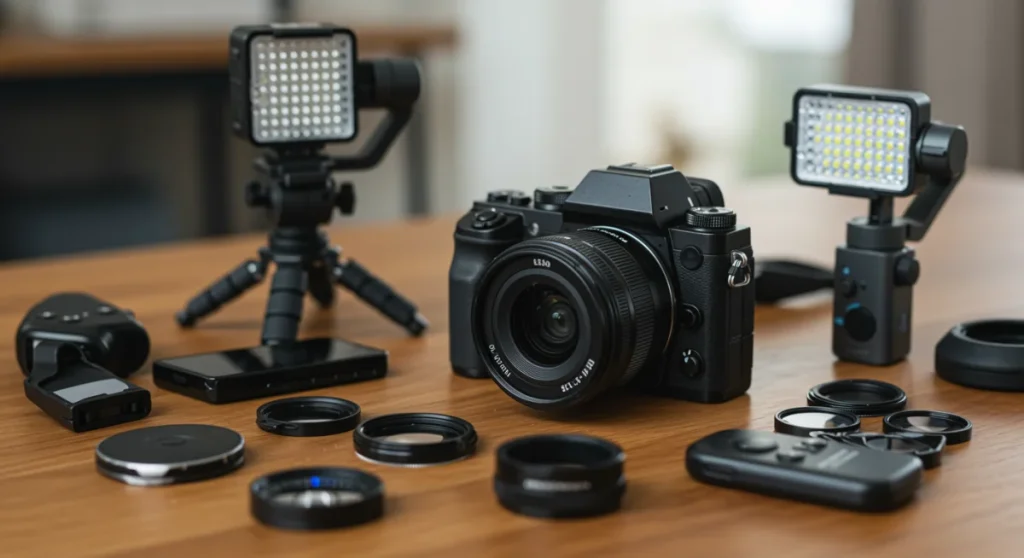
A tripod might seem like a basic accessory, but its impact on image quality, especially for amateur photographers, is profound. It provides the essential stability needed to prevent camera shake, which is a common culprit for blurry photos. Beyond just avoiding blur, a good tripod opens up a world of creative possibilities, allowing for longer exposures and precise framing that handheld shooting simply cannot achieve.
Many amateur photographers overlook the importance of a solid foundation for their camera. Even the slightest movement during exposure can degrade image sharpness. A compact tripod, however, ensures your camera remains perfectly still, especially in challenging lighting conditions or when you’re experimenting with advanced techniques.
Choosing the Right Compact Tripod
When selecting a tripod, consider its weight, portability, and maximum load capacity. For amateurs, a lightweight and easily foldable model that can fit into a backpack is often ideal. You want something sturdy enough to hold your camera securely but not so cumbersome that you’ll hesitate to bring it along on your adventures.
- Material: Look for aluminum or carbon fiber for a good balance of weight and durability.
- Head Type: Ball heads offer quick adjustments, while pan-tilt heads provide more precise control for landscapes.
- Leg Locks: Flip locks are fast, twist locks are often more secure.
- Height: Ensure it extends to a comfortable working height but also collapses compactly.
Investing in a quality compact tripod is one of the smartest moves an amateur photographer can make. It’s not just about preventing blur; it’s about giving yourself the freedom to explore advanced photographic techniques with confidence and precision. From capturing serene landscapes to intricate macro shots, a stable platform is your best friend.
External LED Light Panels: Mastering Illumination
Lighting is arguably the most critical element in photography. While natural light is often preferred, relying solely on it can be limiting. This is where external LED light panels come into play. These portable, versatile light sources allow amateur photographers to control and manipulate light, transforming ordinary scenes into captivating images. They are far superior to a camera’s built-in flash, offering softer, more even illumination.
Many beginners struggle with harsh shadows or poorly lit subjects. An external LED panel provides a continuous, adjustable light source that can fill shadows, highlight details, and even create dramatic effects. Their ease of use makes them perfect for those still learning the nuances of lighting.
Benefits of Portable LED Lights
Portable LED lights are characterized by their compact size, long battery life, and adjustable brightness and color temperature. This flexibility makes them indispensable for various shooting scenarios, from portraiture to product photography.
- Soft, Even Light: Reduces harsh shadows and provides flattering illumination.
- Color Temperature Control: Match ambient light or create specific moods with adjustable Kelvin settings.
- Portability: Small and lightweight, easy to carry for on-location shoots.
- Versatility: Ideal for portraits, macro, product, and even video lighting.
By incorporating an external LED light panel into your gear, you gain unprecedented control over your lighting, a skill that distinguishes professional-looking photographs. Experimenting with different angles and intensities will quickly teach you how light shapes an image, allowing you to craft stunning shots with greater intent.
Smartphone Gimbals: Smooth Video and Creative Angles
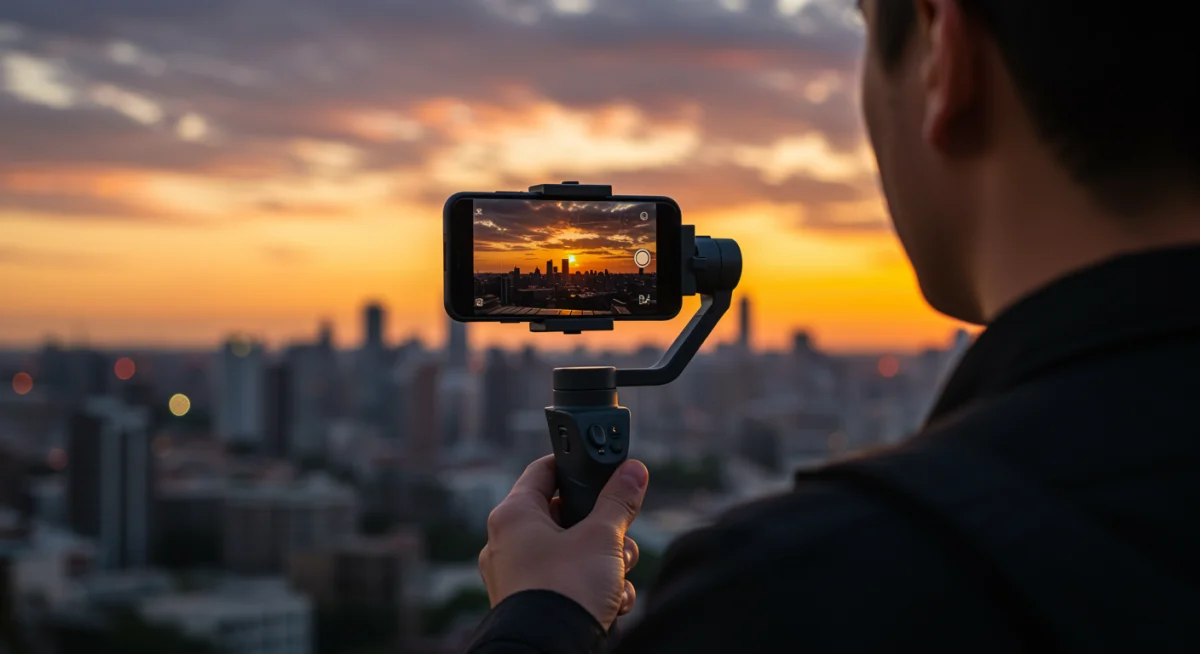
In an age where smartphones are powerful photographic tools, a gimbal stabilizer is a game-changer for amateur videographers and photographers alike. A smartphone gimbal uses motors to counteract unwanted movements, ensuring your footage is incredibly smooth and stable, free from jitters and shakes. This technology, once exclusive to professional film sets, is now accessible and affordable for enthusiasts.
Capturing dynamic shots with a smartphone can be challenging; even walking can introduce significant camera shake. Gimbals eliminate this problem, allowing for fluid tracking shots, smooth pans, and cinematic movements that elevate the quality of your mobile content significantly.
Unlocking Cinematic Potential with Gimbals
Beyond stabilization, modern smartphone gimbals often come with intelligent features such as object tracking, time-lapse modes, and panoramic stitching, providing creative tools that were once complex to achieve. They essentially turn your smartphone into a miniature film studio.
- Cinematic Smoothness: Eliminates shakes and jitters for professional-looking video.
- Creative Modes: Access features like active tracking, hyperlapse, and slow motion.
- Ergonomic Design: Improves grip and comfort during extended shooting sessions.
- Portability: Easily foldable and lightweight, perfect for travel and vlogging.
For any amateur looking to produce high-quality video content or even capture unique, stable still images from challenging angles, a smartphone gimbal is an indispensable tool. It transforms casual phone photography and videography into a more polished and professional endeavor, making it easier to tell compelling visual stories.
Clip-On Lenses for Smartphones: Expanding Your Perspective
While smartphone cameras have advanced remarkably, they still have limitations, particularly concerning optical zoom and specialized effects. Clip-on lenses are ingenious little gadgets that attach directly to your smartphone’s camera, offering a range of focal lengths and creative possibilities that are otherwise inaccessible. These lenses are an affordable way for amateur photographers to experiment with different perspectives without investing in a dedicated camera system.
Many smartphone users find themselves wishing for wider shots, closer macro details, or the ability to zoom without losing quality. Clip-on lenses directly address these needs, providing optical solutions that digital zoom or software enhancements cannot replicate effectively.
Types of Smartphone Clip-On Lenses
There’s a wide variety of clip-on lenses available, each designed for a specific photographic purpose. The most popular types include wide-angle, macro, fisheye, and telephoto lenses. Each offers a distinct way to see and capture the world around you.
- Wide-Angle Lenses: Perfect for landscapes, architecture, or group photos, capturing a broader field of view.
- Macro Lenses: Ideal for extreme close-ups, revealing intricate details of small subjects.
- Fisheye Lenses: Create a unique, distorted, ultra-wide spherical effect for artistic shots.
- Telephoto Lenses: Provide optical zoom, bringing distant subjects closer without pixelation.
Clip-on lenses empower amateur photographers to explore new creative avenues with their existing smartphone camera. They are compact, easy to use, and offer a tangible improvement in image quality and versatility, making them a fantastic entry point into specialized photography without significant financial commitment.
Remote Shutter Release: Precision and Self-Portraits
A remote shutter release is a small but mighty gadget that can dramatically improve your photography, especially when shooting on a tripod. This simple device allows you to trigger your camera’s shutter without physically touching it, eliminating any potential camera shake. For amateur photographers, this means sharper images and greater flexibility in various shooting scenarios.
Touching the camera often introduces subtle vibrations, leading to slight blur, particularly during long exposures or when using telephoto lenses. A remote shutter release bypasses this issue entirely, ensuring maximum sharpness and control, even when you’re not directly behind the lens.
Benefits of Using a Remote Shutter Release
Beyond preventing camera shake, a remote shutter release is invaluable for self-portraits, group shots where the photographer wants to be included, and wildlife photography where discretion is key. They come in wired and wireless versions, offering different levels of convenience.
- Eliminates Camera Shake: Ensures sharper images, crucial for long exposures and macro photography.
- Convenience for Self-Portraits: Allows the photographer to be in the shot without needing a timer.
- Wildlife Photography: Trigger the shutter from a distance without disturbing subjects.
- Creative Control: Essential for bulb mode photography, allowing precise long exposure timing.
Incorporating a remote shutter release into your amateur photography kit is a subtle yet powerful upgrade. It provides a level of precision and freedom that significantly enhances image quality and expands your creative possibilities, making it easier to capture those perfectly composed and sharp shots.
Memory Cards and Portable Storage: Never Miss a Moment
While not as glamorous as other gadgets, reliable memory cards and portable storage solutions are absolutely critical for any photographer, amateur or professional. Running out of space or experiencing data loss can be devastating. High-speed, high-capacity memory cards ensure you can capture countless images and videos without interruption, while portable storage devices offer a crucial backup for your precious work on the go.
Many amateurs focus solely on the camera and lens, often overlooking the importance of where their images are stored. A slow or full memory card can lead to missed shots or frustrating delays, undermining the creative flow. Similarly, without a backup, all your hard work is vulnerable to loss.
Choosing and Using Storage Wisely
When selecting memory cards, prioritize speed (UHS-I or UHS-II for modern cameras) and capacity. Always carry multiple cards. For portable storage, consider rugged external hard drives or solid-state drives (SSDs) that can withstand the rigors of travel and provide fast data transfer.
- High-Speed Cards: Essential for continuous shooting and 4K video recording.
- Sufficient Capacity: Prevents interruptions and allows for extensive shooting sessions.
- Portable Backup Devices: Safeguard your photos against accidental deletion or card failure.
- Organized Workflow: Label cards and transfer data regularly to prevent confusion and loss.
By prioritizing reliable memory cards and portable storage, amateur photographers can focus entirely on capturing stunning shots without the anxiety of running out of space or losing their work. These often-underestimated gadgets are the foundation of a robust and worry-free photographic workflow, ensuring every precious moment is securely saved.
| Gadget | Key Benefit for Amateurs |
|---|---|
| Compact Tripod | Ensures sharp, blur-free images and enables long exposure photography. |
| External LED Light | Provides controlled, soft illumination, eliminating harsh shadows. |
| Smartphone Gimbal | Delivers smooth, cinematic video footage and stable mobile shots. |
| Clip-On Lenses | Expands smartphone camera capabilities for wide, macro, and zoom shots. |
Frequently Asked Questions About Photography Gadgets
Yes, absolutely. A tripod is crucial for achieving sharp images, especially in low light or when using slower shutter speeds. It also enables creative techniques like long exposure and time-lapses, significantly improving the quality and versatility of your amateur photography.
While natural light is often preferred, external LED lights offer control that natural light cannot. They can supplement, enhance, or even replace natural light when conditions are poor, allowing you to shape shadows and highlights precisely for stunning results.
Modern smartphone gimbals are designed with user-friendliness in mind. Most models feature intuitive controls and companion apps that make balancing and operating them straightforward, even for absolute beginners. They significantly simplify capturing smooth video.
For beginners, a wide-angle or macro clip-on lens is often recommended. A wide-angle broadens your perspective for landscapes, while a macro lens opens up the fascinating world of close-up photography, both offering immediate and visible improvements to your smartphone photos.
A remote shutter release prevents camera shake caused by pressing the shutter button directly. This results in sharper images, particularly vital for long exposures, macro shots, or when the camera is on a tripod. It also allows for easier self-portraits and group photos.
Conclusion
Embarking on the journey of photography as an amateur is an exciting endeavor, and the right tools can make all the difference. By strategically incorporating these five pro-level photography gadgets for amateurs—a compact tripod, an external LED light panel, a smartphone gimbal, clip-on lenses, and a remote shutter release—you’re not just buying equipment; you’re investing in your creative growth. Each gadget offers a unique advantage, from enhanced stability and superior lighting to expanded perspectives and precise control, enabling you to capture stunning shots that truly stand out. Remember, the best gear is the gear you understand and use effectively. Start experimenting with these tools, and watch your photographic skills flourish, transforming every snap into a potential masterpiece.