Cloud Migration Strategies: Cut Costs by 15% in 3 Months

Implementing strategic cloud migration approaches can significantly reduce infrastructure costs for US tech companies, aiming for a 15% saving within a quarter through optimized resource allocation and efficient cloud adoption.
For US tech companies, navigating the complexities of modern infrastructure demands a keen eye on efficiency and cost-effectiveness. This article delves into robust cloud migration strategies, offering insider tips designed to help your organization reduce infrastructure costs by a significant 15% within just three months, ensuring both operational agility and financial prudence.
Understanding the Cloud Cost Landscape
Before embarking on any migration, it’s crucial for US tech companies to thoroughly understand their current infrastructure spending. Many organizations operate with legacy systems that, while familiar, incur substantial hidden costs related to maintenance, power consumption, and physical security. Cloud adoption offers a clear path to mitigate these expenses, but only with a well-defined strategy.
The promise of the cloud isn’t just about shifting servers; it’s about transforming operational paradigms. Identifying which workloads are truly cloud-ready and which require re-architecting is the initial, most critical step. This foundational analysis prevents costly missteps and ensures that the migration aligns with overarching business objectives. Without a clear understanding of current expenditure and potential cloud benefits, the migration can quickly become an expense rather than an investment.
Assessing Current Infrastructure Spending
- Detailed Cost Analysis: Break down all on-premises costs, including hardware depreciation, software licenses, power, cooling, and IT personnel salaries.
- Performance Benchmarking: Evaluate current system performance and identify bottlenecks that could be alleviated by cloud scalability.
- Future Growth Projections: Anticipate future resource needs and how on-premises infrastructure would struggle to meet them efficiently.
A comprehensive assessment provides a baseline for measuring cost savings post-migration. It also highlights areas where immediate savings can be realized, such as decommissioning underutilized servers or optimizing existing software licenses. Understanding the true total cost of ownership (TCO) for your current infrastructure is paramount to building a compelling business case for cloud migration.
In essence, a clear picture of your existing infrastructure’s financial drain is the first and most vital step toward realizing significant cost reductions through cloud migration. This detailed analysis forms the bedrock of all subsequent strategic decisions, ensuring that every dollar saved is a result of informed planning rather than mere speculation.
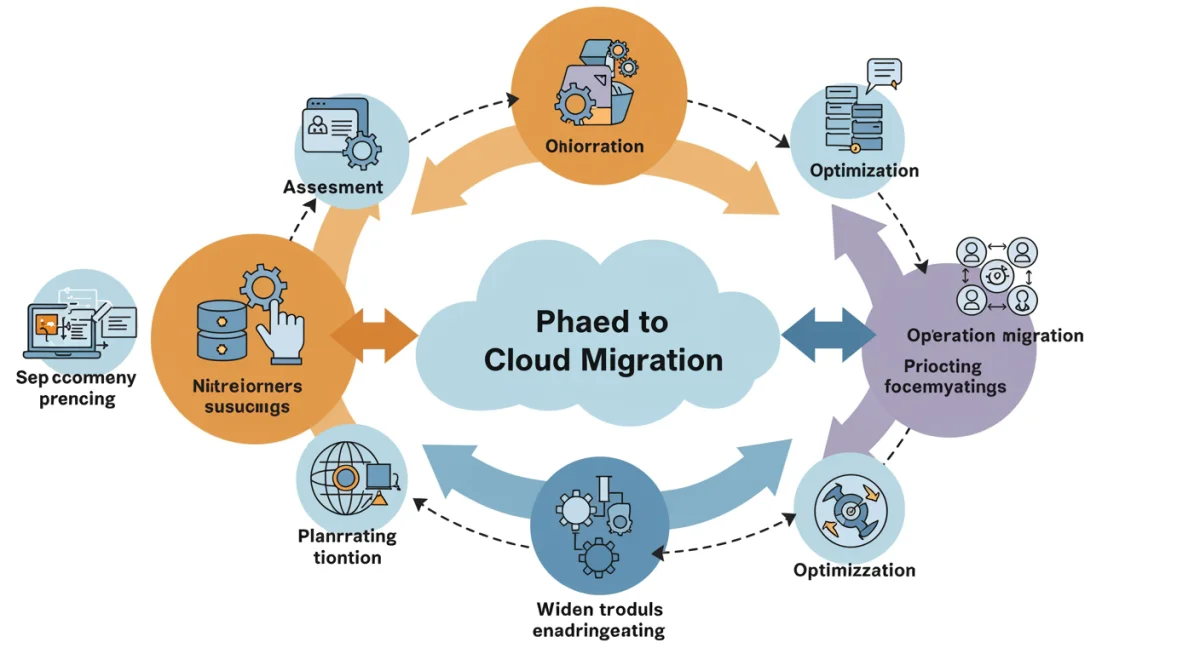
Developing a Phased Migration Strategy
A successful cloud migration isn’t a single event but a carefully orchestrated series of steps. For US tech companies aiming for rapid cost reduction, a phased approach is essential. This involves prioritizing workloads, starting with those that offer the quickest return on investment and least disruption.
Instead of attempting a ‘big bang’ migration, which carries high risks and can be incredibly complex, a phased strategy allows for continuous learning and optimization. Each successful phase provides valuable insights that can be applied to subsequent stages, reducing overall risk and improving efficiency. This iterative process is particularly effective for achieving cost savings within a tight three-month timeframe.
Prioritizing Workloads for Migration
Identify applications and services that are either low-risk or high-impact for cloud migration. “Lift and shift” operations, where applications are moved to the cloud with minimal changes, can be a good starting point for quick wins. However, consider re-platforming or re-architecting for applications that could benefit significantly from cloud-native features, even if they require more initial effort.
- Low-Risk Applications: Non-critical applications or development/test environments that can be quickly moved to the cloud.
- High-Impact Services: Applications with fluctuating demand that can leverage cloud autoscaling to reduce peak capacity costs.
- Legacy System Decommissioning: Identifying systems that can be retired after migration, eliminating their ongoing maintenance costs.
The selection of initial workloads should be strategic, focusing on quick wins that demonstrate tangible cost savings and build internal confidence. This early success can then be leveraged to secure further resources and buy-in for more complex migration phases. A clear roadmap for each workload ensures a structured and manageable transition.
By adopting a phased approach, companies can manage the migration process more effectively, minimize business disruption, and realize measurable cost benefits incrementally. This methodical strategy is crucial for achieving the targeted 15% cost reduction within a short period, as it allows for continuous adjustments and optimizations based on real-world performance and expenditure.
Leveraging Cloud-Native Services for Optimization
Simply moving existing applications to the cloud often results in ‘lift and shift’ costs that are not significantly lower than on-premises. True cost reduction comes from embracing cloud-native services. These services are designed for scalability, efficiency, and often come with a pay-as-you-go model that eliminates the need for extensive upfront capital expenditure.
For US tech companies, leveraging serverless computing, managed databases, and containerization can dramatically reduce operational overhead. These services abstract away infrastructure management, allowing IT teams to focus on innovation rather than maintenance. This shift in focus is not just about cost; it’s about accelerating development cycles and improving overall business agility.
Implementing Serverless and Containerization
Serverless architectures, such as AWS Lambda or Azure Functions, allow you to run code without provisioning or managing servers. You only pay for the compute time consumed, making it incredibly cost-effective for event-driven workloads. Containerization with Docker and Kubernetes offers portability and efficient resource utilization, further optimizing cloud spending.
- Serverless Benefits: Reduced operational overhead, automatic scaling, and granular billing based on actual usage.
- Containerization Advantages: Consistent environments across development and production, improved resource isolation, and faster deployment cycles.
- Managed Databases: Offloading database administration tasks to the cloud provider, reducing staff requirements and ensuring high availability.
By strategically adopting these cloud-native services, companies can significantly reduce their infrastructure footprint and associated costs. The inherent elasticity of these solutions ensures that resources are scaled precisely to demand, avoiding over-provisioning and idle capacity charges. This optimization is a cornerstone of achieving substantial savings within the stipulated three months.
The transition to cloud-native services is more than a technical upgrade; it’s a strategic move towards a more agile and cost-efficient operating model. By embracing these innovative solutions, US tech companies can unlock the full potential of cloud computing, transforming their infrastructure into a competitive advantage.
Optimizing Cloud Resource Allocation and Usage
Even after migrating to the cloud, continuous optimization of resource allocation is crucial for maintaining cost efficiency. Cloud providers offer a vast array of instance types and storage options, and choosing the right combination for your specific workloads can lead to significant savings. Many companies over-provision resources, leading to unnecessary expenses.
Regular monitoring and analysis of cloud resource usage are essential. Tools provided by cloud vendors, as well as third-party solutions, can help identify idle resources, right-size instances, and optimize storage tiers. This proactive management prevents cost creep and ensures that your cloud environment remains lean and efficient.
Rightsizing Instances and Storage
- Instance Rightsizing: Analyze CPU, memory, and network usage to select the smallest instance type that meets performance requirements.
- Storage Tiering: Move infrequently accessed data to cheaper, archival storage tiers to reduce costs without compromising data availability.
- Automated Shutdowns: Implement policies to automatically shut down non-production environments during off-hours, saving compute costs.
Beyond rightsizing, consider reserved instances or savings plans for predictable workloads. These options offer significant discounts compared to on-demand pricing, provided you commit to a certain level of usage over a period. Strategic planning in this area can yield substantial, long-term cost reductions.
The key to sustained cost reduction in the cloud lies in vigilant management and continuous optimization. By actively monitoring, rightsizing, and leveraging cost-saving features, US tech companies can ensure their cloud infrastructure remains a powerful, yet economical, asset.
Implementing Robust Cost Governance and Monitoring
Achieving and maintaining a 15% cost reduction within three months requires more than just a one-time migration effort; it demands robust cost governance and continuous monitoring. Without proper oversight, cloud costs can quickly escalate, negating any initial savings. Establishing clear policies and responsibilities for cloud spending is paramount.
Tools for cost tracking, budgeting, and alert systems are invaluable. These allow companies to gain real-time visibility into their cloud expenditure, identify anomalies, and enforce budgetary limits. Proactive management of cloud finances ensures that the initial cost-saving goals are met and sustained over time.
Establishing Cost Visibility and Accountability
Assign ownership for cloud spending to specific teams or individuals. Implement tagging strategies to categorize resources by project, department, or owner, making it easier to track and allocate costs. This transparency fosters accountability and encourages teams to optimize their resource consumption.
- Real-time Dashboards: Utilize cloud provider dashboards or third-party tools to visualize spending trends and identify cost drivers.
- Budget Alerts: Set up automated alerts to notify stakeholders when spending approaches predefined thresholds.
- Regular Cost Reviews: Conduct periodic reviews of cloud expenditure with relevant teams to identify areas for optimization and ensure adherence to budgets.
Furthermore, consider implementing FinOps practices, which integrate financial accountability with cloud operations. This collaborative approach brings together finance, technology, and business teams to make data-driven decisions on cloud spending. FinOps is not just about saving money; it’s about maximizing business value from cloud investments.
Effective cost governance transforms cloud spending from a black box into a transparent, controllable expense. By integrating financial practices with operational management, US tech companies can ensure that their cloud migration strategies not only achieve initial cost reduction targets but also foster a culture of continuous financial efficiency.
Security and Compliance in Cloud Migration
While cost reduction is a primary driver for cloud migration, it’s imperative that security and compliance are not overlooked. For US tech companies, adhering to regulations like HIPAA, SOC 2, and GDPR (if applicable to their data) is non-negotiable. A secure cloud environment protects sensitive data and maintains customer trust, preventing potentially catastrophic breaches.
Integrating security from the outset of the migration strategy rather than as an afterthought is crucial. This involves selecting cloud providers with robust security features, implementing strong access controls, and encrypting data both in transit and at rest. Security should be a foundational element, not an add-on, to any cloud initiative.
Ensuring Data Protection and Regulatory Adherence
- Shared Responsibility Model: Understand the division of security responsibilities between your organization and the cloud provider.
- Access Management: Implement multi-factor authentication (MFA) and least privilege access principles for all cloud resources.
- Data Encryption: Encrypt all sensitive data at rest and in transit, utilizing cloud provider encryption services.
- Compliance Audits: Regularly audit cloud environments to ensure continuous adherence to industry and regulatory standards.
Beyond technical controls, establishing clear security policies and conducting regular employee training are vital. Human error remains a significant vulnerability, and an educated workforce is the first line of defense. Ensuring compliance also involves meticulous documentation of security measures and incident response plans.
A secure and compliant cloud migration not only safeguards valuable assets but also enhances the long-term viability and reputation of the company. By prioritizing security alongside cost savings, US tech companies can achieve a balanced and sustainable transition to the cloud, protecting their investments and their customers.
| Key Strategy | Brief Description |
|---|---|
| Phased Migration | Move workloads incrementally, starting with low-risk/high-impact applications for quick wins. |
| Cloud-Native Adoption | Utilize serverless, containers, and managed services to reduce operational overhead. |
| Resource Optimization | Continuously rightsize instances, tier storage, and automate shutdowns to minimize waste. |
| Cost Governance | Implement FinOps, tagging, and budget alerts for transparent and accountable cloud spending. |
Frequently Asked Questions About Cloud Migration
The initial step involves a comprehensive assessment of your current on-premises infrastructure, including all associated costs, performance benchmarks, and future growth projections. This baseline understanding is critical for identifying potential savings and building a strong business case for migration.
Achieving this reduction involves a phased migration focusing on quick wins, aggressive adoption of cloud-native services like serverless and containers, continuous resource optimization through rightsizing, and implementing robust cost governance. Proactive management of cloud resources is key to rapid savings.
Cloud-native services are designed specifically for the cloud environment, offering features like automatic scaling, pay-as-you-go billing, and managed operations. They reduce the need for extensive infrastructure management, allowing companies to pay only for what they use and significantly cut operational overhead.
Cost governance establishes policies, responsibilities, and tools for tracking, budgeting, and monitoring cloud spending. It ensures transparency, accountability, and allows for real-time adjustments to prevent cost overruns, maintaining financial discipline throughout the cloud journey.
No, security should never be compromised. A well-planned migration integrates security from the outset, focusing on robust access controls, data encryption, and compliance with regulations. Prioritizing security alongside cost savings ensures a secure and compliant transition without sacrificing data protection.
Conclusion
For US tech companies, strategic cloud migration is not merely a technological upgrade but a critical pathway to significant infrastructure cost reduction and enhanced operational agility. By meticulously assessing current expenditures, adopting a phased migration approach, embracing cloud-native services, and implementing rigorous cost governance, organizations can realistically target and achieve a 15% reduction in infrastructure costs within a demanding three-month timeframe. This journey, while challenging, promises not only financial savings but also a more resilient, scalable, and innovative technological foundation for future growth in an increasingly competitive market.