Decentralized AI: US Frameworks for Secure, Private AI in 2025

Decentralized AI frameworks in the US are pivotal for securing and privatizing AI models by distributing data and processing, addressing critical concerns about centralized control and data vulnerability.
As we approach 2025, the conversation around artificial intelligence is increasingly shifting towards how to make these powerful systems more secure, transparent, and private. The advent of decentralized AI frameworks in the United States offers a compelling answer to these challenges, promising a future where AI models are not only more robust but also more aligned with ethical principles and user control. This paradigm shift addresses critical vulnerabilities inherent in centralized AI systems, paving the way for a new era of trust and innovation.
The imperative for decentralized AI
The rapid advancement of artificial intelligence has brought unprecedented capabilities, but it has also illuminated significant concerns regarding data privacy, security, and the concentration of power. Centralized AI systems, while efficient, often pose single points of failure, making them vulnerable to cyberattacks, data breaches, and algorithmic biases that can go unchecked. The need for a more resilient and equitable foundation for AI development has never been more pressing, driving the exploration and adoption of decentralized approaches.
Decentralized AI, by its very nature, distributes data, processing, and control across multiple nodes rather than relying on a single, central authority. This architectural shift fundamentally changes how AI models are built, trained, and deployed, offering inherent advantages in terms of security and privacy. By removing the central honeypot of data, the risk of large-scale data breaches is significantly reduced, and the integrity of AI models becomes more difficult to compromise. Furthermore, the distributed nature allows for greater transparency and auditability, fostering trust in AI decision-making processes.
Addressing data privacy through distributed ledgers
One of the primary drivers for decentralized AI is the enhancement of data privacy. Traditional AI training often requires vast amounts of sensitive data to be aggregated in centralized locations, raising significant privacy concerns. Decentralized frameworks leverage technologies like distributed ledgers and federated learning to allow AI models to learn from data without directly accessing or centralizing individual data points. This approach ensures that personal and proprietary information remains on local devices or within secure enclaves, significantly mitigating privacy risks.
- Federated learning: Enables collaborative AI model training without exchanging raw data.
- Homomorphic encryption: Allows computations on encrypted data, preserving privacy.
- Differential privacy: Adds noise to data to protect individual records while maintaining statistical utility.
These privacy-enhancing technologies are crucial for building AI systems that comply with stringent data protection regulations, such as GDPR and CCPA, and for gaining public trust. The ability to train powerful AI models on distributed, private datasets opens up new possibilities for applications in healthcare, finance, and other sensitive sectors, where data confidentiality is paramount.
In essence, the move towards decentralized AI is not merely a technical upgrade; it represents a fundamental rethinking of how AI interacts with society. It’s about empowering individuals with greater control over their data and ensuring that AI serves the broader public good, rather than being concentrated in the hands of a few. This philosophical and technological shift is setting the stage for a more secure, private, and ethical AI landscape in the years to come.
US framework 1: The AI security and privacy standard (ASPS)
Among the emerging frameworks designed to tackle the complexities of decentralized AI, the AI Security and Privacy Standard (ASPS) stands out as a promising US-led initiative. ASPS is a comprehensive framework aiming to establish robust guidelines and best practices for developing and deploying secure and private decentralized AI models. Its core philosophy revolves around a multi-layered security approach combined with a strong emphasis on data sovereignty and user control.
The ASPS framework, currently in its advanced drafting stages with input from industry, academia, and government bodies, seeks to provide a standardized roadmap for developers. It addresses not only the technical aspects of decentralization but also the governance and ethical considerations crucial for widespread adoption. The framework is designed to be adaptable, acknowledging the diverse applications of AI and the evolving nature of cybersecurity threats.
Key components of ASPS for secure AI
ASPS outlines several critical components essential for building secure decentralized AI systems. These include mandatory encryption protocols, secure multi-party computation requirements, and verifiable integrity checks for AI models and their training data. The framework champions the use of immutable distributed ledgers to record all significant changes to an AI model, its data sources, and its operational parameters, thereby creating an auditable trail that enhances transparency and accountability.
- End-to-end encryption: Mandates encryption for all data in transit and at rest within decentralized AI networks.
- Secure multi-party computation (SMC): Facilitates collaborative computation among multiple parties without revealing their individual inputs.
- Immutable audit trails: Utilizes blockchain technology to create tamper-proof records of AI model development and deployment.
These measures are designed to prevent unauthorized access, manipulation, and bias injection into AI models, which are common vulnerabilities in centralized systems. By enforcing these security standards, ASPS aims to build a foundation of trust that is critical for the widespread adoption of AI in sensitive applications.
Furthermore, ASPS places a significant emphasis on continuous monitoring and threat intelligence sharing among participants in decentralized AI networks. This collaborative security model ensures that emerging threats are quickly identified and mitigated, enhancing the overall resilience of the ecosystem. The framework also advocates for regular security audits and penetration testing to identify and address potential weaknesses proactively, fostering a culture of continuous improvement in AI security.
US framework 2: The privacy-preserving AI consortium (PPAIC)
Alongside ASPS, the Privacy-Preserving AI Consortium (PPAIC) is another pivotal US-based initiative driving the development of secure and private decentralized AI. PPAIC, a collaborative effort involving leading technology firms, research institutions, and privacy advocacy groups, focuses specifically on advancing privacy-enhancing technologies (PETs) within decentralized AI architectures. Their approach is less about broad regulatory standards and more about fostering innovation and shared resources for practical PET implementation.
PPAIC’s mission is to accelerate the research, development, and adoption of techniques that allow AI to function effectively while rigorously protecting individual and organizational privacy. They recognize that privacy is not just a compliance issue but a fundamental requirement for the ethical and sustainable growth of AI. The consortium actively promotes open-source tools and frameworks that incorporate advanced PETs, encouraging a community-driven approach to solving complex privacy challenges in AI.
Innovations in privacy-preserving AI
The PPAIC framework heavily emphasizes federated learning, secure multi-party computation, and differential privacy as core pillars for privacy-preserving decentralized AI. However, their contribution extends beyond merely advocating for these technologies; they are actively developing and refining new algorithms and protocols that make these PETs more efficient, scalable, and easier to integrate into existing AI workflows. Their work includes creating benchmarks for privacy protection and developing methodologies for evaluating the privacy guarantees of various AI models.
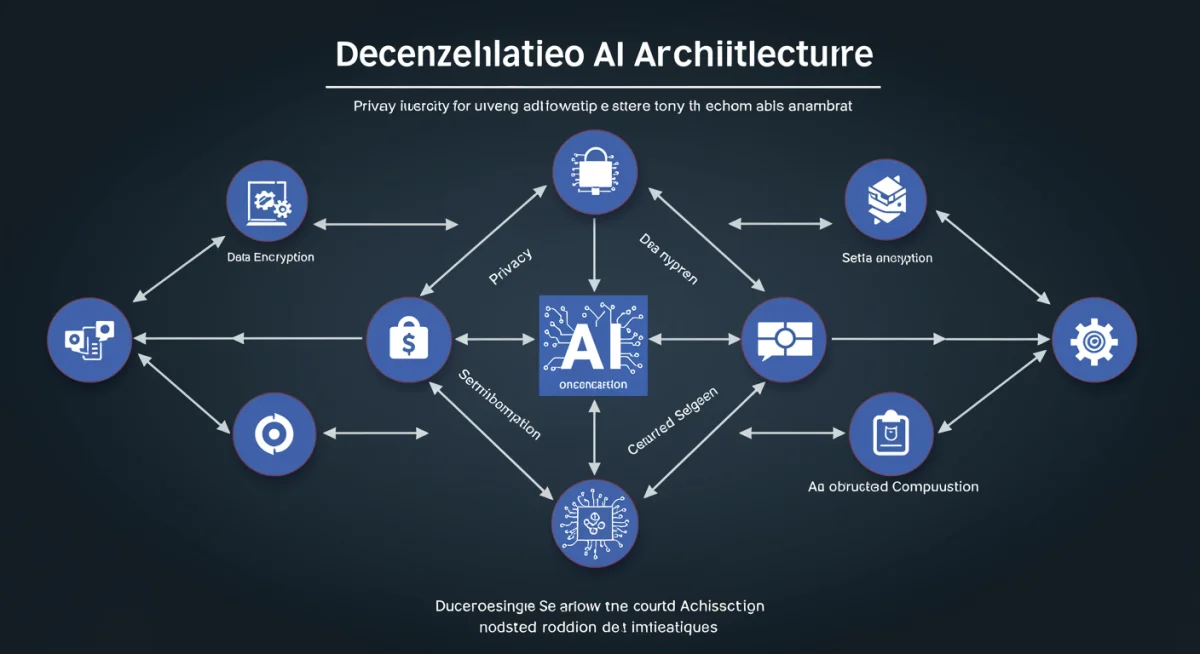
The consortium also explores novel applications of zero-knowledge proofs and secure enclaves to further enhance data privacy without compromising AI model utility. Zero-knowledge proofs allow one party to prove the truth of a statement to another without revealing any information beyond the validity of the statement itself, offering a powerful tool for verifiable computation in decentralized settings. Secure enclaves, on the other hand, provide hardware-level protection for data and computations, creating isolated environments where sensitive operations can be performed with maximum security.
PPAIC’s collaborative ecosystem facilitates knowledge sharing and best practices among its members, leading to the rapid iteration and improvement of privacy-preserving AI solutions. By focusing on practical implementation and fostering a community of experts, PPAIC is playing a crucial role in making privacy-centric decentralized AI a reality. Their efforts are instrumental in building a future where AI can deliver its full potential without compromising fundamental privacy rights.
Comparing ASPS and PPAIC: A strategic synergy
While both the AI Security and Privacy Standard (ASPS) and the Privacy-Preserving AI Consortium (PPAIC) are dedicated to advancing secure and private decentralized AI in the US, their approaches and primary focuses differ, creating a strategic synergy that is essential for the comprehensive development of this field. Understanding these distinctions helps illuminate how they collectively contribute to a more robust AI ecosystem.
ASPS, with its emphasis on standardization and regulatory guidelines, aims to establish a foundational layer of trust and accountability. It provides the architectural blueprint and compliance requirements that ensure AI systems meet a baseline level of security and privacy. This framework is geared towards formalizing best practices, making it easier for organizations to adopt decentralized AI while adhering to national and international security mandates. Its strength lies in its ability to provide a structured, auditable path for secure AI deployment.
PPAIC, conversely, acts as an innovation hub, driving the bleeding edge of privacy-enhancing technologies. While ASPS sets the ‘what’ and ‘why’ for secure and private AI, PPAIC focuses on the ‘how’ – developing the actual tools, algorithms, and methodologies that make robust privacy guarantees feasible in complex AI scenarios. The consortium’s collaborative, open-source nature fosters rapid experimentation and the creation of practical solutions that can then be integrated into broader frameworks like ASPS.
Complementary roles in AI development
The relationship between ASPS and PPAIC can be viewed as complementary. ASPS provides the overarching structure and regulatory impetus, ensuring that decentralized AI development is conducted responsibly and securely. It sets the bar for what constitutes a secure and private AI system. PPAIC, on the other hand, provides the technological muscle, continuously pushing the boundaries of what’s possible in privacy preservation, feeding new innovations into the ecosystem that ASPS can then incorporate into its evolving standards.
- ASPS: Focuses on regulatory compliance, security standards, and auditable governance for decentralized AI.
- PPAIC: Concentrates on research, development, and practical implementation of cutting-edge privacy-enhancing technologies.
- Synergy: PPAIC’s innovations can inform and enhance ASPS standards, while ASPS provides a framework for PPAIC’s technologies to be widely adopted.
This dynamic ensures that while AI development remains innovative and agile through PPAIC’s efforts, it also remains grounded in strong security and ethical principles mandated by ASPS. Together, these two frameworks create a powerful ecosystem that not only addresses current challenges but also anticipates future needs in the rapidly evolving landscape of decentralized AI. Their combined influence is crucial for the US to maintain a leadership position in the ethical and secure development of artificial intelligence.
The future landscape of decentralized AI in 2025
Looking ahead to 2025, the impact of frameworks like ASPS and PPAIC on the landscape of decentralized AI in the United States is poised to be transformative. We can anticipate a significant shift towards AI models that are inherently more secure, private, and trustworthy by design. This will not only address current societal concerns but also unlock new opportunities for AI applications that were previously constrained by centralized vulnerabilities and privacy risks.
The increasing adoption of decentralized architectures will likely lead to a more fragmented yet resilient AI ecosystem. Instead of a few dominant centralized AI providers, we may see a rise in specialized decentralized AI services, each focusing on particular data types or application domains, and all adhering to robust security and privacy standards. This could foster greater competition and innovation, ultimately benefiting users with more diverse and trustworthy AI solutions.
Emerging trends and challenges
Several key trends are expected to shape the future of decentralized AI. The continued maturation of blockchain technology will provide more robust and scalable infrastructure for distributed ledgers, enabling more complex AI operations. Advances in edge computing will further decentralize processing, allowing AI to operate closer to data sources, reducing latency and enhancing privacy. The integration of quantum-resistant cryptography will also become increasingly important as quantum computing capabilities advance, providing long-term security guarantees for decentralized AI systems.
However, challenges remain. The interoperability between different decentralized AI frameworks and platforms will be a critical area of development. Ensuring seamless communication and data exchange while maintaining security and privacy across diverse systems will require significant effort. Regulatory harmonization will also be crucial, as various states and international bodies develop their own AI governance policies. Striking a balance between innovation and regulation will be key to fostering a thriving decentralized AI ecosystem.
The push for explainable AI (XAI) will also find new avenues within decentralized frameworks. The transparent and auditable nature of distributed ledgers can provide clearer insights into how AI models are trained and how they arrive at their decisions, enhancing trust and accountability. This transparency will be vital for applications in high-stakes environments, such as autonomous vehicles and medical diagnostics.
Implementation and adoption strategies
For decentralized AI frameworks to truly take root and flourish by 2025, effective implementation and adoption strategies are paramount. It’s not enough to simply develop robust technical standards and innovative privacy-preserving technologies; these must be integrated into real-world applications and gain widespread acceptance across various sectors. This requires a multi-faceted approach involving education, incentives, and collaborative development.
One crucial strategy involves fostering a culture of ‘privacy by design’ and ‘security by design’ among AI developers and organizations. This means embedding the principles of decentralized AI into the very earliest stages of AI system development, rather than attempting to bolt on security and privacy measures as an afterthought. Training programs and certification initiatives aligned with frameworks like ASPS can help equip professionals with the necessary skills and knowledge to build secure and private AI models from the ground up.
Incentivizing adoption and addressing barriers
Governments and industry consortia can play a significant role in incentivizing the adoption of decentralized AI. This could include grants for research and development, tax breaks for companies implementing compliant systems, or preferential procurement policies for AI solutions built on secure, private frameworks. Demonstrating the tangible benefits – such as reduced data breach risks, enhanced regulatory compliance, and increased public trust – will be key to overcoming initial inertia.
- Pilot programs: Launching successful pilot projects in critical sectors to showcase the benefits of decentralized AI.
- Open-source initiatives: Promoting and contributing to open-source decentralized AI tools and libraries to lower entry barriers.
- Regulatory sandboxes: Creating environments where companies can test innovative decentralized AI solutions under relaxed regulatory scrutiny.
Addressing the technical complexities and the perceived overhead of transitioning from centralized to decentralized systems is also vital. This includes developing user-friendly tools, robust documentation, and providing comprehensive support for developers. Furthermore, building interoperability standards will ensure that different decentralized AI systems can communicate and collaborate effectively, preventing fragmentation and promoting a more unified ecosystem.
Ultimately, the successful implementation of decentralized AI frameworks hinges on a collaborative effort involving policymakers, technologists, businesses, and the public. By working together to build secure, private, and ethical AI systems, we can ensure that artificial intelligence remains a force for good, driving innovation while respecting fundamental human values.
Ethical considerations and governance in decentralized AI
Beyond the technical advancements in security and privacy, the successful long-term deployment of decentralized AI frameworks in the US by 2025 also hinges on robust ethical considerations and effective governance mechanisms. Decentralization, while offering many benefits, introduces new complexities in accountability, bias mitigation, and the fair distribution of benefits. Addressing these aspects is crucial for ensuring that decentralized AI truly serves the public good and avoids replicating or amplifying existing societal inequalities.
One of the primary ethical challenges in decentralized AI is establishing clear lines of accountability. In a system where data, processing, and decision-making are distributed across multiple entities, attributing responsibility for errors, biases, or harmful outcomes can become significantly more difficult. Frameworks like ASPS aim to address this through immutable audit trails and verifiable integrity checks, but the legal and ethical implications of distributed responsibility require ongoing societal and legislative dialogue.
Mitigating bias and ensuring fairness
While decentralized AI can help mitigate some forms of bias inherent in centralized systems by diversifying data sources and model trainers, it does not automatically eliminate bias. Biases can still be embedded in local datasets, algorithmic designs, or the aggregation mechanisms used in federated learning. Therefore, ethical governance must include proactive measures for bias detection, measurement, and mitigation across all decentralized nodes and aggregated models. This includes:
- Diverse data sourcing: Encouraging the use of representative and unbiased local datasets for training.
- Algorithmic fairness audits: Implementing regular, independent audits of decentralized AI algorithms for fairness and non-discrimination.
- Transparency in model aggregation: Ensuring visibility into how individual model contributions are combined to form a global model.
Furthermore, the governance of decentralized AI must consider the equitable access to and distribution of its benefits. Without careful planning, decentralized AI could exacerbate digital divides if access to the necessary infrastructure or computational resources is unevenly distributed. Policies should aim to promote inclusive participation and ensure that the advantages of secure and private AI are accessible to all segments of society, not just a privileged few.
The ethical framework for decentralized AI must also be dynamic, capable of adapting to new technological capabilities and unforeseen societal impacts. This necessitates ongoing public engagement, interdisciplinary research, and a commitment to continuous learning and refinement of governance principles. By proactively addressing these ethical and governance challenges, the US can ensure that its decentralized AI frameworks foster innovation responsibly and build a future where AI enhances human well-being and societal trust.
| Key Point | Brief Description |
|---|---|
| Decentralized AI Need | Addresses privacy, security, and power concentration in centralized AI systems. |
| ASPS Framework | US standard for secure, auditable decentralized AI with encryption and audit trails. |
| PPAIC Consortium | Focuses on advancing privacy-enhancing technologies (PETs) for decentralized AI. |
| Future Outlook | Expect more secure, private AI, new applications, and continued ethical governance challenges. |
Frequently asked questions about decentralized AI
Decentralized AI refers to artificial intelligence systems where data, processing, and control are distributed across multiple nodes rather than being managed by a single central entity. This architecture enhances security, privacy, and resilience against failures or attacks, fostering a more robust and trustworthy AI ecosystem.
US frameworks like ASPS enforce strict security protocols such as end-to-end encryption, secure multi-party computation, and immutable audit trails using blockchain. These measures prevent unauthorized access, data manipulation, and ensure transparency, significantly reducing vulnerabilities inherent in centralized AI systems.
The Privacy-Preserving AI Consortium (PPAIC) focuses on advancing privacy-enhancing technologies (PETs) like federated learning and differential privacy. They develop practical solutions and open-source tools that allow AI models to learn from data without directly accessing or centralizing sensitive information, thus safeguarding individual privacy.
By 2025, decentralized AI will be crucial for addressing growing concerns about data privacy, security breaches, and ethical governance in AI. It enables the development of more trustworthy AI applications, fostering innovation in sensitive sectors like healthcare and finance while empowering users with greater control over their data.
Key challenges include ensuring interoperability between diverse decentralized systems, harmonizing regulatory policies, and overcoming the technical complexities of transitioning from centralized to decentralized architectures. Incentivizing adoption and building user-friendly tools are also vital for widespread implementation.
Conclusion
The journey towards a future dominated by secure and private AI models is undeniably being shaped by the innovative strides in decentralized AI frameworks within the United States. Initiatives like the AI Security and Privacy Standard (ASPS) and the Privacy-Preserving AI Consortium (PPAIC) exemplify a concerted effort to address the critical vulnerabilities and ethical quandaries posed by traditional centralized AI. As we look to 2025, these frameworks are not merely theoretical constructs but practical blueprints for building an AI ecosystem that is more resilient, transparent, and respectful of individual privacy. The synergy between regulatory standardization and technological innovation promises to unlock AI’s full potential, ensuring it serves as a force for positive transformation while upholding fundamental societal values.