
Anúncios
Edge AI software is rapidly redefining operational paradigms across US industries, with manufacturing, healthcare, and retail emerging as key sectors poised for significant transformation by 2026 through enhanced real-time data processing and decision-making.
The landscape of artificial intelligence is continuously evolving, and at its forefront is the burgeoning field of Edge AI software. This innovative technology brings AI capabilities closer to the data source, promising unprecedented efficiency, reduced latency, and enhanced privacy for various sectors. By 2026, its impact on US industries, particularly manufacturing, healthcare, and retail, is expected to be transformative, ushering in a new era of intelligent operations and real-time decision-making.
Anúncios
Understanding Edge AI Software and Its Strategic Advantages
Edge AI software refers to the deployment of artificial intelligence algorithms directly on edge devices, rather than relying solely on cloud-based processing. This fundamental shift allows for data analysis and decision-making to occur at or near the point where data is generated, such as on sensors, cameras, or local servers. The strategic advantages of this approach are multifaceted and address some of the most pressing challenges faced by modern industries.
One primary benefit is the significant reduction in latency. By processing data locally, the time taken for information to travel to a centralized cloud, be processed, and then return with an instruction is dramatically minimized. This is crucial for applications requiring instantaneous responses, where even milliseconds can make a difference in operational outcomes or safety. Furthermore, Edge AI enhances data privacy and security. Sensitive information can be processed and acted upon without ever leaving the local network, reducing exposure to potential breaches during transit to the cloud.
Anúncios
Enhanced Operational Efficiency
The ability of Edge AI to process data locally leads to far more efficient operations. Devices can operate autonomously, even when connectivity to the central cloud is intermittent or unavailable. This resilience is vital for remote installations or critical infrastructure where constant, high-bandwidth connections cannot be guaranteed.
- Reduced Bandwidth Consumption: Only processed insights, not raw data, need to be sent to the cloud, saving significant bandwidth and associated costs.
- Improved Reliability: Systems can continue functioning and making intelligent decisions even during network outages.
- Scalability: Adding more edge devices doesn’t necessarily mean proportional increases in cloud infrastructure, allowing for more flexible scaling.
Another key advantage lies in its ability to handle vast amounts of data generated by an increasing number of IoT devices. Instead of overwhelming cloud servers with raw data, Edge AI filters and prioritizes, sending only critical information upstream. This intelligent filtering ensures that cloud resources are used more effectively, focusing on higher-level analysis and long-term strategic planning. The computational power of edge devices is also continually improving, making them more capable of running complex AI models locally. This trend is expected to accelerate, further solidifying Edge AI’s role in the future of industrial automation and intelligent systems.
In conclusion, Edge AI software offers a compelling blend of speed, security, and efficiency that traditional cloud-centric AI struggle to match in certain scenarios. Its localized processing capabilities are not just an incremental improvement but a foundational change that empowers devices to act smarter and faster, laying the groundwork for truly autonomous and resilient systems across various US industries.
Manufacturing: Revolutionizing Production with Real-Time Intelligence
The US manufacturing sector is poised for a significant overhaul driven by the adoption of Edge AI software. This technology is enabling factories to become smarter, more agile, and significantly more efficient by bringing advanced analytics and decision-making capabilities directly to the production line. The traditional model of sending all data to a central cloud for analysis often introduced delays that were incompatible with the pace of modern manufacturing. Edge AI eliminates this bottleneck, allowing for immediate action and optimization.
One of the most impactful applications is in predictive maintenance. Instead of waiting for equipment to fail or relying on time-based maintenance schedules, Edge AI systems analyze sensor data in real-time to detect subtle anomalies that indicate impending breakdowns. This allows maintenance teams to intervene proactively, preventing costly downtime and extending the lifespan of machinery. The continuous monitoring and immediate alerts provided by Edge AI are transforming maintenance from a reactive to a highly predictive process.
Quality Control and Defect Detection
Edge AI is also revolutionizing quality control. High-speed cameras integrated with Edge AI software can inspect products on the assembly line for defects with unparalleled speed and accuracy. These systems can identify deviations from quality standards instantly, flagging faulty items without human intervention. This not only improves product quality but also reduces waste and rework.
- Automated Visual Inspection: AI-powered cameras detect even microscopic flaws in real-time.
- Reduced False Positives: Advanced algorithms minimize misidentification of defects, improving efficiency.
- Consistent Quality Standards: Ensures uniform product quality across all batches.
Furthermore, Edge AI plays a critical role in optimizing robotic operations and process automation. Robots equipped with Edge AI can adapt to changing conditions on the factory floor, learn from new data, and make agile decisions without constant human oversight or cloud communication. This leads to more flexible production lines that can quickly reconfigure for different products or production volumes. The ability of Edge AI to enable localized intelligence empowers individual machines and entire production cells to operate with greater autonomy and precision, contributing to a more dynamic and competitive manufacturing sector in the US.
In essence, Edge AI software is transforming US manufacturing by providing the intelligence needed for real-time adjustments, proactive problem-solving, and enhanced automation. By 2026, factories will be characterized by interconnected, intelligent machines that self-optimize and respond instantly to production demands, leading to unprecedented levels of productivity and quality.
Healthcare: Advancing Patient Care and Operational Efficiency
The healthcare industry in the US is on the cusp of a major transformation, with Edge AI software emerging as a critical enabler for improved patient care, enhanced operational efficiency, and better data security. The traditional healthcare model often involves vast amounts of sensitive data being transferred to centralized servers, posing latency and privacy challenges. Edge AI addresses these by bringing computational power closer to the patient, enabling faster diagnoses and more personalized treatments.
One significant application is in remote patient monitoring. Wearable devices and in-home sensors powered by Edge AI can continuously collect and analyze vital signs and other health metrics. Instead of sending all raw data to the cloud, Edge AI processes it locally, alerting healthcare providers only when critical changes or anomalies are detected. This proactive approach allows for early intervention, potentially preventing serious health events and reducing hospital readmissions.
Real-Time Diagnostic Assistance
In clinical settings, Edge AI is enhancing diagnostic capabilities. Imaging devices, such as X-ray and MRI machines, can integrate Edge AI to perform real-time analysis of scans. This allows clinicians to receive immediate insights, helping them identify abnormalities more quickly and accurately during examinations. This speeds up the diagnostic process, which is crucial for conditions where early detection significantly impacts patient outcomes.
- Accelerated Image Analysis: AI-powered systems provide instant interpretations of medical scans.
- Reduced Diagnostic Errors: Augments human expertise by highlighting subtle indicators of disease.
- Improved Workflow: Frees up clinician time by automating initial screening tasks.
Beyond diagnostics, Edge AI is also improving hospital operations and resource management. Systems can monitor patient flow, equipment utilization, and even predict staffing needs based on real-time data from various departments. This leads to more efficient allocation of resources, reduced wait times, and a smoother overall patient experience. The enhanced security and privacy offered by local data processing are particularly vital in healthcare, where patient confidentiality is paramount. By keeping sensitive data on-site and processing it without transmitting it across networks, Edge AI helps healthcare providers comply with stringent regulations like HIPAA, building greater trust and safeguarding patient information.
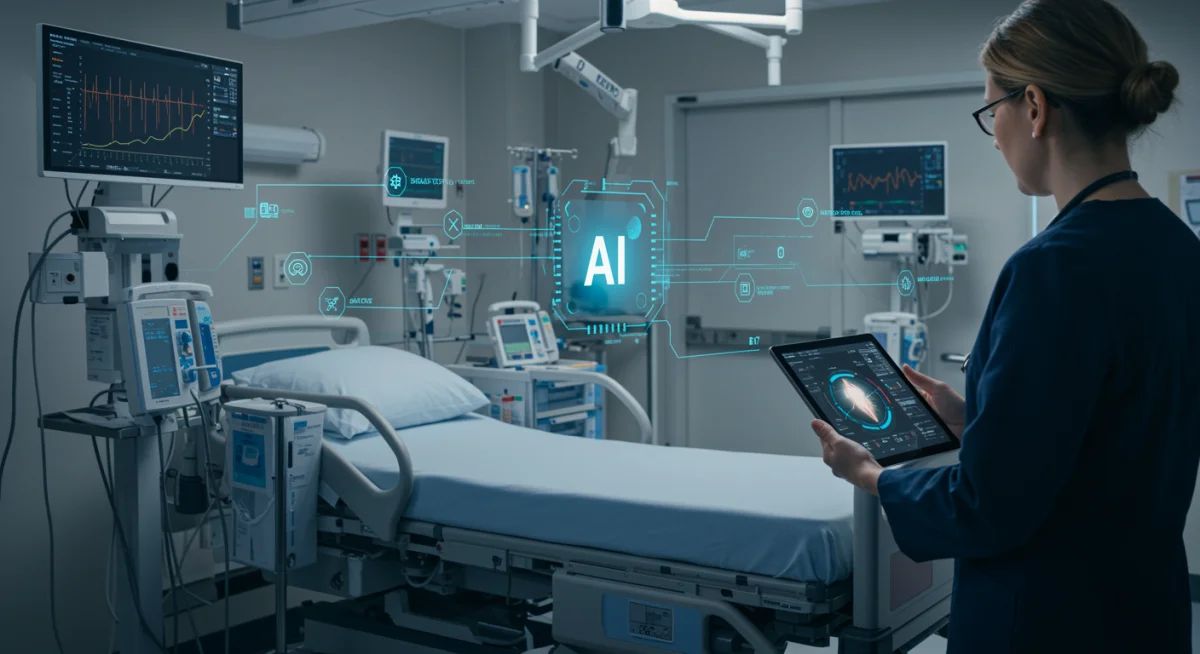
By 2026, Edge AI software will be instrumental in creating a more responsive, efficient, and patient-centric healthcare system in the US. Its ability to deliver immediate, secure, and insightful intelligence at the point of care will revolutionize how medical professionals deliver services and how patients manage their health.
Retail: Personalizing Experiences and Optimizing Operations
The US retail sector is undergoing a profound transformation, driven by the desire to offer highly personalized customer experiences and optimize operational efficiencies. Edge AI software is emerging as a pivotal technology in this evolution, enabling retailers to process vast amounts of customer and inventory data in real-time, right at the store level. This localized intelligence allows for immediate insights and actions that can significantly impact sales, inventory management, and customer satisfaction, moving beyond the limitations of purely cloud-based analytics which often introduce delays.
One of the most exciting applications of Edge AI in retail is in enhancing the in-store customer experience. Smart cameras and sensors, equipped with Edge AI, can anonymously analyze customer behavior patterns, such as foot traffic, dwell times in specific aisles, and interactions with displays. This data, processed locally, provides immediate insights into store layout effectiveness, product placement, and promotional impact. Retailers can then make real-time adjustments, like re-stocking popular items or reconfiguring displays, to maximize engagement and sales.
Intelligent Inventory Management
Edge AI is also revolutionizing inventory management. By deploying AI at points of sale, on shelves, or in stockrooms, retailers can achieve unprecedented accuracy and efficiency. Edge devices can continuously monitor stock levels, predict demand fluctuations based on local sales data, and even identify misplaced items. This significantly reduces instances of out-of-stock products and overstocking, leading to optimized inventory costs and improved customer satisfaction.
- Real-time Stock Tracking: Automated monitoring of product availability on shelves and in storage.
- Demand Forecasting: Local AI models predict future sales based on immediate trends.
- Loss Prevention: Identifies suspicious activities or unauthorized product removals instantly.
Furthermore, Edge AI facilitates dynamic pricing strategies and personalized promotions. In-store digital signage can be updated in real-time to display offers tailored to current foot traffic patterns or local events, maximizing their relevance and impact. Cashier-less stores, a growing trend, heavily rely on Edge AI to track customer purchases and manage transactions seamlessly, ensuring a frictionless shopping experience. The privacy benefits of Edge AI are also crucial here; by processing sensitive customer behavior data locally and only sending anonymized aggregates to the cloud, retailers can enhance security and build greater trust with their customer base.
In summary, Edge AI software is empowering US retailers to create more responsive, efficient, and personalized shopping environments. By 2026, the retail landscape will be characterized by intelligent stores that adapt dynamically to customer needs and market trends, all driven by the power of localized AI processing.
Challenges and Considerations for Edge AI Adoption in the US
While the benefits of Edge AI software are compelling, its widespread adoption in US industries is not without its challenges. Organizations must navigate several key considerations to successfully implement and scale Edge AI solutions. Understanding these hurdles is crucial for strategic planning and ensuring a smooth transition to this advanced technological paradigm. The complexity often lies not just in the technology itself, but in the integration, management, and ethical implications of deploying AI at the edge.
One significant challenge is the initial investment and infrastructure requirements. Deploying Edge AI often necessitates upgrading existing hardware to devices capable of running AI models locally. This can include more powerful processors, specialized AI accelerators, and robust connectivity at the edge. The cost associated with these upgrades, coupled with the need for skilled personnel to manage and maintain these distributed systems, can be a barrier for some enterprises, particularly smaller businesses. Furthermore, ensuring seamless integration with existing IT infrastructure and legacy systems can be a complex undertaking.
Data Governance and Security at the Edge
Even though Edge AI enhances privacy by processing data locally, it introduces new security challenges. Securing a multitude of distributed edge devices from cyber threats becomes a more complex task than securing a centralized cloud. Each edge device represents a potential vulnerability, requiring robust security protocols, regular updates, and continuous monitoring. Data governance also becomes more intricate, as organizations must define policies for what data is processed locally, what is sent to the cloud, and how it is protected across the entire distributed network.
- Distributed Security Management: Protecting numerous edge devices from varied cyber threats.
- Compliance with Regulations: Ensuring local processing adheres to industry-specific data laws.
- Firmware and Software Updates: Managing updates across a vast network of edge devices effectively.
Another consideration is the complexity of developing and deploying AI models for edge devices. Edge devices typically have constrained computational resources compared to cloud servers, meaning AI models must be highly optimized for efficiency without sacrificing accuracy. This often requires specialized AI development techniques and expertise in model compression and optimization. Additionally, managing the lifecycle of these models – from training in the cloud to deployment at the edge and continuous retraining – adds another layer of operational complexity. Addressing these challenges effectively will be key for US industries to fully harness the potential of Edge AI and ensure its sustainable growth by 2026 and beyond.
Ultimately, while Edge AI offers immense opportunities, successful adoption requires a holistic approach that considers not only the technological aspects but also the financial, operational, and ethical implications. Organizations that strategically plan for these challenges will be best positioned to reap the full benefits of intelligent edge computing.
The Future Outlook: Edge AI’s Impact Beyond 2026
As we look beyond 2026, the trajectory of Edge AI software suggests an even more pervasive and transformative impact on US industries and daily life. The current applications in manufacturing, healthcare, and retail are just the beginning, laying the groundwork for a future where intelligent, autonomous systems are the norm rather than the exception. The continuous advancements in hardware capabilities, coupled with more sophisticated AI algorithms optimized for edge deployment, will unlock new possibilities that are currently in their nascent stages.
One significant area of growth will be in smart cities and critical infrastructure. Edge AI will power intelligent traffic management systems that adapt to real-time conditions, optimize public transport, and enhance urban safety through smart surveillance. In critical infrastructure like energy grids and telecommunications networks, Edge AI will enable autonomous monitoring, predictive maintenance, and rapid response to outages, ensuring greater reliability and resilience. The ability to process vast amounts of data locally without relying on distant data centers will be paramount for these time-sensitive and geographically dispersed applications.
Democratization of AI and New Business Models
The increasing accessibility and affordability of edge computing devices will lead to a democratization of AI, allowing smaller businesses and even individual entrepreneurs to leverage advanced analytics previously reserved for large enterprises. This could foster a wave of innovation, leading to the creation of entirely new business models and services that capitalize on localized intelligence. Imagine personalized services delivered directly to consumers through smart devices, or hyper-efficient local supply chains managed by autonomous edge systems.
- New Market Opportunities: Edge AI enables innovative services and products for niche markets.
- Enhanced Personalization: Real-time local data allows for highly customized user experiences.
- Sustainable Practices: Optimized resource use and reduced energy consumption through intelligent edge control.
Furthermore, the synergy between Edge AI and other emerging technologies, such as 5G connectivity and quantum computing, will amplify its capabilities. 5G will provide the high-bandwidth, low-latency communication necessary for edge devices to interact more seamlessly with each other and with cloud resources, creating a truly distributed intelligent ecosystem. While still in its early stages, quantum computing could eventually offer unprecedented processing power for complex AI models, potentially being deployed at the edge for highly specialized tasks. The combination of these technologies promises a future where AI is not just intelligent but ubiquitous, operating seamlessly in our physical environment and making our systems more efficient, responsive, and secure than ever before. The journey of Edge AI is still unfolding, but its trajectory indicates a future rich with innovation and profound societal impact.
The long-term impact of Edge AI extends to environmental sustainability. By optimizing resource usage in manufacturing, energy consumption in smart buildings, and logistics in supply chains, Edge AI can significantly contribute to reducing carbon footprints. Its capacity for precise, real-time control minimizes waste and enhances efficiency across various sectors, aligning with global efforts towards a greener future. This aspect, while perhaps less immediately apparent than operational gains, represents a powerful, enduring benefit of widespread Edge AI adoption.
Best Practices for Implementing Edge AI Solutions
Successfully integrating Edge AI software into existing operations requires more than just acquiring the technology; it demands a strategic approach centered on best practices. Organizations in the US aiming to harness the full potential of Edge AI by 2026 must consider several critical factors to ensure effective deployment, optimal performance, and long-term sustainability. Without a well-defined strategy, the promise of Edge AI can quickly turn into a complex and costly endeavor.
A foundational best practice is to start with a clear definition of use cases. Rather than attempting a broad, uncoordinated deployment, identify specific problems or processes where Edge AI can deliver immediate and measurable value. This could involve a pilot project in a single manufacturing line, a specific department in a hospital, or a particular retail store. By focusing on well-defined use cases, organizations can gain valuable experience, demonstrate ROI, and refine their approach before scaling up. This iterative process helps in understanding the unique challenges and opportunities within their specific operational context.
Selecting the Right Hardware and Software Stack
The choice of hardware and the software stack is paramount for Edge AI success. Edge devices come in various forms, from tiny IoT sensors to robust industrial computers, each with different processing capabilities, power consumption, and environmental tolerances. Selecting hardware that matches the specific requirements of the AI model and the operating environment is crucial. Equally important is choosing a software stack that supports efficient model deployment, management, and updates across a distributed network of edge devices. This includes robust operating systems, AI frameworks optimized for edge inference, and secure communication protocols.
- Hardware-Software Alignment: Ensure edge devices can efficiently run chosen AI models.
- Scalable Management Tools: Implement platforms for remote deployment and monitoring of AI at the edge.
- Security by Design: Integrate security measures from the initial stages of development.
Another critical best practice involves establishing a robust data governance and security framework. While Edge AI processes data locally, clear policies must be in place for data collection, storage, retention, and transfer (if necessary) to the cloud. This includes adhering to relevant industry regulations and privacy laws. Implementing layered security measures, such as encryption, access controls, and regular vulnerability assessments, is essential to protect edge devices and the data they process from cyber threats. Furthermore, fostering a culture of continuous learning and adaptation within the organization is vital. The Edge AI landscape is rapidly evolving, requiring teams to stay informed about new technologies, tools, and best practices to maintain a competitive edge. This includes investing in training for IT staff, data scientists, and operational teams to effectively manage and leverage Edge AI solutions.
By adhering to these best practices, US industries can navigate the complexities of Edge AI adoption more effectively, unlocking its transformative potential to drive innovation, efficiency, and competitive advantage well into 2026 and beyond. A thoughtful and strategic implementation will differentiate leaders in this new era of intelligent computing.
| Key Application Area | Primary Benefit of Edge AI |
|---|---|
| Manufacturing | Enhanced predictive maintenance and real-time quality control. |
| Healthcare | Improved remote patient monitoring and faster diagnostic assistance. |
| Retail | Personalized in-store experiences and optimized inventory management. |
| Cross-Industry | Reduced latency, enhanced data privacy, and operational resilience. |
Frequently Asked Questions About Edge AI Software
Edge AI software deploys AI algorithms directly on local devices or gateways, processing data near its source. This contrasts with cloud AI, which sends data to remote servers for processing. The key difference lies in localized, real-time processing versus centralized, often delayed, processing.
By 2026, Edge AI will be crucial for US industries due to its ability to provide real-time insights, reduce operational latency, enhance data privacy and security, and improve system reliability. These benefits drive efficiency and innovation across sectors like manufacturing, healthcare, and retail.
In manufacturing, Edge AI offers benefits such as predictive maintenance, preventing equipment failures before they occur. It also enables real-time quality control through automated visual inspection, ensuring consistent product standards and reducing waste directly on the production line.
Edge AI enhances patient care by enabling advanced remote patient monitoring, allowing for early detection of health issues. It also provides real-time diagnostic assistance for medical imaging, helping clinicians make faster and more accurate diagnoses at the point of care.
Organizations adopting Edge AI face challenges including initial hardware investment, the complexity of securing distributed edge devices, and the need for specialized expertise in optimizing AI models for constrained environments. Strategic planning and robust data governance are essential for successful implementation.
Conclusion
The undeniable rise of Edge AI software is setting the stage for a profound technological shift across US industries, particularly within manufacturing, healthcare, and retail. By 2026, its pervasive integration will redefine operational efficiency, elevate data security, and unlock unprecedented levels of real-time intelligence. While challenges in implementation and resource allocation persist, the strategic advantages of reduced latency, enhanced privacy, and improved resilience make Edge AI an indispensable component of future-proofed digital strategies. As businesses continue to embrace this localized intelligence, the competitive landscape will favor those who adeptly leverage Edge AI to innovate, optimize, and deliver superior value, promising a future where smart, autonomous operations are not just an aspiration but a tangible reality.