Gaming Gadgets Evolving: Next 12 Months’ Innovations
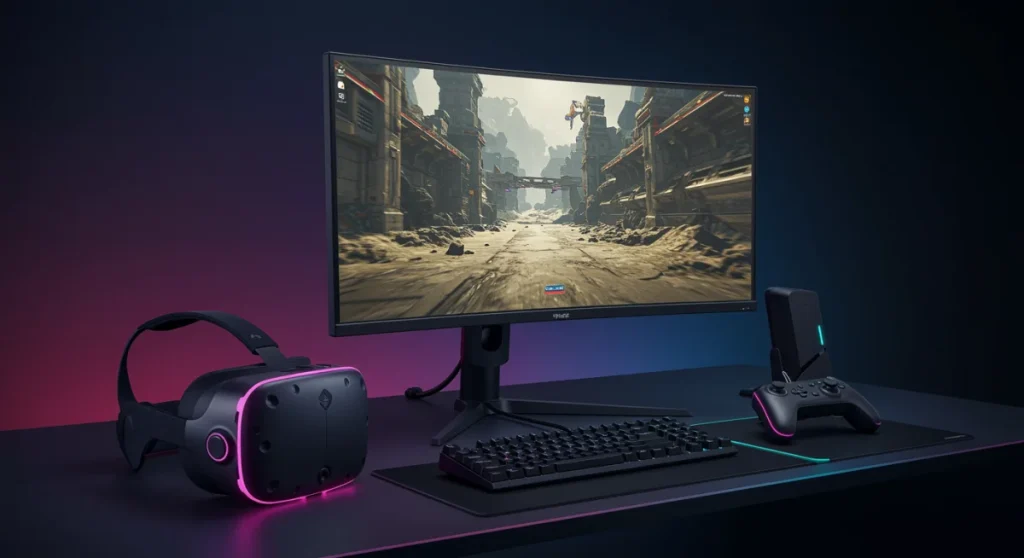
The landscape of gaming gadgets is rapidly evolving, promising significant advancements in virtual reality, portable consoles, and AI integration over the next 12 months, reshaping how we experience interactive entertainment.
The world of interactive entertainment is constantly pushing boundaries, and the realm of gaming gadgets evolving is no exception. In the next 12 months, we anticipate a transformative period, with innovations set to redefine immersion, portability, and the very intelligence of our gaming experiences. Get ready for a thrilling ride as we delve into what’s on the horizon.
The Ascent of Virtual and Augmented Reality in Gaming
Virtual Reality (VR) and Augmented Reality (AR) have long been hailed as the future of gaming, and the coming year is poised to bring these technologies closer to mainstream adoption. Expect significant leaps in hardware capabilities and software ecosystems, making immersive experiences more accessible and compelling.
Current VR headsets, while impressive, often grapple with issues like resolution, field of view, and motion sickness. Manufacturers are addressing these head-on, with new iterations focusing on lighter designs, higher pixel densities, and more comfortable ergonomics. This push aims to reduce friction for new users and deepen immersion for seasoned VR enthusiasts.
Next-Generation VR Headsets and Haptics
The next wave of VR headsets will likely feature advanced eye-tracking and foveated rendering, optimizing graphical fidelity where the user is looking and reducing computational load. This allows for stunning visuals without requiring top-tier PCs.
- Higher Resolution Displays: Expect 4K per eye or even higher, minimizing the ‘screen-door effect.’
- Wider Fields of View: Moving beyond 110 degrees for a more natural peripheral vision.
- Enhanced Haptic Feedback: Controllers and even full-body suits offering more nuanced tactile sensations.
AR gaming, while still nascent in dedicated hardware, will see more sophisticated mobile applications and possibly the emergence of more refined AR glasses. These devices promise to blend digital elements seamlessly with the real world, opening up new genres of gameplay.
The integration of advanced haptic feedback within VR controllers and accessories is also set to evolve. Imagine feeling the distinct recoil of different weapons, the texture of surfaces, or the impact of a blow with unprecedented realism. This tactile dimension is crucial for enhancing overall immersion and making virtual worlds feel more tangible. The convergence of superior visuals and refined haptics will create gaming experiences that are not just seen and heard, but truly felt.
Portable Gaming Powerhouses: Beyond Handheld Consoles
Portable gaming has experienced a renaissance, moving far beyond the simple handheld consoles of yesteryear. The next 12 months will see a continued surge in powerful, versatile devices that challenge the traditional boundaries between mobile, console, and PC gaming.
The success of devices like the Steam Deck has paved the way for a new category of portable gaming PCs. These machines offer console-like convenience with the flexibility and vast game libraries of PC gaming. We can anticipate more competitors entering this space, each vying to offer better performance, battery life, and ergonomic designs.
Ergonomics and Display Innovation in Handhelds
Manufacturers are heavily investing in improving the user experience, focusing on displays and controls. Expect more vibrant OLED screens, higher refresh rates, and more customizable button layouts.
- OLED Screens: Richer colors and deeper blacks for a more visually appealing experience.
- Higher Refresh Rates: Smoother gameplay, especially in fast-paced titles.
- Modular Controllers: The ability to swap out joysticks and D-pads for personalized comfort.
Beyond dedicated handhelds, smartphones continue to evolve as formidable gaming platforms. With advancements in mobile chipsets and cloud gaming services, the line between traditional gaming devices and smartphones will blur further. Expect more accessories designed to enhance mobile gaming, transforming phones into legitimate gaming machines.
The drive for longer battery life without sacrificing performance remains a critical challenge and a key area of innovation. New battery technologies and more efficient processors will be crucial in allowing gamers to enjoy extended play sessions on the go. This focus on endurance, combined with powerful internals, will solidify portable gaming’s position as a dominant force in the industry.
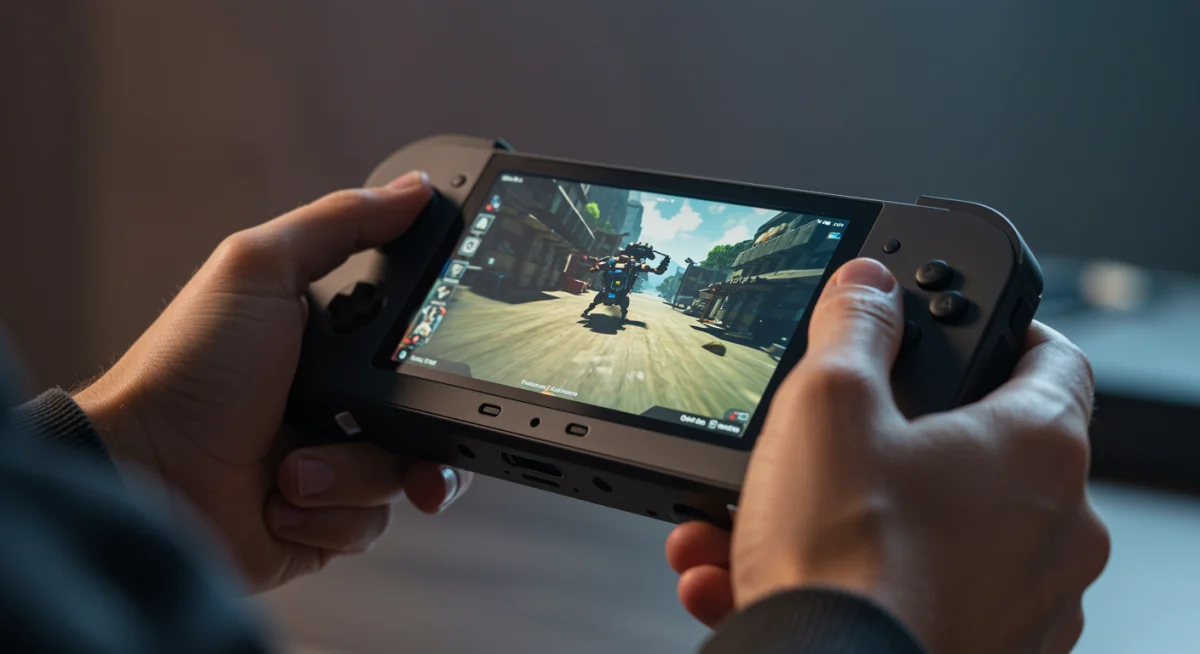
AI’s Deepening Integration in Gaming Peripherals
Artificial Intelligence (AI) is no longer confined to in-game characters; it is increasingly finding its way into gaming peripherals, promising smarter, more personalized, and more responsive experiences. Over the next year, AI integration will become a key differentiator for high-end gaming gear.
From mice that adapt to your grip to headsets that optimize audio based on environmental noise, AI is making our gadgets more intelligent. These innovations aim to reduce latency, enhance precision, and provide a competitive edge, all while making gaming more comfortable and intuitive.
Adaptive Peripherals and Smart Audio
AI-powered mice and keyboards will learn user preferences, offering dynamic keybindings and sensitivity adjustments. Headsets will use AI to filter out background noise for clearer communication and personalize sound profiles.
- AI-Driven Mice: Adjusting weight distribution or sensor sensitivity based on game and user input.
- Smart Headsets: Real-time noise cancellation and personalized spatial audio.
- Predictive Input: Minimizing input lag by anticipating player actions.
Beyond individual peripherals, AI is starting to influence how entire gaming ecosystems operate. Machine learning algorithms can optimize network performance, predict hardware failures, and even suggest game titles based on play patterns. This holistic integration of AI will create a more seamless and enjoyable gaming environment.
The ethical implications and data privacy concerns surrounding AI in gaming are also becoming more prominent. As gadgets collect more data about user behavior and preferences, transparency and robust security measures will be paramount. Developers and manufacturers will need to navigate these challenges carefully to build trust and ensure responsible AI deployment.
Cloud Gaming’s Maturation and Hardware Implications
Cloud gaming, once a niche concept, is steadily maturing, promising to decouple high-end gaming experiences from expensive local hardware. The next 12 months will see further refinement of these services and their impact on the types of gaming gadgets we prioritize.
The core promise of cloud gaming is simple: play any game, anywhere, on almost any device, provided you have a stable internet connection. As network infrastructure improves and streaming technology becomes more efficient, the appeal of cloud gaming grows. This shift could lead to a focus on more affordable, lightweight client devices rather than powerful local machines.
Optimized Cloud Gaming Devices
Expect to see more devices specifically designed to excel at cloud gaming, featuring low latency displays, robust Wi-Fi capabilities, and ergonomic designs for extended streaming sessions.
- Dedicated Streaming Handhelds: Devices optimized for low latency and long battery life with cloud services.
- Smart TV Integration: Direct integration of cloud gaming apps into smart TVs, bypassing consoles.
- Enhanced Wi-Fi 7 Adoption: Leveraging the latest wireless standards for ultra-low latency streaming.
While cloud gaming offers undeniable convenience, it also presents challenges, particularly regarding internet access and data caps. The industry will need to continue innovating in compression technologies and regional server infrastructure to make cloud gaming a truly ubiquitous experience for all gamers. The evolution of 5G and future wireless technologies will play a critical role in this expansion.
The future of cloud gaming also hinges on content availability and business models. Exclusive titles and compelling subscription services will be key to attracting and retaining users. As the technology matures, we may see a hybrid approach where local processing handles some aspects while the cloud manages others, offering a balance of performance and accessibility.
Innovative Controllers and Input Methods
The traditional gamepad has been a staple of gaming for decades, but innovation in controllers and input methods is accelerating. The next year will bring new ways to interact with games, catering to diverse needs and enhancing accessibility.
Beyond standard controllers, we’re seeing a push towards more adaptive and customizable input devices. This includes modular controllers that can be reconfigured for different genres, as well as specialized peripherals designed for specific disabilities, making gaming more inclusive.
Modular and Accessible Controllers
The focus will be on personalization and accessibility, with controllers offering swappable components, remappable buttons, and even biometric feedback for a more tailored experience.
- Modular Designs: Allowing users to customize stick height, button placement, and paddle configurations.
- Adaptive Triggers and Haptics: Further refinement of force feedback and resistance in triggers.
- Biometric Integration: Potentially monitoring player stress or excitement to adapt game difficulty.
Motion controls, though having seen varying degrees of success, are also due for a resurgence with improved accuracy and less intrusive designs. Imagine precise gesture controls that feel natural and intuitive, offering a deeper connection to the game world without the need for bulky attachments. The refinement of these technologies could open up entirely new gameplay mechanics.
The integration of voice commands and eye-tracking into controller design is another area of active development. These alternative input methods can provide shortcuts, enhance navigation, and offer hands-free control options, especially beneficial for players with limited mobility. The goal is to create a gaming experience that is as fluid and personalized as possible for every individual.
The Rise of Sustainable and Repairable Gaming Gadgets
As technology advances, so does the conversation around sustainability and environmental impact. The gaming industry, known for its rapid hardware cycles, is increasingly facing pressure to adopt more eco-friendly practices. The next 12 months will likely see a greater emphasis on sustainable and repairable gaming gadgets.
Consumers are becoming more conscious of their purchasing decisions, favoring brands that demonstrate a commitment to sustainability. This translates into a demand for products designed for longevity, ease of repair, and made from recycled or ethically sourced materials.
Eco-Conscious Design and Longevity
Manufacturers will strive for modular designs that allow for easier component replacement, reducing electronic waste. Expect more transparency regarding manufacturing processes and materials used.
- Modular Components: Easily swappable parts to extend product lifespan.
- Recycled Materials: Increased use of post-consumer plastics and metals in chassis.
- Energy Efficiency: Gadgets designed to consume less power during operation and standby.
The ‘right to repair’ movement is gaining traction, pushing for legislation that makes it easier for consumers to fix their own devices or have them repaired by independent shops. This will influence how gaming gadgets are designed, with a greater focus on user-friendly disassembly and readily available spare parts.
Beyond hardware, the software aspect also plays a role in sustainability. Optimized game engines and cloud gaming solutions that reduce the need for constant hardware upgrades contribute to a greener gaming ecosystem. The industry’s collective effort towards sustainable technology will be a defining trend in the coming year, reflecting a broader societal shift towards environmental responsibility.
| Key Trend | Brief Description |
|---|---|
| VR/AR Immersion | Higher resolution, wider FOV, and advanced haptics for deeper gaming immersion. |
| Portable Power | More powerful handhelds with OLED screens and improved battery life, blurring device lines. |
| AI in Peripherals | Smart mice, headsets, and controllers adapting to user preferences and optimizing performance. |
| Sustainable Design | Increased focus on repairability, recycled materials, and energy efficiency in new gadgets. |
Frequently Asked Questions About Gaming Gadget Evolution
The next 12 months in VR gaming are expected to bring significant improvements in display resolution, wider fields of view, and more sophisticated haptic feedback systems. Eye-tracking and foveated rendering will also become more common, enhancing visual fidelity and reducing performance demands on hardware.
Portable gaming will see more powerful handheld PCs with console-level performance, longer battery life, and superior OLED displays. Expect increased modularity in controllers and further integration of cloud gaming services, blurring the lines between traditional gaming platforms and mobile devices.
AI will be deeply integrated into gaming peripherals to provide adaptive and personalized experiences. This includes mice that learn user preferences, headsets with smart noise cancellation and personalized audio, and predictive input systems to minimize latency, offering a more intuitive and responsive gaming session.
While cloud gaming is maturing rapidly with better streaming quality and broader game libraries, it’s unlikely to fully replace traditional hardware in the next year. Instead, it will complement it, offering more accessible gaming on various devices. The focus will be on optimized client devices and improved network infrastructure.
The gaming industry is increasingly focusing on sustainability through modular designs for easier repair, using recycled materials in manufacturing, and improving energy efficiency. The ‘right to repair’ movement is also influencing design, promoting longevity and reducing electronic waste, reflecting growing environmental consciousness.
Conclusion
The next 12 months promise to be an exhilarating period for gaming enthusiasts, with the continued evolution of gaming gadgets set to deliver unprecedented levels of immersion, convenience, and intelligence. From the refined realism of VR and AR to the raw power of portable devices and the adaptive intelligence of AI-driven peripherals, the way we play is fundamentally changing. These innovations aren’t just about technological prowess; they’re about creating more personalized, accessible, and ultimately, more sustainable gaming experiences for everyone. As these trends unfold, gamers can look forward to a future where their favorite pastime is more engaging, flexible, and environmentally conscious than ever before. Staying informed about these advancements will be key to making the most of the exciting year ahead in gaming technology.