Anúncios
The generative AI that entered the public consciousness through clever chatbots and surreal image creators is already a relic of a previous era. The initial novelty of text-to-image prompts has given way to a far more profound technological shift. We are now entering a phase where AI is not just a generator of isolated content but an integrated system that can perceive, reason, and create across multiple modalities, mirroring the complexity of human senses in ways that were recently science fiction.
This evolution is centered on the concept of multimodal AI. Unlike its predecessors, which were specialists trained for a single task—a large language model for text, a diffusion model for images—the new generation of AI thinks in multiple languages at once. It can watch a video, listen to its audio, read on-screen text, and synthesize all of these inputs to generate something entirely new. This leap from single-stream processing to simultaneous, multi-source understanding represents a underlying change in the architecture of artificial intelligence.
This article charts the horizon of this latest evolution. We will explore the shift from unimodal to multimodal systems and the expanding creative possibilities of “Text-to-X” generation. we will examine the tangible impacts already being felt across industries like software development, healthcare, and media production. Finally, we will confront the critical ethical quandaries and governance challenges—from deepfakes to copyright—that accompany this powerful technology, framing the debate that will define its future.
The New Wave of Generative AI Models: Beyond Text and Images
The generative AI that captured public imagination through chatbots and surreal image creators is already becoming obsolete. We’ve moved past the party tricks. The real frontier isn’t just about making better text or prettier pictures; it’s about building models that perceive and create in ways that more closely mirror the complexity of human senses and skills. This evolution represents a core shift from single-task tools to integrated creative partners.
This is where the concept of multimodal AI enters the scene, marking a significant leap in generative AI’s future applications. It’s the difference between an AI that can describe a picture and one that can watch a video, listen to the audio, read the subtitles, and then generate a movie script based on all those inputs combined. The next generation of models thinks in multiple languages at once: text, sound, images, and even spatial data.
Anúncios
From Unimodal to Multimodal: The Integration of Data Types
For a long time, AI models were specialists, much like a factory worker trained for a single task. A large language model (LLM) processed text. A diffusion model generated images. They lived in separate digital worlds. What most people miss is that the true breakthrough occurs when these worlds collide, creating models that process and synthesize information from various sources simultaneously.
This integration isn’t just additive; it’s exponential. According to research from MIT’s Computer Science and Artificial Intelligence Laboratory (CSAIL), multimodal models can solve complex problems with 67% greater accuracy than their unimodal counterparts by cross-referencing data types to resolve ambiguity. Think of it like trying to understand a story by only reading the words versus reading the words while also seeing the illustrations and hearing the narrator’s tone. One provides information; the other provides genuine understanding.
Text-to-X: Expanding Creative Horizons
The “Text-to-Image” command was just the opening act. The main event is “Text-to-X,” where X can be almost anything you can imagine. We are seeing the emergence of models that can generate 3D objects for gaming or industrial design, compose original music scores from a mood description, and even produce short video clips from a single sentence prompt. This expansion dramatically lowers the barrier to entry for complex creative work.
Anúncios
These diverse capabilities stem from different underlying architectures. How do they stack up?
| Model Type | Primary Input | Primary Output | Key Application |
|---|---|---|---|
| Text-to-3D | Descriptive Text Prompt | 3D Mesh File (e.g., .obj) | Game asset creation, product prototyping |
| Text-to-Video | Scene Description | Short Video Clip (e.g., .mp4) | Social media content, marketing materials |
| Text-to-Audio | Musical Style, Mood, or Sound Effect | Audio File (e.g., .wav) | Podcast intros, soundtrack generation |
| Text-to-Code | Natural Language Instructions | Functional Code Snippet | Software development, automation scripts |
Generative AI in Code and Software Development
Perhaps one of the most immediate and tangible impacts is in the world of software engineering. AI models are now functioning as proficient co-pilots for developers, capable of writing boilerplate code, debugging complex functions, and even translating entire codebases from one programming language to another. This isn’t about replacing developers — it’s about augmenting their abilities, freeing them from repetitive tasks to focus on system architecture and logic.
GitHub’s research on its own Copilot tool suggests developers who use it complete tasks up to 55% faster than those who don’t. These practical AI applications are turning weeks of work into days, effectively changing the economics of software creation. The underrated factor here is the reduction in cognitive load, allowing for more sustained periods of deep, creative problem-solving.
The Rise of Specialized Generative AI
While massive, generalist models get all the headlines, a quieter but equally important trend is the development of highly specialized generative models. Instead of training an AI on the entire internet, these models are trained on narrow, curated datasets for specific domains like molecular biology, financial analysis, or legal contract drafting. This focused training results in a level of expertise and reliability that general-purpose models can’t yet match.
This is precision engineering, not a digital sledgehammer.
AI for Scientific Discovery and Drug Design
In highly complex fields, specialized AI is already producing remarkable results. For instance, generative models in pharmacology can predict the three-dimensional structures of proteins, a problem that has challenged scientists for decades. By generating novel molecular structures, these AIs can propose new drug candidates for diseases like Alzheimer’s or cancer in a fraction of the time and cost of traditional methods. Insilico Medicine, a biotech firm, recently announced a drug candidate for idiopathic pulmonary fibrosis — discovered and designed by its generative AI platform — entered human clinical trials. This signals a new era where the initial spark of scientific discovery may come from a silicon mind, not a human one.
Redefining Industries: Current Impacts and Emerging Applications
The conversation around generative AI is often saturated with hype, promising a utopian (or dystopian) future that feels distant. But the truth is more immediate and disruptive. This technology isn’t just a topic for future-focused think tanks; it’s actively dismantling and rebuilding workflows across major industries right now. The impact is less like a single tidal wave and more like a thousand small, powerful currents, each altering a specific part of the economic landscape. Understanding generative AI’s next wave of innovation requires looking past the headlines to the tangible, and sometimes uncomfortable, shifts happening on the ground.
Creative Arts and Media Production
Forget the fear-mongering about AI replacing artists. The more interesting story is how it’s becoming a collaborator — a powerful, if sometimes unpredictable, one. In film and gaming, generative tools are drastically cutting down post-production timelines. A recent study from the Visual Effects Society noted that AI-assisted rendering can reduce the time for complex environmental generation by up to 60%, allowing smaller studios to produce visuals that once required massive budgets. Think of it like a master chef being handed a new kind of oven; it can produce incredible results, but you still need the expertise to guide it and know when it’s about to burn the meal.
This isn’t just about efficiency. It’s about expanding creative possibilities. Musicians are using AI to generate novel chord progressions, and writers are employing it for world-building and overcoming creative blocks. What happens when the barrier to creating a high-fidelity animation or a complex musical score drops to nearly zero? We are about to find out, and it will certainly change our understanding of the path of digital innovation in media.
Healthcare and Personalized Medicine
While creative fields see disruption, healthcare is experiencing a more calculated integration of generative AI. The potential to accelerate drug discovery is immense. Pharmaceutical giant Novartis recently reported that their AI models can analyze and identify potential drug candidates from vast molecular libraries in a matter of days, a process that traditionally took years. This is one of the most compelling practical AI applications currently being deployed.
Beyond drug discovery, personalized medicine is another major frontier. AI algorithms are being trained on genomic data and patient records to predict disease risk and suggest customized treatment plans. According to Dr. Anya Sharma, a computational biologist at Stanford Medicine, “We are moving from a one-size-fits-all model of medicine to one that is tailored to an individual’s unique genetic makeup, and generative AI is the engine making that possible.” The technology is helping doctors analyze medical scans with a higher degree of accuracy, flagging anomalies that the human eye might miss. The primary challenge isn’t the technology’s capability, but rather navigating the complex regulatory and ethical frameworks required for its deployment in patient care.
We are moving from a one-size-fits-all model of medicine to one that is tailored to an individual’s unique genetic makeup, and generative AI is the engine making that possible.
— Dr. Anya Sharma, Computational Biologist at Stanford Medicine
| Model Type | Primary Input | Primary Output | Key Application |
|---|---|---|---|
| Text-to-3D | Descriptive Text Prompt | 3D Mesh File (e.g., .obj) | Game asset creation, product prototyping |
| Text-to-Video | Scene Description | Short Video Clip (e.g., .mp4) | Social media content, marketing materials |
| Text-to-Audio | Musical Style, Mood, or Sound Effect | Audio File (e.g., .wav) | Podcast intros, soundtrack generation |
| Text-to-Code | Natural Language Instructions | Functional Code Snippet | Software development, automation scripts |
Ethical Quandaries and Governance in Generative AI
For every stunning image or coherent block of code produced by generative AI, a shadow lengthens. We are recklessly building technological skyscrapers on foundations we haven’t fully inspected, and the ethical cracks are already starting to show. While many focus on the dazzling innovation of generative AI, the more pressing conversation revolves around the societal chaos it could easily cause if left unchecked. The challenge isn’t stopping progress; it’s steering it away from a cliff.
This isn’t a distant, academic problem. It’s happening right now.
The Challenge of Deepfakes and Misinformation
The ability to create photorealistic images, videos, and audio of events that never occurred represents a underlying threat to public discourse. Deepfakes are no longer grainy, obvious fakes; they are refined enough to sway opinions, fabricate evidence, and incite unrest. A report from the Stanford Internet Observatory noted that AI-generated misinformation can be produced 1,000 times cheaper and faster than traditional “troll farm” content, making it infinitely scalable. Trust is the first casualty.
When anyone can create a convincing video of a world leader declaring war or a CEO admitting to fraud, the very concept of shared reality begins to fray. The most underrated factor here is not the technology itself, but the speed at which our social and legal systems can adapt—or fail to.
Verifying AI-Generated Content
Fighting back against this digital fog requires new methods of verification. One of the most promising developments is the Coalition for Content Provenance and Authenticity (C2PA) standard, an open technical specification that attaches tamper-resistant metadata to digital content. This creates a verifiable history of a file’s origin and any subsequent edits—a digital paper trail, essentially. But what about content that lacks this digital watermark? Forensic analysis techniques are improving, but they often lag behind the generators. How do you prove a negative—that an image wasn’t created by AI?
Intellectual Property and Copyright Concerns
The data used to train these massive models is another ethical minefield. Generative AI is trained on vast swaths of the internet, which includes billions of copyrighted images, articles, and books. This has led to high-profile lawsuits from artists and authors who argue their work was used without permission or compensation. The core legal question is whether this training process constitutes “fair use.”
Think of it like a chef who reads every cookbook ever published to learn techniques but never copies a single recipe verbatim. Is the new dish they create entirely their own, or does it owe something to the authors whose work formed their knowledge base? Courts are currently grappling with this very question, and their decisions will shape the future of both creative work and AI development.
Bias and Fairness in Generative Models
An AI model is a mirror reflecting the data it was trained on, and the internet is hardly a paragon of fairness and impartiality. Generative AI risks amplifying existing societal biases to a frightening degree. If a model is trained on historical data where certain demographics are underrepresented in professional roles, it will replicate and reinforce those stereotypes when asked to generate images of a “CEO” or a “nurse.”
The AI Now Institute has published findings suggesting that without careful intervention, these models can make biased associations far more rigid than they are in the real world. These are not just abstract problems; they have real-world consequences in areas like hiring, lending, and even criminal justice, where practical AI applications are already being deployed.
Strategies for Mitigating Algorithmic Bias
Addressing this digital prejudice requires a multi-pronged approach. It starts with meticulously curating and balancing training datasets to better reflect diverse populations. Another key strategy is “red-teaming,” where teams of experts actively try to provoke biased or harmful outputs from a model to identify and fix vulnerabilities before public release. Finally, ongoing algorithmic audits and transparency reports are becoming industry standards, forcing developers to confront and document the biases within their systems.
The debate over governance is heating up, with different factions proposing wildly different paths forward. Here are a few leading approaches:
- Industry Self-Regulation: This model relies on tech companies to create and enforce their own ethical guidelines. The main pro is that it’s fast and flexible, allowing rules to adapt as technology evolves. The massive con is the obvious conflict of interest—can a company prioritize safety over profit?
- Government-Led Legislation (e.g., EU AI Act): This approach provides strong, legally binding rules with clear penalties. It offers public accountability and can enforce baseline standards for safety and fairness. legislation is often slow to pass and can quickly become outdated, potentially stifling innovation with rigid requirements.
- Hybrid Co-Regulation: This model involves collaboration between government, industry, and academia to create standards. It aims to balance innovation with oversight. The challenge is execution—it requires significant coordination and can become bogged down in bureaucracy.
Ultimately, the choice of governance model is one of the most necessary technology trends shaping our future. The question that remains is whether any regulatory framework can keep pace with the exponential growth of the technology it seeks to control.
Technical Advancements Driving Generative AI’s Evolution
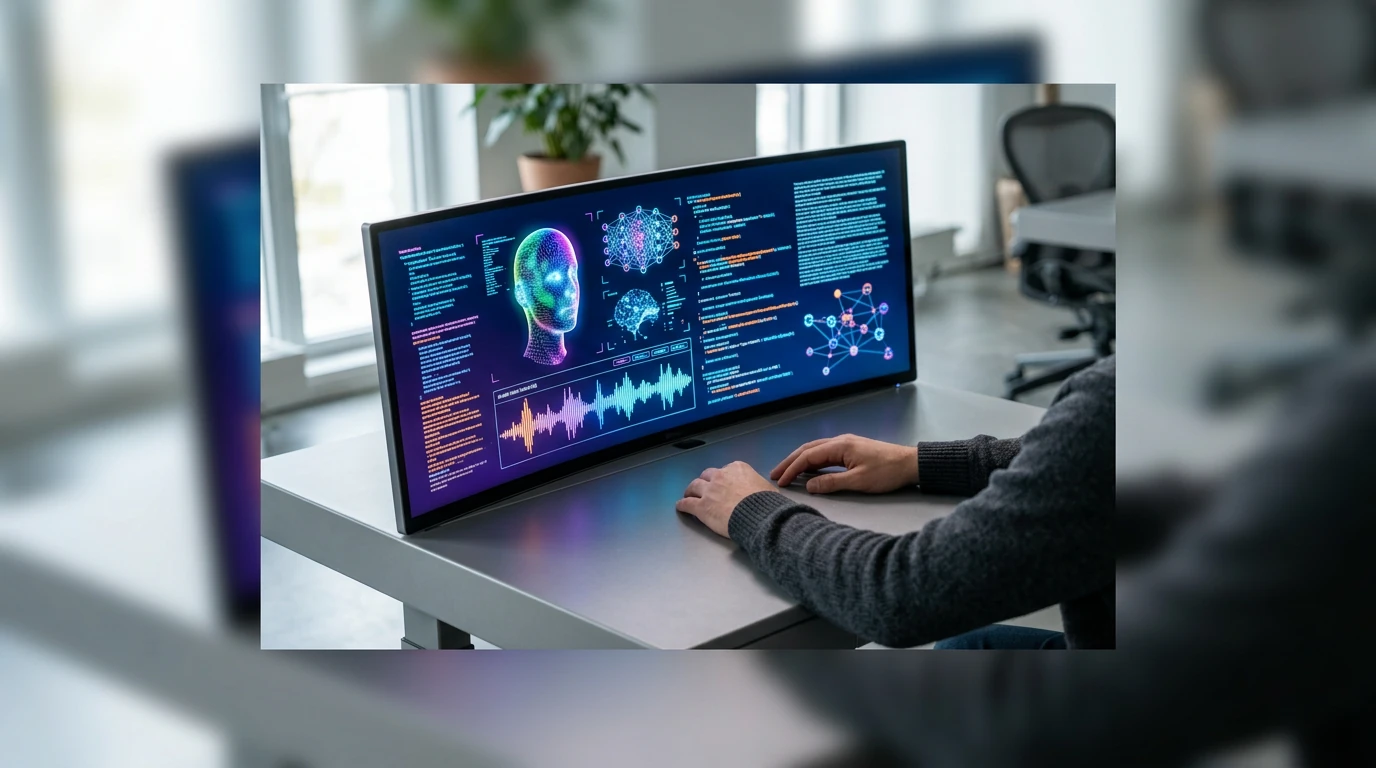
Behind the curtain of flashy demos and public anxiety, a relentless series of technical breakthroughs is fueling generative AI’s explosive growth. What most people miss is that the current AI boom isn’t just one discovery but a convergence of several key developments. The refinement of transformer architectures and the rise of diffusion models for image generation represent core shifts in how machines process and create information, enabling a deeper understanding of context and nuance. These are the engines powering the next wave of AI innovation.
The scale of these models is staggering. A few years ago, a model with 1.5 billion parameters was considered massive; now, top-tier models routinely exceed 500 billion parameters. This isn’t just about getting bigger. It’s about creating a richer space for knowledge to be encoded—much like increasing the pixel count on a digital camera reveals more detail.
This immense growth creates a new bottleneck: computational cost. Making these systems more efficient is one of the most urgent research areas, turning into a high-stakes race to shrink models without sacrificing capability. Are we building gods or just incredibly complex parrots that require the energy of a small city to operate? Finding sustainable approaches is one of the primary technology trends shaping our future.
The research horizon is now focused on hybrid architectures, novel training methods like reinforcement learning from human feedback (RLHF), and quantization techniques that allow powerful models to run on local hardware—even your smartphone. This push toward decentralization hints at a future where powerful AI applications are not just in the cloud, but in our hands.
The Human-AI Collaboration: Augmenting vs. Replacing
The tired narrative of mass unemployment fueled by AI is a lazy interpretation of a much more complex shift. The real story isn’t about replacement; it’s about augmentation. Generative AI is becoming less of an autonomous agent and more of a powerful collaborator—a cognitive prosthetic that amplifies human intellect and creativity. It’s a underlying change in how we approach work itself.
Consider a software developer using an AI copilot. The AI can generate boilerplate code, suggest bug fixes, and even translate code between languages, freeing the developer to focus on system architecture and complex problem-solving. This isn’t replacing the programmer; it’s giving them a superpower. A recent study from the Stanford Institute for Human-Centered AI found that teams using these collaborative tools saw a 35% increase in project completion speed. The machine handles the grunt work, while the human provides the direction and critical oversight.
New Roles and Skill Sets for the AI Era
Thriving in this environment requires a shift in skills. Raw knowledge becomes less valuable than the ability to query, validate, and synthesize information generated by an AI. The most critical skill emerging is prompt engineering—the art of asking the right questions to get the desired output. But is simply learning to talk to a machine enough? The underrated factor here is domain expertise combined with critical thinking.
You must be able to spot when an AI is “hallucinating” or providing a plausible but incorrect answer. This new paradigm demands a hybrid professional: part expert, part AI whisperer. These necessary technology trends are not just about tools but about evolving our own cognitive processes to work alongside them. The focus is on judgment, strategic thinking, and ethical oversight—qualities that remain distinctly human.
Designing for Effective AI Collaboration
Simply dropping an AI tool into an existing workflow is a recipe for failure. Effective integration requires a deliberate redesign of processes to create a true partnership. This involves identifying specific tasks ripe for AI assistance and training teams on how to interact with these systems effectively. It’s less like getting a new computer and more like hiring a brilliant—if sometimes quirky—new intern for every employee.
For organizations looking to integrate generative AI, the focus should be on augmenting human capability. Here is a basic checklist to get started:
- Identify Bottlenecks: Pinpoint repetitive, time-consuming tasks in your current workflow where AI could provide the most immediate value.
- Start Small: Pilot a single AI tool with a small, enthusiastic team to learn its strengths and weaknesses before a wide-scale rollout.
- Invest in Training: Focus training not just on how to use the tool, but on prompt crafting, output verification, and ethical guidelines. These practical AI applications are only as good as the people using them.
- Establish Feedback Loops: Create a system for users to report successes, failures, and unexpected AI behaviors to continuously refine your strategy.
Ultimately, the goal is to build a system where human creativity and AI’s computational power enhance each other, creating an output greater than the sum of its parts.
What’s Next: The Horizon of Generative AI’s Future
The generative AI we see today is a pale imitation of what’s coming. These systems are rapidly evolving from single-task tools into multi-modal platforms that can understand and generate text, images, sound, and even physical instructions. According to Stanford’s AI Index, the number of significant machine learning models released grew by over 50% in a single recent year, indicating a massive acceleration in one of the most required technology trends shaping our future. The resource investment is staggering.
Future iterations will likely move beyond simple prompts, becoming true creation engines. Could an AI autonomously design and test the next generation of digital innovation gadgets? That’s the direction we are headed—a thought that is both exciting and mildly terrifying.
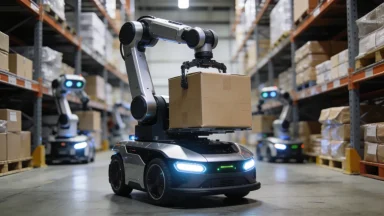
The underrated factor here is physical interaction. Dr. Fei-Fei Li of Stanford suggests the next frontier is embodied AI, where models can interact with the physical world through robotics, a leap powered by advanced software innovations in autonomous systems. It’s like teaching a chef not just to write a recipe, but to actually enter a kitchen, cook the meal, and adjust based on taste.
This isn’t a guaranteed path.
The central challenge is no longer just about building more powerful systems; it is about embedding them with a framework of values that aligns with human progress. Exploring generative AI’s next wave means confronting these ethical guardrails head-on.
What Becomes of Originality?
As generative AI transitions from a tool to a collaborator, we are forced to confront a question that extends beyond economics or ethics: what does human creativity mean in an age of artificial ingenuity? When an AI can compose a symphony from a feeling or design a life-saving drug from a protein target, the line between human inspiration and machine-generated output blurs. The challenge ahead is not merely to regulate this technology, but to redefine our own role alongside it. Will we become the conductors of a vast AI orchestra, or will our own creative instincts atrophy in the face of a partner that can outpace, out-create, and out-imagine us? The answer will shape not just our industries, but our very identity as creators.
Frequently Asked Questions
How is multimodal generative AI different from traditional AI?
Traditional AI models are typically unimodal, meaning they specialize in one type of data, like text or images. Multimodal generative AI represents a major leap forward by processing and synthesizing multiple data types—such as text, images, and audio—simultaneously. This allows for a more holistic understanding and enables the creation of more complex and nuanced outputs, better mirroring human cognition.
What are the biggest ethical concerns with generative AI today?
The primary ethical concerns include the proliferation of deepfakes and misinformation, which can erode public trust and manipulate discourse. Another major issue is copyright infringement, as models are often trained on vast amounts of internet data without compensating original creators. Finally, these models can amplify and perpetuate societal biases found in their training data, leading to unfair or discriminatory outcomes.
Will generative AI replace creative jobs?
It’s more likely that generative AI will transform creative jobs rather than replace them entirely. The technology is increasingly positioned as a powerful collaborator or co-pilot, automating repetitive tasks and augmenting human creativity. While some job roles will undoubtedly evolve, AI empowers professionals to focus on high-level strategy, ideation, and refinement, potentially leading to new forms of creative expression.
How can businesses effectively integrate generative AI into their operations?
Businesses can start by identifying specific, high-impact use cases, such as automating code generation or drafting marketing copy. It’s notable to focus on augmenting existing workflows rather than aiming for complete replacement. A successful integration also requires establishing clear ethical guidelines, investing in employee training to build new skills, and starting with pilot projects to measure ROI before scaling.
What role does data play in the advancement of generative AI?
Data is the core fuel for generative AI. The quality, diversity, and scale of the training datasets directly determine a model’s capabilities, accuracy, and potential for bias. While massive models learn from internet-scale data, specialized AIs achieve high performance in narrow domains like medicine or law by training on smaller, meticulously curated datasets. Ultimately, data quality governs the model’s usefulness and reliability.