Neuromorphic Computing: 2026 Breakthroughs for 100x AI Efficiency
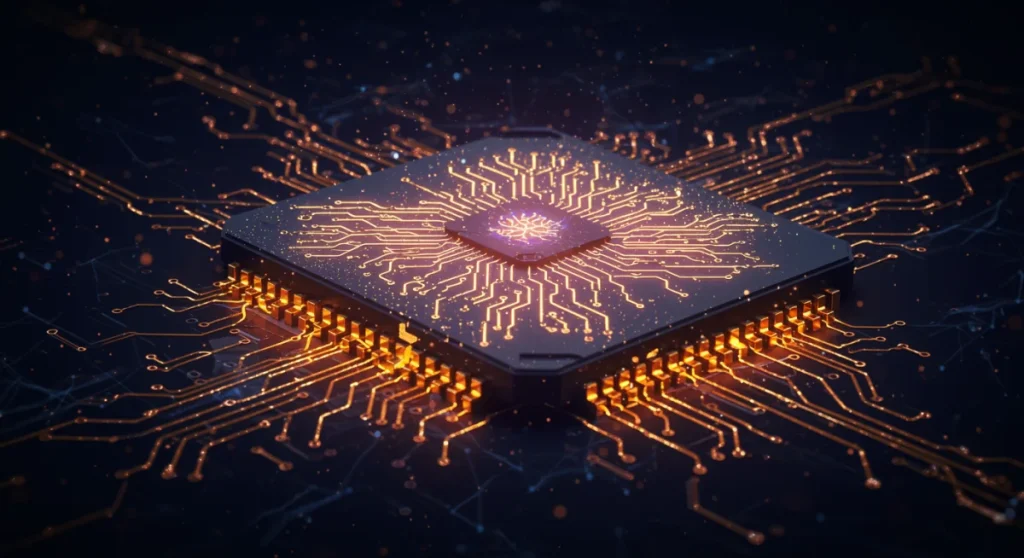
Neuromorphic computing is poised for significant breakthroughs by 2026, promising up to 100 times more efficient AI processing by mimicking the human brain’s architecture for unparalleled speed and energy conservation.
The landscape of artificial intelligence is on the cusp of a profound transformation, driven by advancements in hardware that fundamentally rethink how we process information. Among these, neuromorphic computing breakthroughs are emerging as a pivotal force, promising an exponential leap in AI efficiency. By emulating the intricate, energy-efficient architecture of the human brain, these novel systems are set to redefine the boundaries of what AI can achieve, particularly in areas demanding real-time processing and minimal power consumption.
The foundational shift to neuromorphic architecture
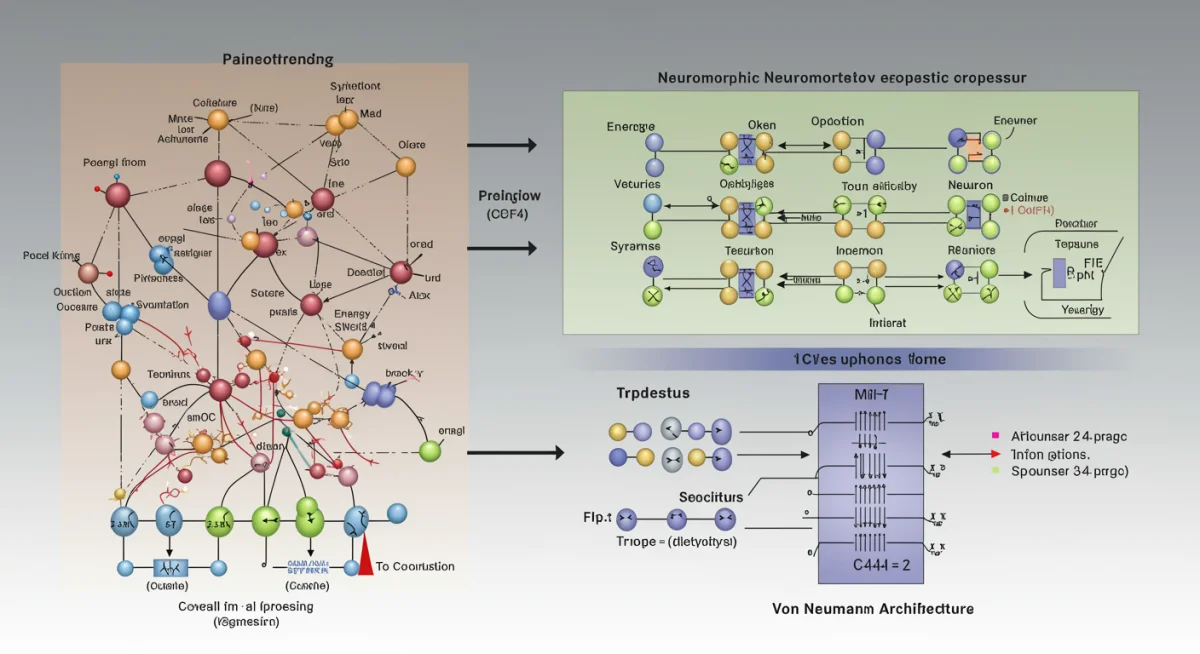
Neuromorphic computing represents a radical departure from conventional computer architectures, moving away from the Von Neumann bottleneck that separates processing and memory. Instead, it integrates these functions, much like biological brains, allowing for highly parallel and event-driven computation. This fundamental shift is not merely an incremental improvement but a complete reimagining of how AI systems learn, adapt, and operate.
Mimicking the brain’s efficiency
The human brain operates with astonishing energy efficiency, consuming only about 20 watts while performing complex cognitive tasks. Traditional AI, on the other hand, often requires vast amounts of power, especially for deep learning models running on GPUs. Neuromorphic systems aim to close this gap by:
- Event-driven processing: Neurons in the brain fire only when stimulated, leading to sparse and asynchronous activity. Neuromorphic chips adopt this principle, processing data only when changes occur, significantly reducing energy waste.
- In-memory computation: Data processing happens where data resides, eliminating the constant back-and-forth between processor and memory, which is a major bottleneck in conventional systems.
- Massive parallelism: Thousands or millions of ‘neurons’ and ‘synapses’ work simultaneously, enabling complex computations to be distributed and processed in parallel, mirroring the brain’s inherent parallelism.
This architectural paradigm promises not just efficiency but also new ways of handling unstructured data and real-time learning, opening doors for AI applications previously deemed too resource-intensive. The implications for edge AI, autonomous systems, and always-on intelligent devices are staggering.
The core idea behind neuromorphic computing is to build hardware that is intrinsically suited for AI workloads, rather than adapting conventional hardware to fit AI’s demands. This inherent compatibility is what drives the potential for 100x efficiency gains, setting the stage for a new era of intelligent machines that are both powerful and sustainable.
Key technological breakthroughs expected by 2026
The journey towards widespread neuromorphic adoption is accelerating, with several critical breakthroughs anticipated by 2026. These advancements will tackle current limitations, bringing neuromorphic chips closer to commercial viability and widespread deployment.
Advancements in materials science and fabrication
The physical realization of neuromorphic chips relies heavily on breakthroughs in materials science. Researchers are actively exploring novel materials that can mimic biological synapses with greater fidelity and scalability. This includes:
- Memristors: These resistive memory devices can store and process information simultaneously, acting as artificial synapses that learn and adapt. Significant progress is being made in their stability, endurance, and manufacturability.
- Phase-change materials: These materials can switch between amorphous and crystalline states, offering tunable resistance for synaptic weight storage. Their integration into large-scale arrays is becoming more robust.
- Ferroelectric devices: Offering non-volatile memory and low-power operation, ferroelectric transistors are being explored for highly efficient synaptic emulation.
These material innovations are crucial for creating high-density, low-power neuromorphic cores that can scale to brain-like complexities. The ability to fabricate these components reliably and cost-effectively will be a major determinant of market penetration.
Beyond materials, improved fabrication techniques are enabling the creation of more intricate and reliable neuromorphic circuits. Advances in nanotechnology and semiconductor manufacturing are allowing for tighter integration of components, reducing latency and increasing overall chip performance. These combined efforts are paving the way for a new generation of hardware that can truly unlock the potential of brain-inspired AI.
Impact on AI processing: 100x efficiency and beyond
The promise of neuromorphic computing is not just about incremental improvements; it’s about a paradigm shift that could deliver AI processing with unprecedented efficiency. The ‘100x more efficient’ benchmark isn’t an exaggeration but a realistic target driven by fundamental architectural advantages.
Energy reduction and performance boost
The primary driver of this efficiency gain is the drastically reduced energy consumption. By eliminating the constant data movement between CPU/GPU and memory, neuromorphic chips can perform complex AI tasks with orders of magnitude less power. This has profound implications for:
- Edge AI: Devices like smart sensors, wearables, and autonomous vehicles can run sophisticated AI models locally without relying on cloud connectivity or large power sources.
- Sustainable AI: Reducing the carbon footprint of large AI models, which currently consume enormous amounts of energy, becomes a tangible goal.
- Real-time processing: The ability to process data at the source, without latency, is critical for applications like real-time object recognition, natural language processing, and robotics.
This efficiency doesn’t come at the cost of performance. In many AI workloads, particularly those involving pattern recognition, anomaly detection, and continuous learning, neuromorphic systems can outperform traditional processors due to their inherent parallelism and event-driven nature. Imagine an AI that can learn and adapt in real-time within a drone, processing visual data and making decisions on the fly with minimal power draw.
The synergy between reduced power consumption and enhanced performance means that more complex AI models can be deployed in environments where they were previously unfeasible. This opens up entirely new frontiers for AI applications, from personalized healthcare to advanced environmental monitoring, all powered by highly efficient, brain-inspired hardware.
Applications poised for revolution
As neuromorphic computing matures, its applications will span a wide array of industries, fundamentally transforming how we interact with technology and how AI is deployed in the real world. The unique capabilities of these systems make them ideal for tasks that demand real-time adaptation and low power.
Autonomous systems and robotics
One of the most immediate beneficiaries will be autonomous systems. Cars, drones, and robots require instantaneous decision-making based on vast amounts of sensory data. Neuromorphic chips can process this data with unmatched speed and efficiency, enabling:
- Instantaneous perception: Rapid object recognition, scene understanding, and obstacle avoidance without significant power draw.
- Adaptive learning: Robots that can learn new tasks or adapt to changing environments in real-time, improving their performance continuously.
- Enhanced safety: Faster processing means quicker reactions to unforeseen circumstances, critical for safety in autonomous vehicles.
Beyond individual units, neuromorphic networks could facilitate swarm robotics, where multiple robots collaborate and share information with unprecedented efficiency, leading to more complex and coordinated behaviors. The ability to process data at the edge, directly on the robot, reduces the need for constant cloud communication, making these systems more robust and reliable.
The implications extend to industrial automation, where robots can perform more intricate tasks with greater autonomy and precision, reducing human intervention and increasing productivity. The synergy of low power and high performance will drive a new generation of intelligent machines that are truly integrated into our physical world.
Challenges and the path to widespread adoption
While the potential of neuromorphic computing is immense, several significant challenges must be addressed before it achieves widespread adoption. These hurdles span hardware, software, and the broader ecosystem surrounding AI development.
Programming and algorithm development
One of the most significant challenges lies in programming neuromorphic hardware effectively. Traditional algorithms designed for Von Neumann architectures are not directly transferable to brain-inspired systems. This requires:
- New programming paradigms: Developers need to learn new ways of thinking about computation, focusing on event-driven, asynchronous processing.
- Specialized algorithms: Developing algorithms specifically optimized for spike-based neural networks and in-memory computation.
- Software tools and frameworks: Building robust software development kits (SDKs) and frameworks that abstract away the complexity of the hardware, making it accessible to a broader range of developers.
The lack of standardized programming interfaces and a mature ecosystem of tools currently limits rapid development and deployment. Researchers and companies are actively working on bridging this gap, but it requires a concerted effort from the entire AI community.
Another challenge is the integration of neuromorphic chips into existing computing infrastructure. This involves developing hybrid systems where neuromorphic processors work alongside traditional CPUs and GPUs, leveraging the strengths of each architecture. Overcoming these integration complexities will be crucial for seamless adoption in enterprise and consumer markets.
Leading players and ongoing research
The field of neuromorphic computing is a highly competitive and rapidly evolving area, with several key players driving innovation. From established tech giants to agile startups, the race to unlock the full potential of brain-inspired AI is intense.
Pioneering companies and academic institutions
Major technology companies are heavily investing in neuromorphic research and development:
- IBM: With projects like TrueNorth, IBM has been a pioneer in developing large-scale neuromorphic chips, focusing on low-power cognitive computing.
- Intel: Intel’s Loihi research chip is a significant platform for exploring event-driven AI and is being made available to researchers worldwide.
- SpiNNaker (University of Manchester): This project focuses on building a massively parallel computing platform designed to simulate large-scale neural networks in real-time.
Beyond these giants, numerous startups are emerging, specializing in specific aspects of neuromorphic hardware or software, often focusing on niche applications like edge AI or specialized sensory processing. Academic institutions globally are also contributing significantly, publishing groundbreaking research in materials science, chip architecture, and novel algorithms.
Collaborations between industry and academia are crucial for accelerating progress, combining the research capabilities of universities with the engineering and manufacturing prowess of corporations. This collaborative ecosystem is vital for overcoming the complex challenges and bringing neuromorphic technology from the lab to commercial products. The ongoing investment and research indicate a strong belief in the transformative power of neuromorphic computing.
The future beyond 2026: A new era of AI
While 2026 marks a significant milestone for neuromorphic computing breakthroughs, the journey doesn’t end there. The advancements achieved by this date will lay the groundwork for an even more profound transformation in the decades to follow, ushering in a truly new era of artificial intelligence.
Expanding capabilities and accessibility
Post-2026, we can expect to see neuromorphic systems becoming even more sophisticated and integrated into everyday life. This will include:
- Increased scale and complexity: Neuromorphic chips will likely grow in size and density, approaching the complexity of biological brains, enabling even more advanced cognitive functions.
- Enhanced learning paradigms: Further development of algorithms that leverage the unique attributes of neuromorphic hardware, leading to more efficient and robust learning, including unsupervised and continuous learning.
- Democratization of AI: As efficiency increases and costs potentially decrease, powerful AI capabilities will become accessible in a wider range of devices and applications, from smart homes to personalized medical devices.
The long-term vision for neuromorphic computing extends to creating truly autonomous and adaptive AI that can learn from experience, reason, and interact with the world in a more human-like way. This future promises not just more powerful AI, but also AI that is inherently more sustainable and integrated into the fabric of our society.
The continuous evolution of neuromorphic technology will pave the way for AI systems that are not only intelligent but also intuitive, responsive, and deeply embedded in our technological infrastructure, fundamentally reshaping industries and daily life.
| Key Aspect | Brief Description |
|---|---|
| Brain Mimicry | Integrates processing and memory, enabling highly parallel and event-driven computation like the human brain. |
| 100x Efficiency | Achieves significantly reduced energy consumption and enhanced performance compared to traditional AI hardware. |
| Key Breakthroughs | Advancements in memristors, phase-change materials, and fabrication techniques are crucial for scalability. |
| Future Applications | Revolutionizes autonomous systems, robotics, edge AI, and sustainable computing. |
Frequently asked questions about neuromorphic computing
Neuromorphic computing is a new paradigm for building computer chips that mimic the architecture and function of the human brain. Unlike traditional computers that separate processing and memory, neuromorphic chips integrate these functions, enabling highly parallel, event-driven, and energy-efficient computation for AI tasks.
It achieves this by drastically reducing energy consumption through event-driven processing, where ‘neurons’ only activate when necessary. It also performs in-memory computation, eliminating the energy-intensive data transfer between processor and memory that plagues traditional Von Neumann architectures, leading to significant power savings and speed.
By 2026, significant advancements are anticipated in materials science, particularly with memristors and phase-change materials, which are crucial for creating robust artificial synapses. Improved fabrication techniques for large-scale, high-density neuromorphic chips are also expected, making them more commercially viable.
Autonomous systems like self-driving cars and robotics, edge AI devices (wearables, smart sensors), and real-time data processing applications stand to benefit immensely. Their need for low-power, instantaneous decision-making aligns perfectly with neuromorphic capabilities, enhancing performance and enabling new functionalities.
Key challenges include developing new programming paradigms and algorithms specifically for neuromorphic hardware, as traditional software isn’t compatible. The creation of robust software development kits and frameworks, along with seamless integration into existing computing infrastructure, are also critical hurdles to overcome for widespread adoption.
Conclusion
The journey towards a future powered by neuromorphic computing is not just a technological race but a fundamental re-evaluation of how we design and deploy artificial intelligence. With anticipated breakthroughs by 2026 promising up to 100 times more efficient AI processing, we are on the cusp of an era where AI is not only more powerful but also significantly more sustainable and adaptable. While challenges in software and integration remain, the relentless innovation from researchers and industry leaders suggests that brain-inspired AI will fundamentally reshape industries, from autonomous systems to edge computing, ushering in an unprecedented chapter of intelligent technology.