Anúncios
Next-generation batteries are poised to redefine portable electronics and electric vehicles, projecting a significant 30% increase in device lifespan by 2026, driven by breakthroughs in solid-state, silicon anode, lithium-sulfur, and structural battery technologies.
The quest for longer-lasting devices and more efficient energy storage has never been more urgent. We are on the cusp of a revolution in power, with next-generation batteries promising to extend the life of our gadgets and electric vehicles by a remarkable 30% by 2026. This isn’t just about incremental improvements; it’s about fundamental shifts in how we store and utilize energy, paving the way for a more sustainable and connected future. Join us as we delve into the four key innovations set to transform the battery landscape.
The Dawn of Solid-State Batteries: A Safer, Denser Future
Solid-state batteries represent one of the most exciting frontiers in energy storage. Unlike traditional lithium-ion batteries that rely on liquid electrolytes, solid-state batteries utilize a solid material to conduct ions between the electrodes. This fundamental change not only enhances safety by eliminating flammable liquids but also opens the door to significantly higher energy densities.
Anúncios
Improved Safety and Stability
The inherent safety of solid-state batteries is a game-changer. By replacing volatile liquid electrolytes with non-flammable solid alternatives, the risk of thermal runaway and fires is drastically reduced. This makes them ideal for applications where safety is paramount, such as electric vehicles and medical implants.
- Eliminates fire hazards associated with liquid electrolytes.
- Offers greater thermal stability across a wider temperature range.
- Reduces the need for complex cooling systems, simplifying battery design.
Beyond safety, the solid electrolyte also contributes to greater stability, allowing for more charge and discharge cycles without significant degradation. This translates directly into a longer operational life for devices and vehicles powered by these advanced cells. The reduced degradation rate is a critical factor in achieving that projected 30% longer device life.
Higher Energy Density and Faster Charging
The compact nature of solid electrolytes enables the use of lithium metal anodes, which boast a much higher theoretical energy capacity than the graphite anodes found in current lithium-ion batteries. This allows for significantly more energy to be packed into a smaller, lighter battery, extending device runtimes and vehicle ranges.
Anúncios
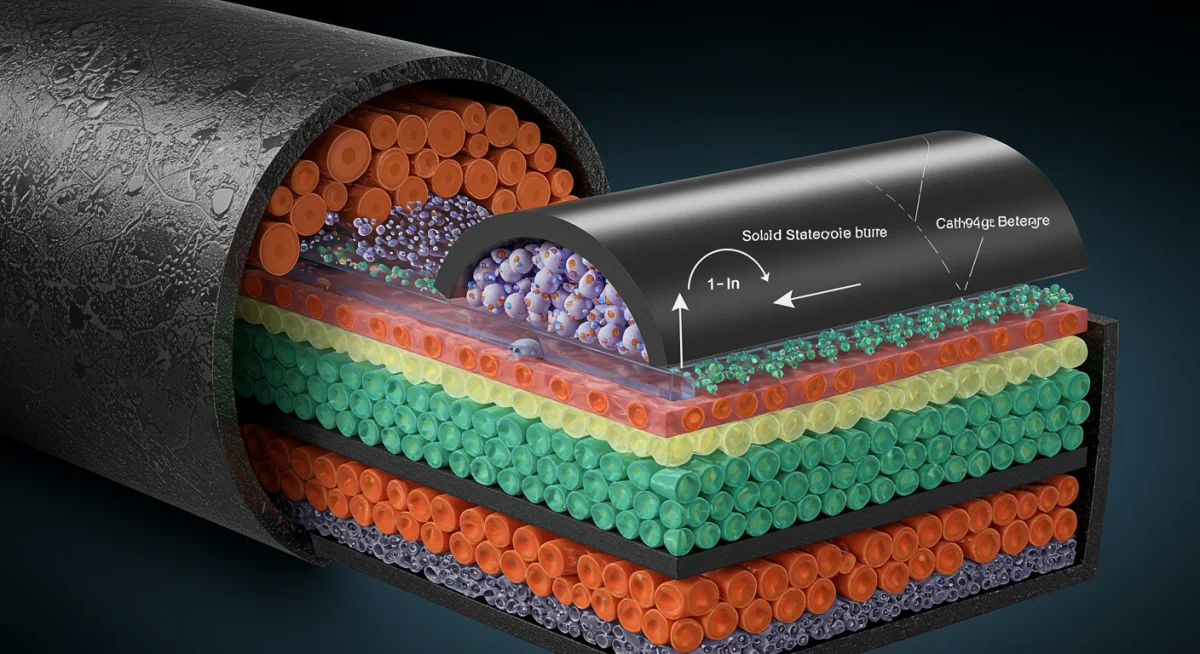
Furthermore, some solid-state battery designs show promise for ultra-fast charging capabilities. The solid electrolyte can facilitate more efficient ion transfer, leading to quicker replenishment of charge without compromising battery health. This combination of higher energy density and rapid charging is essential for the next generation of consumer electronics and electric transportation.
The promise of solid-state technology is clear: safer, more powerful, and longer-lasting batteries that can fundamentally alter our reliance on current energy storage solutions. While challenges remain in mass production and cost reduction, the progress being made suggests a widespread adoption in the coming years.
Silicon Anode Batteries: Unlocking Unprecedented Capacity
Another major leap forward in battery technology comes from the integration of silicon into the anode. Silicon has an astonishing theoretical capacity to store lithium ions – nearly ten times that of graphite, the current standard. This immense capacity translates directly into batteries that can hold significantly more charge, leading to extended device usage times.
Overcoming Silicon’s Challenges
Despite its potential, silicon has presented significant challenges. During charging and discharging, silicon expands and contracts dramatically, leading to structural instability and rapid degradation of the battery. Researchers have been diligently working to overcome these issues through innovative material engineering.
- Developing silicon nanowires and nanoparticles to mitigate expansion.
- Creating porous silicon structures that can accommodate volume changes.
- Integrating polymer binders and protective coatings to enhance stability.
These advancements are crucial for making silicon anodes viable for commercial applications. By managing the volume changes, engineers can create batteries that not only offer higher capacity but also maintain their performance over many charge cycles, contributing significantly to that 30% longer device life target.
Real-World Impact and Integration
Companies like Sila Nanotechnologies and StoreDot are at the forefront of bringing silicon anode technology to market. Sila Nano’s materials are already found in some consumer electronics, demonstrating a tangible increase in energy density. StoreDot, on the other hand, is focused on ultra-fast charging electric vehicle batteries using silicon-dominant anodes, aiming to deliver hundreds of miles of range in minutes.
The widespread adoption of silicon anode batteries will mean smartphones that last days on a single charge, and electric vehicles with ranges comparable to gasoline cars, without the added weight or bulk. This technology is not just about extending life; it’s about fundamentally changing user experience and accessibility to high-performance devices.
Lithium-Sulfur Batteries: High Energy, Lower Cost
Lithium-sulfur (Li-S) batteries offer another compelling alternative to traditional lithium-ion chemistry, primarily due to their high theoretical energy density and the abundance of sulfur. Sulfur is significantly cheaper and more environmentally friendly than the cobalt and nickel used in many current battery cathodes, making Li-S batteries a potentially sustainable and cost-effective solution.
The Promise of High Energy Density
The theoretical energy density of lithium-sulfur batteries is more than double that of conventional lithium-ion batteries. This means a Li-S battery of the same weight could power a device for twice as long, or a lighter battery could provide the same amount of power. This characteristic makes them particularly attractive for applications where weight is critical, such as drones, aviation, and long-range electric vehicles.
However, Li-S batteries face their own set of challenges, mainly related to the dissolution of polysulfides into the electrolyte and the volumetric expansion of the sulfur cathode during cycling. These issues lead to rapid capacity fade and short cycle life, which researchers are actively addressing.
Innovations Addressing Challenges
Significant research is underway to overcome the limitations of Li-S batteries. Strategies include developing novel carbon-sulfur composite cathodes that trap polysulfides, using solid electrolytes to prevent their migration, and designing advanced binders to maintain structural integrity.
- Porous carbon structures to encapsulate sulfur and polysulfides.
- Advanced electrolyte formulations to stabilize chemical reactions.
- Protective interlayers to prevent lithium anode degradation.
Breakthroughs in these areas are bringing Li-S batteries closer to commercial viability. Companies like OXIS Energy (though now in administration, their research laid significant groundwork) and Lyten are pushing the boundaries, developing Li-S battery prototypes with impressive performance metrics. As these challenges are resolved, lithium-sulfur batteries could become a dominant force, offering both extended device life and a more sustainable energy future.
Structural Batteries: Power as Part of the Product
Structural batteries represent a radical departure from traditional battery design. Instead of being separate components, these batteries are integrated directly into the structure of a device or vehicle, performing both a mechanical function (like carrying load) and an electrochemical function (storing energy). This innovative approach eliminates the need for separate battery casings and wiring, leading to significant weight savings and increased energy efficiency.
Dual Functionality and Weight Reduction
Imagine a smartphone whose casing is also its battery, or an electric car where the body panels contribute to its power storage. This is the vision of structural batteries. By combining two functions into one material, designers can reduce the overall weight and volume of products, making them lighter, sleeker, and more energy-dense. This intrinsic integration not only saves space but also reduces manufacturing complexity.
The core concept involves using composite materials, such as carbon fiber, that are engineered to store energy. These composites act as both the structural skeleton and the power source, allowing for a more efficient use of space and resources. This is particularly advantageous in aerospace and automotive industries where every gram saved translates to better performance and fuel efficiency.
Applications and Future Prospects
While still in the early stages of development, structural batteries hold immense promise for a wide range of applications. In electric vehicles, they could extend range by making the car lighter and more aerodynamically efficient. For portable electronics, they could enable thinner, lighter devices with longer battery life, directly contributing to the 30% increase we anticipate.
- Electric vehicle chassis acting as power packs.
- Drone frames providing flight power.
- Wearable electronics with integrated energy storage.
Researchers at Chalmers University of Technology in Sweden have been at the forefront of this field, demonstrating prototypes of structural battery composites that can store energy while bearing mechanical loads. The challenge lies in optimizing both the mechanical strength and electrochemical performance simultaneously. As material science advances, structural batteries could lead to revolutionary product designs and a paradigm shift in how we think about power sources.
The Economic and Environmental Impact of Battery Advancements
The introduction of these next-generation battery technologies extends far beyond just longer device life; it promises profound economic and environmental benefits. On the economic front, increased battery efficiency and longevity mean consumers will replace devices less frequently, leading to cost savings. For industries, particularly automotive and renewable energy, these advancements translate into more competitive products and more robust infrastructure.
Driving Sustainable Innovation
Environmentally, the shift towards these new battery chemistries is critical. Many next-generation batteries aim to reduce reliance on rare and ethically contentious materials like cobalt. Lithium-sulfur batteries, for instance, utilize abundant sulfur, offering a more sustainable pathway. Solid-state batteries, with their enhanced safety, reduce the risks associated with battery disposal and recycling.
- Reduced demand for rare earth minerals.
- Lower carbon footprint from manufacturing and extended product life.
- Improved recyclability and reduced waste streams.
The ability to store more energy in smaller, lighter packages also boosts the efficiency of electric vehicles, further reducing their environmental impact by minimizing energy consumption per mile. Furthermore, the capacity for faster charging will support the wider adoption of electric transport, alleviating range anxiety and making sustainable travel more accessible to the broader public.
Global Market Transformation
The global battery market is projected to see unprecedented growth, driven by these innovations. Investments in research and development are soaring, with startups and established giants alike vying for leadership in this transformative sector. Countries are recognizing the strategic importance of domestic battery production and are investing heavily in gigafactories and material supply chains.
This competitive landscape is accelerating the pace of innovation, ensuring that these promising technologies move from laboratories to commercial products at a faster rate. The economic ripple effect will be felt across numerous industries, from consumer electronics to grid-scale energy storage, creating new jobs and fostering technological independence. The overarching impact will be a cleaner, more efficient, and economically vibrant future powered by advanced energy solutions.
Challenges and the Road Ahead for Battery Technology
While the future of battery technology appears incredibly promising with innovations like solid-state, silicon anode, lithium-sulfur, and structural batteries, it is crucial to acknowledge the significant challenges that lie ahead. The journey from laboratory breakthrough to mass market adoption is often fraught with hurdles, including manufacturing scalability, cost reduction, and ensuring consistent performance under diverse real-world conditions.
Manufacturing Scalability and Cost
One of the primary challenges for many next-generation battery technologies is scaling up production to meet global demand. Current manufacturing processes for traditional lithium-ion batteries are highly optimized, making it difficult for new chemistries to compete on cost initially. For instance, solid-state batteries require entirely new manufacturing infrastructure, which demands substantial investment and time to perfect.
- High initial investment in new production lines.
- Complex material synthesis and processing techniques.
- Achieving consistent quality control at high volumes.
Reducing the cost per kilowatt-hour is paramount for widespread adoption, especially in cost-sensitive markets like electric vehicles. Researchers and engineers are working tirelessly to refine production methods, explore alternative, cheaper raw materials, and optimize cell designs to bring down costs without compromising performance or safety.
Performance Under Real-World Conditions
Laboratory results often represent ideal conditions, and translating these into robust real-world performance is another critical challenge. Batteries must withstand extreme temperatures, vibrations, and countless charge-discharge cycles without significant degradation. For example, while silicon anodes offer high theoretical capacity, managing their volume expansion over thousands of cycles in a commercial product requires sophisticated engineering.
Ensuring long-term stability, rapid charging capabilities without overheating, and reliable operation across various climates are all factors that need to be meticulously addressed. Extensive testing and validation are necessary before these technologies can be deemed ready for prime time, especially in critical applications like electric vehicles where safety and reliability are non-negotiable.
Despite these challenges, the concerted efforts of scientists, engineers, and industry leaders worldwide are steadily pushing these next-generation batteries towards commercial readiness. The pace of innovation suggests that many of these hurdles will be overcome, leading to the transformative impact on device life and energy storage that we anticipate.
| Key Battery Innovation | Promised Benefit |
|---|---|
| Solid-State Batteries | Enhanced safety, higher energy density, and faster charging for longer device life. |
| Silicon Anode Batteries | Unprecedented capacity, leading to significantly extended device usage times. |
| Lithium-Sulfur Batteries | High energy density and lower cost due to abundant sulfur, ideal for weight-sensitive applications. |
| Structural Batteries | Integrated power and mechanical function, reducing weight and increasing energy efficiency. |
Frequently Asked Questions About Next-Generation Batteries
Solid-state batteries use a solid electrolyte instead of a flammable liquid one. This eliminates the risk of thermal runaway and fires, which are significant safety concerns with current lithium-ion technology, making them much more stable and reliable across various operating conditions.
Silicon anodes have a much higher theoretical capacity to store lithium ions compared to traditional graphite anodes. This means they can pack significantly more energy into the same volume, leading to longer operating times for devices and electric vehicles before needing a recharge.
Yes, lithium-sulfur batteries are considered more environmentally friendly. They utilize abundant sulfur, which is cheaper and less toxic than the cobalt and nickel found in many current lithium-ion cathodes, reducing reliance on rare earth minerals and improving sustainability.
Structural batteries are designed to perform both a mechanical function (like bearing load) and an electrochemical function (storing energy). They integrate battery components directly into the device’s structure, often using composite materials, reducing overall weight and volume while providing power.
While some silicon anode batteries are already in niche products, widespread adoption of all these technologies is projected to increase significantly by 2026. Solid-state, lithium-sulfur, and structural batteries are still overcoming manufacturing and cost challenges, but commercialization is rapidly approaching for many applications.
Conclusion
The landscape of energy storage is undergoing a profound transformation, with next-generation batteries standing at the forefront of this revolution. The four innovations discussed—solid-state, silicon anode, lithium-sulfur, and structural batteries—each offer unique advantages that collectively promise to extend device life by an impressive 30% by 2026. Beyond mere longevity, these advancements are set to enhance safety, reduce environmental impact, and unlock entirely new possibilities for product design across consumer electronics, electric vehicles, and various other sectors. As research and development continue to accelerate, overcoming current challenges, we are on the precipice of a future powered by more efficient, sustainable, and powerful energy solutions.