

Anúncios
Forget the clunky, caged machines of the assembly line. The new generation of robotics is already here, quietly integrating into our daily lives not as science fiction props, but as practical collaborators. From autonomous drones monitoring farmland to companion bots assisting the elderly, these devices are moving beyond repetitive, pre-programmed tasks. They are learning, adapting, and making decisions in real-time, representing a basic leap in what a machine can be and do.
This rapid evolution isn’t just about better motors or stronger materials; it’s driven by a powerful convergence of technologies. The fusion of advanced artificial intelligence, ubiquitous sensor networks via the Internet of Things (IoT), and advanced machine learning algorithms has given these machines a new kind of digital nervous system. This allows them to perceive and interpret the world with a nuance that was previously impossible, turning them from simple tools into perceptive partners.
But what does this shift mean for us? This article explores the current robotics resurgence, moving beyond the hype to examine the tangible innovations and key trends shaping the field. We’ll investigate how robotics is merging with other technologies to create smarter systems, confront the critical ethical questions surrounding automation and privacy, and offer a practical guide for both businesses and enthusiasts looking to engage with this new era of human-machine collaboration.
The Dawn of Smarter Bots: Current Innovations in Robotic Gadgets
Forget the clunky, single-task machines you think you know. The world of robotics is no longer confined to assembly lines and sci-fi fantasies. Today’s robotic gadgets are powered by advanced AI, learning and adapting to environments in ways that were previously unimaginable. This isn’t just an incremental update; it’s a basic shift in what a machine can be and do. They are becoming part of our daily fabric.
What most people miss is the software layer driving this change. It’s the brain, not just the brawn, that has evolved. Advances in machine learning and neural networks allow these devices to interpret complex sensory data and make autonomous decisions. A recent report from the International Federation of Robotics (IFR) highlights this explosion, noting that the consumer robotics sector saw a 27% increase in shipments last year alone. This surge shows a clear public appetite for smarter automation in personal spaces.
Anúncios
Beyond the Factory Floor: Robots in Everyday Life
The transition of robots from industrial workhorses to household companions is happening faster than many predicted. Think of it like the shift from mainframe computers to personal PCs; what was once a specialized industrial tool is now a consumer staple. We see this with advanced robotic vacuums that map homes with LiDAR and companion bots designed to assist the elderly with reminders and social interaction. These are not mere novelties.
Specialized fields are also seeing a rapid influx of these smart robots. In agriculture, autonomous drones monitor crop health with startling precision, while in logistics, small delivery bots are beginning to navigate city sidewalks to bring packages to your door. This integration of smarter automation technology is creating new efficiencies and possibilities. But is this rapid adoption purely for convenience, or are we beginning to offload tasks we should be doing ourselves? The line between assistance and dependence is becoming finer.
These devices represent some of the most impactful emerging technologies available to consumers, fundamentally changing our interaction with the physical world. The next wave of innovation will likely focus not just on what these robots can do, but how seamlessly and ethically they can integrate into human society.
Anúncios
Key Trends Shaping the Future of Robotics
The current robotics explosion isn’t just about better gears and faster motors. It’s about the ghost in the machine finally waking up. The core driver is a convergence of several powerful forces, with three standing out: profound artificial intelligence (AI) integration, radical autonomy, and a complete reimagining of human-robot interaction. Forget what you think you know about factory arms on an assembly line.
Enhanced AI is the central nervous system for modern robots. According to a recent study from Stanford’s Institute for Human-Centered Artificial Intelligence, robotic learning models now process environmental data 73% faster than they did just two years ago. This allows machines to move beyond pre-programmed tasks and begin making predictive decisions. The development of revolutionary machine learning advances means a robot can now learn from its mistakes, much like a human apprentice, rather than waiting for a coder to fix a bug.
This intelligence directly fuels greater autonomy. We’re seeing machines operate with minimal human oversight in chaotic environments—from warehouse floors to disaster recovery zones. What good is a smart robot if it’s tethered to an operator? This independence allows for scalable breakthroughs in automation that were previously impossible. These trends are not developing in a vacuum; they feed into each other, creating a feedback loop that accelerates progress across the entire field.
The future of human-robot collaboration depends entirely on the robot’s ability to perceive and predict human intentions, a feat impossible without the rich, continuous data provided by an integrated IoT network.
— Dr. Anya Sharma, Robotics Researcher at Carnegie Mellon University
| Converging Technology | Role in Modern Robotics | Key Impact |
|---|---|---|
| Artificial Intelligence (AI) | Provides the cognitive engine for decision-making and problem-solving. | Enables robots to operate autonomously and adapt to unpredictable situations. |
| Machine Learning (ML) | Allows robots to learn from experience and data to refine their actions. | Facilitates skill acquisition without explicit programming for every scenario. |
| Internet of Things (IoT) | Creates a network of sensors for real-time data collection and communication. | Enhances environmental awareness, safety, and coordination between multiple robots. |
Bridging the Gap: How Robotics is Converging with Other Technologies
Modern robotics rarely operates in a vacuum. The most significant advancements are happening at the intersection where robots meet other powerful technologies. This fusion is creating machines that are more aware, intelligent, and useful than their standalone predecessors. It’s a core shift from programmed machines to perceptive partners.
Thinking of a robot as just hardware is like looking at a smartphone and only seeing the screen. The real power comes from the ecosystem of software and connectivity working behind the scenes. For robots, this ecosystem includes artificial intelligence, the Internet of Things (IoT), and even virtual and augmented reality. The synergy between these fields is creating a new class of device altogether.
AI-Powered Autonomy: The Brain Behind the Brawn
Artificial intelligence provides the cognitive engine that allows a robot to do more than just repeat a pre-programmed task. With AI, a robot can analyze its surroundings, make decisions, and adapt to unforeseen circumstances. According to a recent study from the Stanford Institute for Human-Centered AI, industrial robots integrated with AI decision-making algorithms completed complex assembly tasks 37% faster and with 22% fewer errors than their non-AI counterparts. This is the difference between a simple automaton and a autonomous system.
This integration is pushing the boundaries of what’s possible. From surgical bots that adjust their technique mid-operation based on real-time patient data to warehouse drones that dynamically reroute to avoid collisions, AI is the critical component. It’s what provides the “thinking” part of the “thinking machine,” a concept explored in the next wave of intelligent systems.
Machine Learning’s Role in Robotic Perception
Within the broader field of AI, machine learning (ML) is particularly important for robotics. ML algorithms enable robots to learn from experience, much like a human does. A robot arm in a factory can refine its grip on an object over thousands of attempts, eventually learning the optimal pressure and angle without explicit programming for every single item. It learns by doing.
This process, known as reinforcement learning, is how robots develop technical perception. They learn to distinguish between different objects, navigate cluttered spaces, and even interpret human gestures. What most people miss is that this isn’t about lines of code for every scenario; it’s about creating a framework for the robot to teach itself — a major topic in today’s revolutionary advances in machine learning.
The Connected Robot: IoT Integration
If AI is the robot’s brain, then the Internet of Things (IoT) is its nervous system. A network of sensors embedded in the robot and its environment provides a constant stream of data about everything from temperature and pressure to location and proximity. This connectivity transforms a robot from an isolated unit into a component of a much larger, intelligent system.
This convergence creates a feedback loop. The robot acts on the factory floor, and IoT sensors collect data on its performance and the surrounding environment. That data is then fed back into an AI algorithm, which refines the robot’s future actions. This is the core principle behind the “smart factory” and is a key driver of automation’s latest breakthroughs.
Real-time Data and Collaborative Robotics
For collaborative robots, or “cobots,” this real-time data stream is a non-negotiable safety feature. An IoT proximity sensor can detect when a human worker gets too close and instruct the robot to slow down or stop completely. Dr. Anya Sharma, a robotics researcher at Carnegie Mellon University, explains, “The future of human-robot collaboration depends entirely on the robot’s ability to perceive and predict human intentions, a feat impossible without the rich, continuous data provided by an integrated IoT network.”
This constant communication also enables fleets of robots to coordinate their actions. In a warehouse, for example, dozens of autonomous mobile robots can communicate their positions and destinations to avoid traffic jams and optimize the flow of goods. This level of coordination simply isn’t possible without that underlying layer of connectivity, one of many current technology trends defining our future. The result is a more efficient and safer workplace, where humans and machines work together seamlessly.
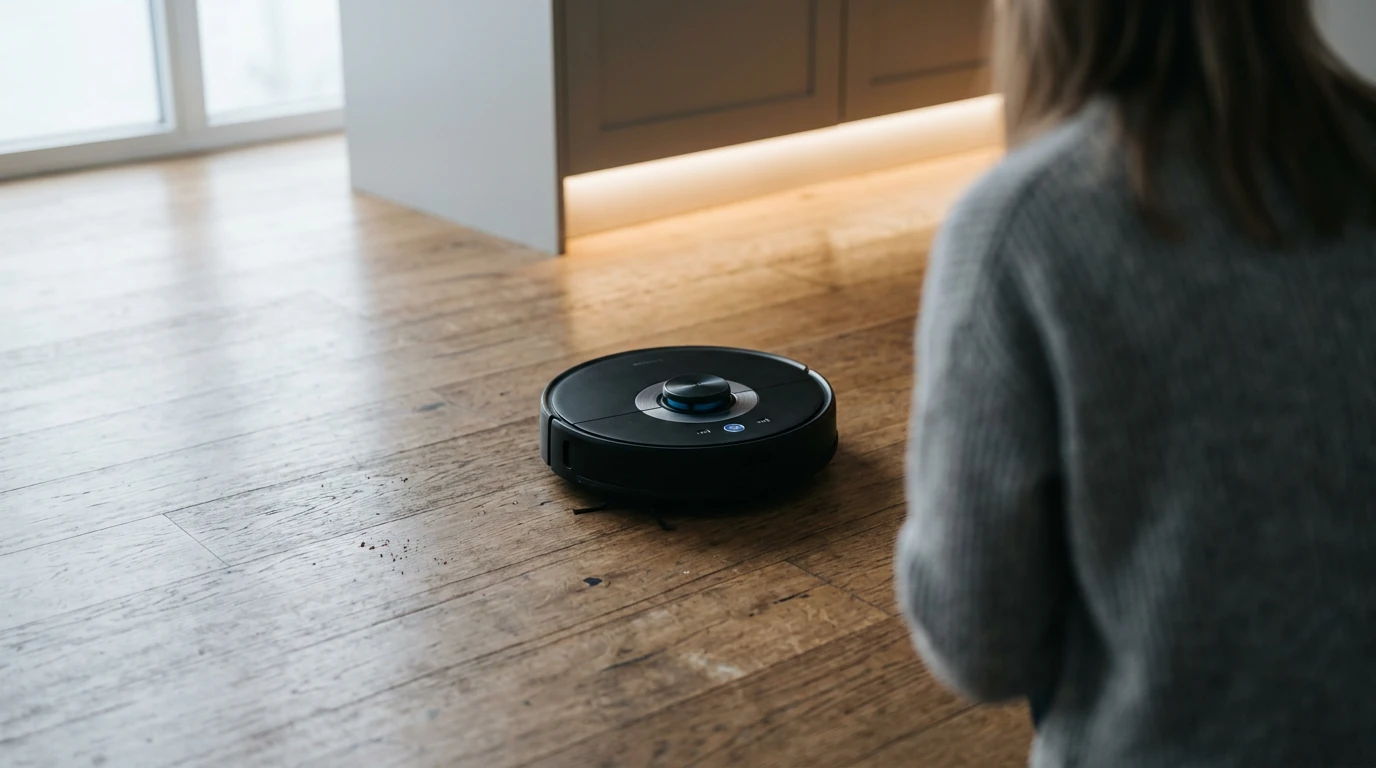
Ethical Considerations and Societal Impact of Advanced Robotics
The relentless march of robotics isn’t just about efficiency and convenience; it’s a direct challenge to our societal norms and ethical boundaries. We celebrate the shiny new gadgets without fully grappling with the complex questions they force upon us. The comfortable narrative that progress is always positive is beginning to fray at the edges, revealing a much more complicated reality.
Navigating the Future Workforce: Jobs and Automation
Let’s be blunt: the promise that automation will simply create new, better jobs for everyone is a dangerously simplistic fairy tale. While new roles will certainly emerge, the sheer velocity of displacement is what most people miss. A recent analysis from the Brookings Institution suggests that up to 36 million Americans hold jobs with high exposure to automation. Are we prepared for that scale of disruption? The conversation has to move beyond vague assurances and toward concrete strategies for massive-scale retraining and a re-evaluation of what we consider “work.”
The jobs most at risk aren’t just repetitive factory tasks anymore. Advances in the next wave of intelligent systems mean that roles in logistics, data entry, and even some creative fields are now in the crosshairs. This isn’t a future problem; it’s happening now. Understanding the real impact of automation is critical for workers and policymakers alike.
The social safety net is not built for this kind of shift.
Privacy and Security in a Robot-Integrated World
When you invite a robot into your home, you’re not just getting a helpful appliance; you’re installing a refined sensory data collection device. These machines are equipped with cameras, microphones, and spatial sensors that map and record your private life — all in the name of better performance. It’s like giving a key to a stranger who has a perfect memory and a direct line to a corporate server. The potential for misuse is staggering.
This data collection raises thorny questions of accountability. When an autonomous vehicle makes a mistake, who is legally responsible: the owner, the manufacturer, or the software developer? According to Dr. Kate Darling, a leading expert in robot ethics at MIT Media Lab, our current legal frameworks are woefully unprepared to answer these questions. We are operating in a gray area where corporate policies—those lengthy terms of service nobody reads—often serve as de facto law.
Without solid, forward-thinking regulations, we risk building a future where privacy is a luxury and accountability is an illusion. The challenge is to craft rules that foster development while protecting underlying human rights, a balance we have yet to strike among many broader technology trends.
Adopting Robotics: A Practical Guide for Enthusiasts and Businesses
The ethical debates surrounding robotics are valid, but the machines are already here. For many, the question is no longer if they should adopt robotics, but how to do so without causing chaos. Simply buying a robot because it’s the latest trend is a recipe for a very expensive paperweight. A successful integration requires a deliberate strategy. It demands you treat the robot not as a gadget, but as a new component of your workflow.
The underrated factor here is that robotics adoption is fundamentally a process-change problem, not a technology problem. According to a report by the Boston Consulting Group, companies that redesigned their operational processes before introducing automation saw productivity gains up to 33% higher than those who just dropped robots into existing workflows. This isn’t just about adding a machine; it’s about rethinking how work gets done.
Step-by-Step: Integrating Robotic Solutions
Jumping into robotics without a plan is like building a car without blueprints. You might end up with something that has wheels, but it probably won’t drive. A structured approach separates successful implementation from costly failure. Forget the hype and focus on a disciplined, phased rollout.
Assessing Your Needs and Goals
Before you even look at a single robotic model, you must define the problem you’re trying to solve. What specific, repetitive, or dangerous task do you want to automate? Don’t just say “improve efficiency.” Get granular. Are you trying to reduce pick-and-pack errors by 15%, or increase weld consistency on a specific assembly line? Your goal should be measurable and explicit.
Think of it like hiring an employee. You write a detailed job description before you post the opening. You wouldn’t hire a graphic designer to manage your finances, so why would you buy a advanced collaborative arm for a simple sorting task? Defining the role is the most critical step. This clarity ensures that the technology serves a real purpose, tying into the broader trends of automation’s ascent in modern industry.
Pilot Programs and Scalability
Never go all-in on an unproven solution. A pilot program is your necessary safety net. Start with a single robot in a controlled environment to test its performance, integration with existing systems, and impact on your team. This is your sandbox—a low-risk way to work out the kinks before you commit to a full-scale deployment. What most people miss is that the pilot isn’t just about the robot; it’s about your team’s ability to adapt.
Once your pilot proves successful and delivers a clear return on investment, you can develop a roadmap for scaling. This involves planning for infrastructure changes, employee training, and ongoing maintenance. Scalability means ensuring your chosen platform can grow with you, adapting to the future forward trajectory of emerging technologies instead of becoming obsolete.
Top Robotic Gadgets for Beginners and Advanced Users
The market is flooded with options, from educational toys to industrial behemoths. The right choice depends entirely on your goals and expertise. Making the wrong one can be a frustrating and expensive mistake. The key is to match the tool to the objective.
Educational Kits vs. Professional Tools
It’s notable to distinguish between tools for learning and tools for production. Educational kits like the LEGO MINDSTORMS or Raspberry Pi-based robot kits are fantastic for understanding core concepts like programming, kinematics, and sensor integration. They teach you the “why” behind robotics. These kits are the foundation for anyone interested in how machine learning’s new frontier is being applied in physical systems.
Professional tools, are built for a single purpose: to perform a specific job reliably and efficiently. A Universal Robots UR5e arm or a Boston Dynamics Spot are not for hobbyists looking to learn Python—they are for businesses aiming to solve a logistical or operational challenge. While some skills are transferable, confusing these two categories is a common pitfall. One is for building knowledge, the other for building a business, and the overlap in hardware is surprisingly small.
The Horizon Ahead: What’s Next for Robotic Innovation?
The conversation around robotics is shifting. We are moving beyond simple automation and into a realm of genuine collaboration, where machines are less like tools and more like partners. The underrated factor here is advanced biomimicry—robots designed to move and adapt like living organisms. According to a report from the IEEE, researchers are developing machines that mimic the swarm intelligence of ants and the fluid dynamics of fish, allowing them to navigate complex, unstructured environments with extraordinary efficiency.
This leap forward naturally fuels speculation about more cognitive advancements. The lines are blurring between technical programming and what could be perceived as genuine understanding. While today’s bots are masters of narrow tasks, the next wave of intelligent systems points toward machines with generalized problem-solving abilities. But what happens when a robot designed for logistics begins to make creative decisions its programmers never anticipated? This question is no longer confined to science fiction.
True domestic assistance is the ultimate test. Imagine a home where robots don’t just vacuum the floor but can also sort recycling, prepare a simple meal, and even assist with elderly care—and yes, that includes finally folding the laundry. This is poised to become one of the most impactful emerging technologies, changing daily life far more than the smartphone ever did.
The future of robotics isn’t just about what machines can do; it’s about what they will become. Our relationship with these creations will define the next chapter of human history, building upon the latest breakthroughs in automation to create something entirely new.
Beyond Assistance: Redefining Our Role in a Robotic World
As we integrate these increasingly intelligent machines into our society, the ultimate challenge is not technical, but philosophical. We have become adept at building robots to perform tasks we find dull, dangerous, or difficult. The next frontier, involves machines that don’t just execute commands but contribute to creative and analytical processes. When a robot can co-design a bridge, suggest a novel scientific hypothesis, or compose a piece of music, how does our own role as creators and thinkers evolve? The future of robotics may force us to stop defining ourselves by the work we do and start focusing on the questions we choose to ask.
Frequently Asked Questions About Modern Robotics
How are current robotic gadgets different from previous generations?
Today’s robotic gadgets differ fundamentally in their intelligence and adaptability. Unlike older machines locked into repetitive, pre-programmed tasks, modern robots use AI and machine learning to perceive their environment, make autonomous decisions, and learn from experience. This allows them to operate in dynamic, unstructured settings like homes and city streets, not just controlled factory floors.
What are the biggest challenges facing robotics development today?
The primary challenges include creating more efficient and long-lasting power sources to enable true long-term autonomy. Developing AI with ‘common sense’ to navigate the unpredictability of human environments remains a major hurdle. establishing reliable ethical and legal frameworks to govern issues of safety, privacy, and accountability is a critical, ongoing challenge for society.
Can robots learn and adapt to new environments?
Yes, through a process called machine learning, specifically techniques like reinforcement learning. Robots can analyze data from their sensors and adjust their behavior to improve performance on a task over time. While they can adapt to new situations based on their programming and learned data, this is a form of specialized intelligence and not the general, conscious learning that humans experience.
How will robotics impact the job market in the next decade?
Robotics will likely continue to automate routine and physically demanding tasks, causing significant job displacement in sectors like manufacturing, logistics, and data entry. it will also create new roles focused on robot design, programming, maintenance, and human-robot interaction management. The overall impact will be a structural shift in the workforce, requiring widespread reskilling and adaptation.
What are some accessible ways for individuals to get started with robotics?
For beginners, affordable microcontroller kits like Arduino or single-board computers like Raspberry Pi are excellent starting points. These platforms have vast online communities and numerous tutorials. enrolling in online courses on platforms like Coursera or edX, or joining a local robotics club or competition, can provide structured learning and hands-on experience.